Red Dao Lunar New Year Specialties
| ExperiencesFor the Kinh people, the sight of green square sticky rice cakes, fatty pork, pickled onions, and red calligraphy signals that Tet has arrived. For the Red Dao community in Hoang Su Phi, Ha Giang, spring is incomplete without banh chit, also known as humpback sticky rice cake. Small enough to fit in the palm of a hand, the cake carries the gentle shape of a grandmother or mother heading to the fields before dawn. Its curved back symbolizes the diligence, resilience, and quiet strength of Red Dao women.
Within the landscape of ha giang food, banh chit appears most prominently during Lunar New Year celebrations, especially on the Full Moon of the first and seventh lunar months. These are sacred occasions for the Red Dao people of the Northwest mountains to express gratitude and reverence toward their ancestors and the natural world.
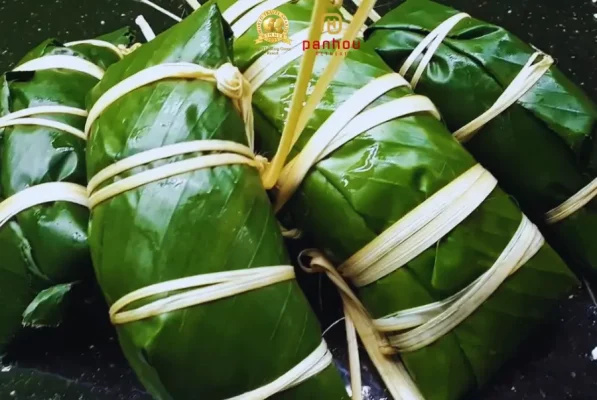
The first essential ingredient is chit leaves, a plant unique to northern mountain regions. These large, vibrant green leaves grow upright in clusters reaching about one to one and a half meters tall. Their color resembles dong leaves commonly used in the lowlands, measuring roughly thirty five centimeters long and eight to ten centimeters wide. Only fresh, broad, and unblemished leaves are selected for wrapping, while yellowed or wilted leaves are carefully discarded.
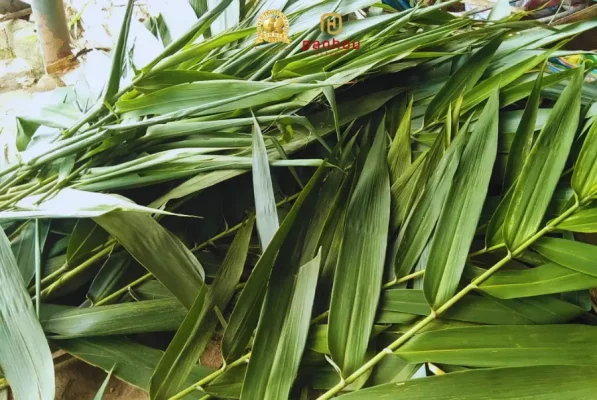
All ingredients used in banh chit represent the essence of ha giang food, sourced directly from local forests and terraced fields. After harvesting, the chit leaves are trimmed at both ends, gently washed to prevent tearing, then briefly blanched in boiling water for about two to three minutes. This step sets banh chit apart from other traditional rice cakes, as blanching softens the leaves, enhances their natural aroma, and helps the cakes keep longer after cooking.
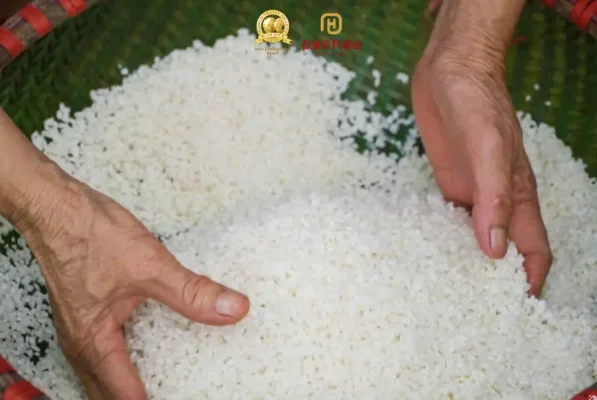
The second key ingredient is upland glutinous rice, carefully chosen for its round, plump grains, natural fragrance, and chewy texture. Before wrapping, the rice is soaked for two to four hours in water mixed with straw ash. This traditional technique gives the rice its natural dark color and helps the cake remain soft and supple after long hours of boiling.
The process of making banh chit
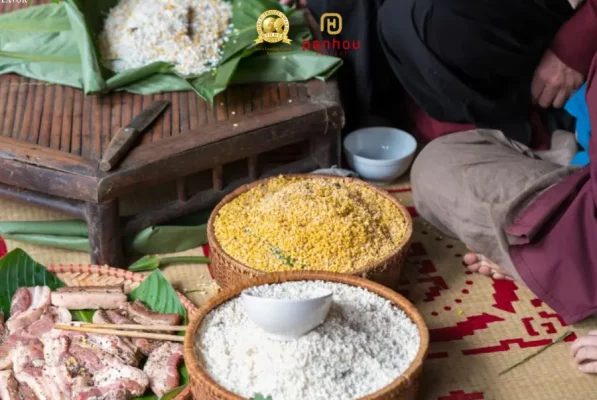
The filling typically consists of thick slices of pork belly marinated with seasonings distinctive to the Red Dao people. To achieve a rich flavor, the pork is seasoned with salt, pepper, and a selection of forest herbs that lend a subtle, earthy fragrance. Mung beans are also carefully selected and steamed until tender, adding a creamy, nutty layer to the filling. The cakes are tied with soft bamboo strips, keeping them firm and intact during cooking.
The meticulous art of wrapping
Wrapping banh chit requires patience and skilled hands, reflecting an important cultural trait of the Red Dao. Because chit leaves are thinner and smaller than dong leaves, fifteen to twenty leaves are layered together with care. A measured amount of rice and filling is placed at the center, then skillfully wrapped and tied into the distinctive humpback shape. This curved form holds deep cultural meaning, symbolizing the endurance and steadfast spirit of the Red Dao people, who have long lived in close harmony with the majestic mountains.
Preserving banh chit
After boiling for eight to twelve hours, banh chit emerges with a glossy black surface. The rice becomes tender and chewy, blending with the fragrant aroma of chit leaves, the richness of pork belly, and the creamy taste of mung beans, creating a flavor that is unmistakably rooted in the mountains. Compared to cakes wrapped in dong leaves, banh chit dries more quickly, allowing it to be stored for three to four days in normal weather conditions.
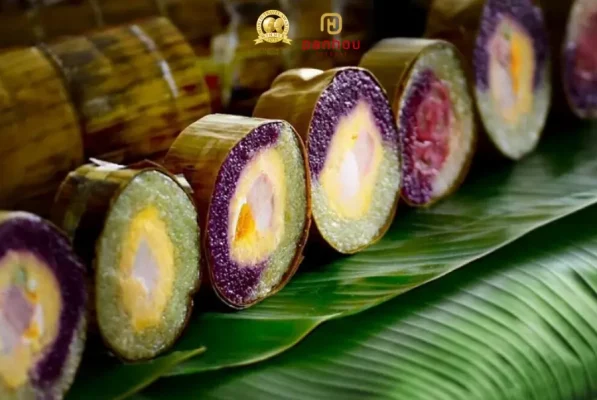
Banh chit of the Red Dao people is more than just a dish. It is a spiritual gift that carries generations of tradition, the taste of the land, and a unique cultural identity that binds people to nature. As a representative dish of ha giang food, banh chit has been thoughtfully selected by Panhou Retreat and introduced through hands on activities such as cooking classes, offering visitors a meaningful way to experience the culinary soul of the Red Dao community.
FAQ
1. What is banh chit and why is it important to the Red Dao people during Tet?
Banh chit, also known as humpback sticky rice cake, is a traditional Tet specialty of the Red Dao people in Hoang Su Phi, Ha Giang. Its distinctive curved shape symbolizes the diligence and resilience of Red Dao women, making it both a meaningful food and a cultural emblem of Lunar New Year.
2. When does banh chit usually appear in Red Dao festivals and rituals?
Within the ha giang food tradition, banh chit is most commonly prepared during Tet and on the Full Moon of the first and seventh lunar months, important occasions for honoring ancestors and expressing gratitude to nature.
3. What makes chit leaves special in the making of banh chit?
Chit leaves are native to northern mountain regions and are carefully selected for their size and freshness. Blanching the leaves before wrapping gives banh chit its distinctive aroma and allows the cake to be preserved longer than those wrapped in dong leaves.
4. What ingredients define the flavor of banh chit?
Banh chit combines upland glutinous rice soaked in straw ash water, pork belly marinated with forest herbs, and steamed mung beans. Together, these ingredients create a rich, earthy flavor that reflects the essence of ha giang food.
5. Why is banh chit considered more than just a traditional dish?
Banh chit represents generations of Red Dao heritage, craftsmanship, and spiritual values. Today, it is recognized as a signature of ha giang food and is shared with visitors through experiences such as cooking classes at Panhou Retreat, helping preserve and pass on this cultural tradition.