Red Dao Round Sticky Rice Cake: The Bustling Sounds of Red Dao’s Tet Holiday
| ExperiencesAs pear and plum blossoms begin to blanket the forests of Thong Nguyen in white, the Red Dao villages of Ha Giang come alive with the rhythmic sound of wooden pestles. More than just a traditional dish, the art of making Round Sticky Rice Cakes (locally known as Banh Day or Dua) during Tet is a vibrant “dance of labor.” It symbolizes community bond and deep gratitude to Mother Earth. Step into the heart of highland culture and feel the warmth of the local people through every strike of the pestle at the Panhou Retreat Ethnic Tet Market.
Origins and sacred meaning of Red Dao rice cake?
For the Red Dao, these cakes are rooted in legends of the universe’s creation. Their round shape represents the Sun and the Moon, the two deities that bring light and life to the high mountains. At the Panhou Retreat Ethnic Market, we recreate this ritual to honor three sacred values:
• Gratitude to Nature: A “thank you” for a year of favorable weather and a bountiful harvest.
• Community Spirit: A time for the village to gather and strengthen neighborly bonds through shared work.
• Purity: The pristine white color represents the sincerity and noble spirit of the people toward their ancestors.
What makes a perfect Red Dao rice cake?
Selection is everything. The Red Dao people and our local team at Panhou Retreat carefully source the finest ingredients:
• Highland Sticky Rice (Nep Nuong): Large, mẩy (plump) grains grown on towering terraced fields. When cooked, this rice is incredibly chewy with a soul-stirring forest aroma.
• Wild Banana Leaves: Deep green leaves harvested from the forest and washed in fresh spring water to maintain their natural purity.
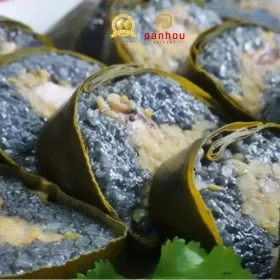
• The Fillings: Choose between sweet (creamy mung beans, soaked until soft, finely ground, and slow-cooked into smooth golden spheres) or savory (rich local pork belly seasoned with aromatic forest pepper).
• Lard: Used to coat the pestles and hands to prevent sticking while adding a beautiful glossy finish and a rich, melt-in-your-mouth texture.
The Craft: an art of strength and skill
Making these cakes is a labor of love that requires both stamina and precision:
• Step 1: Preparation
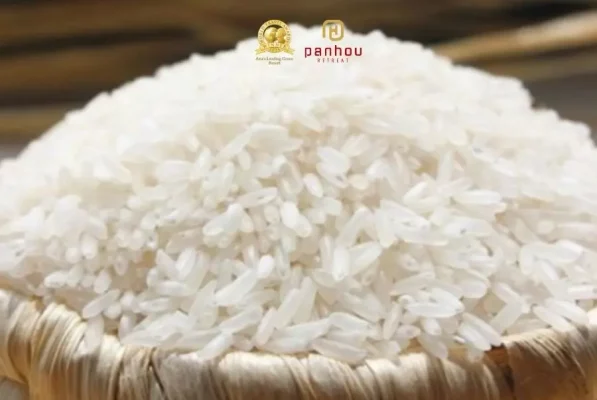
After harvest, the rice is carefully sun-dried so the grains don’t break during milling. It is washed, soaked in warm water for about 12 hours, then drained. We use a traditional wooden steamer (chõ) to ensure the rice remains perfectly chewy without getting mushy, while locking in the natural fragrance of the highland grain.
• Step 2: The Tools
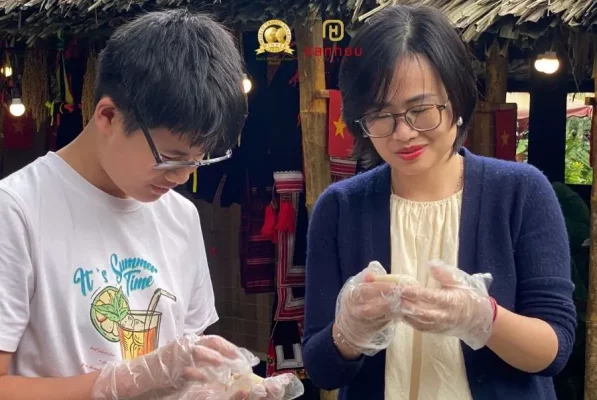
The mortar is carved from heavy, fine-grained wood with a smooth, polished interior to ensure the dough becomes silky and elastic. The long pestles, made from wood or bamboo, are greased with lard for a smooth strike.
• Step 3: The Pounding
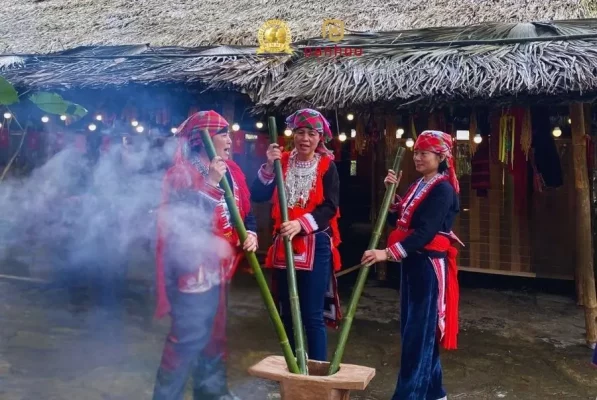
This is the most demanding stage. Two strong men stand on opposite sides of the steaming mortar, rhythmically striking the rice with powerful, decisive blows until it transforms into a smooth, snowy-white, and perfectly cohesive dough.
• Step 4: Shaping and Wrapping
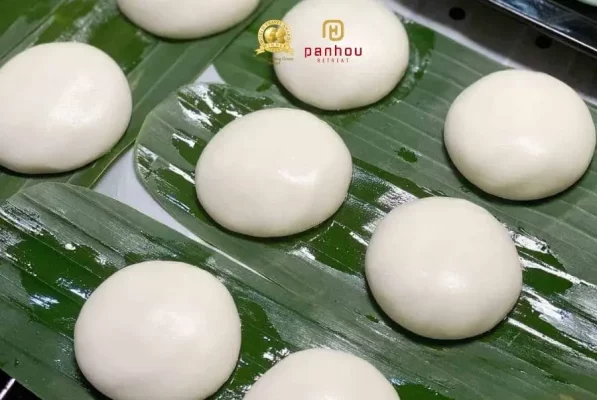
While the dough is still steaming hot, Red Dao women skillfully divide it, apply a touch of lard to their hands for ease, add the fillings, and shape them into perfect rounds. Each cake is then placed onto a square-cut wild banana leaf.
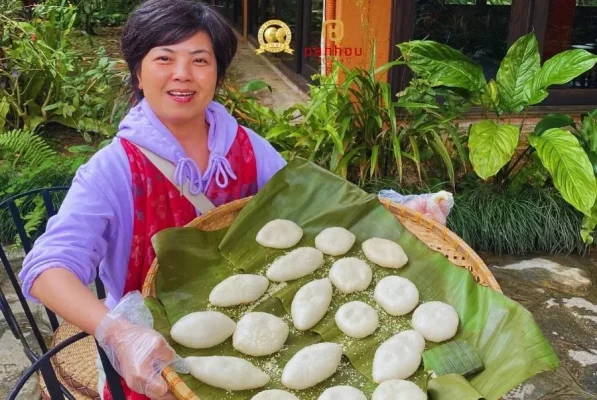
The Spirit of Tet at Panhou Retreat
Visiting us during the Lunar New Year, especially on the morning of the 4th day of Tet allows you to immerse yourself in this lively tradition. This is more than just a culinary activity; it is a sacred cultural experience:
• A symbol of heritage: Each cake embodies a profound respect for the land and the hard work spent on the mountain slopes throughout the year.
• A living connection: At Panhou Retreat, you don’t just observe; you touch the soul of the highlands. Tasting a warm cake in the crisp mountain air, you feel the warmth of human hands and the spiritual energy of Ha Giang.
The pure white round sticky rice cake, served on a vibrant green leaf, is our warmest welcome to you a testament to the enduring spirit of the Red Dao culture in the heart of the rocky highlands
FAQ
1. What does the round shape of the Red Dao sticky rice cake symbolize?
The round shape represents the Sun and the Moon, the two powerful deities that bring light, life, and energy to all living things in the high mountains of Ha Giang.
2. Why is the rice-pounding activity considered a “sacred ritual” during Tet?
It is more than just cooking; it honors three sacred values: gratitude to nature for a good harvest, community spirit by strengthening village bonds, and purity, as the white cake represents a sincere heart toward ancestors.
3. What are the key ingredients that make the cake authentic?
A perfect cake requires highland sticky rice (nep nuong) for its chewy texture, Wild Banana Leaves washed in spring water, lard for a glossy finish, and two types of filling: creamy mung bean (sweet) or peppered pork belly (savory).
4. Why is the “Pounding” stage (Step 3) considered the most demanding part of the process?
This stage requires immense strength and stamina. Two men must stand on opposite sides of the mortar, striking the hot rice with powerful and rhythmic blows until it transforms into a smooth, silky, and elastic dough.
5. What makes the experience of making Banh Day at Panhou Retreat special for travelers?
At Panhou Retreat, guests don’t just watch, they immerse themselves in the culture. On the 4th day of Tet, visitors can touch the soul of the highlands, feel the spiritual energy of Ha Giang, and enjoy a warm cake handmade by the local people in the crisp mountain air.