Ha Giang Shan Tuyet Ancient Tea: The Essence of the Highlands and the Art of Tea Tasting
| ExperiencesHa Giang is not only a land of majestic mountain passes but also a sacred sanctuary for ancient tea trees that have stood for centuries. Researcher Tu Quoc An once noted on VnExpress: “The ancient tea regions of Hoang Su Phi are in no way inferior to the famous tea regions of Yunnan, China, in terms of primitivity and biological value.”
Let us uncover the secrets behind these “snow-covered” tea buds and discover how to fully enjoy this precious gift from the land of Phin Ho, Ha Giang (now part of Tuyen Quang province).
1. Where Does Shan Tuyet Ancient Tea Come From?
Shan Tuyet (meaning “Snow on the Mountain”) is a rare heirloom tea variety that grows naturally on the high northern peaks. Its most striking feature is the fine, white, snow-like down that covers the buds and leaves: a characteristic that lowland teas can never achieve.
Origin and Growing Environment
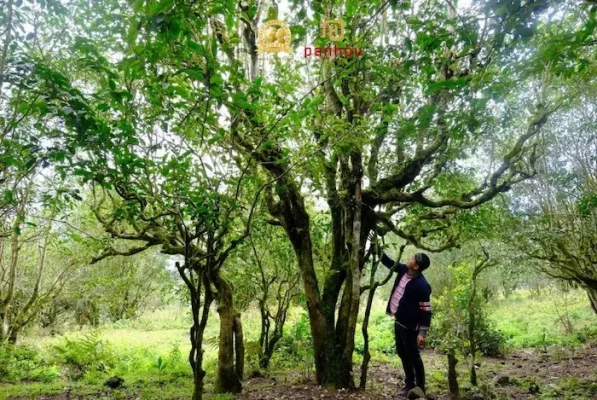
Shan Tuyet tea grows at altitudes above 1,400 meters, primarily in the districts of Hoang Su Phi, Bac Quang, Xin Man, and Ha Giang City. These trees range from several decades to over 300 years old. Their trunks are so large it takes two or three people to span them, and they are often covered in white lichen. In the freezing, mist-shrouded climate of the northern mountains, the deep roots of these trees absorb the essence of the earth to create strong, resilient tea buds that carry the breath of heaven and earth.
2. A Meticulous Process: From Bud to Premium Tea
To preserve the precious “snow” layer and the original flavor, the processing at cooperatives like Phin Ho Tea Cooperative (Fin Ho Tea) undergoes strict control:
• Step 1: Dawn Harvest: The Red Dao people rise before dawn to harvest tea between 5:00 AM and 9:00 AM. This is when the night dew still lingers, ensuring the buds are succulent and have not been dried out by the harsh sun.
• Step 2: Withering: The tea is spread thinly on bamboo mats to wither naturally. This makes the leaves supple and reduces moisture without bruising the edges.
• Step 3: Fixation (Kill-green): This is the most difficult stage. Artisans use their bare hands to feel the heat of the oven (up to 150°C), continuously tossing the leaves so they curl while keeping the delicate white fuzz intact.
• Step 4: Rolling: Skilful hands roll the leaves to shape them, breaking down cell structures to release beneficial nutrients and mellow out the bitterness.
• Step 5: Sorting: After processing, the tea is strictly evaluated by tea masters to be classified into the finest grades.
3. Classifications and Health Benefits
Depending on the oxidation level and processing method, Shan Tuyet tea is divided into several main types:
• Green Tea (Luc tra): Maintains a vibrant green hue with a gentle astringency and a sweet, lingering finish.
• White Tea (Bach tra): Minimally processed from the downy buds. It offers a pure fragrance of wild flowers and morning dew.
• Black Tea (Hong tra): Fully oxidized, producing an amber liquor with rich notes of honey and forest wood.
• Jasmine Scented Tea: A delicate blend of ancient tea and fresh jasmine flowers, meticulously hand-scented in layers.
Health Benefits
The antioxidant content in ancient tea is many times higher than in industrial tea. Traditionally and medically, it is considered a “precious medicine” that helps:
– Prevent aging and support cancer prevention.
– Stabilize blood pressure and improve cardiovascular health.
– Aid digestion, reduce stress, and enhance mental focus.
4. Where to Find Authentic Tea: The Story of Phin Ho Tea
If you are looking for the true standard of Shan Tuyet tea, Phin Ho Tea Cooperative (Fin Ho Tea) is the definitive name. With 18 years of development, an EU Organic certification, and OCOP standards, they are pioneers in bringing Northern Vietnamese ancient tea to the world.

The image of Mrs. Trieu Mui Nghinh, 96 years old, on the packaging is more than just a brand logo: it is a testament to the enduring spirit of Red Dao tea culture. As a historical witness of this tea region, Mrs. Nghinh still keeps her habit of visiting the tea hills at dawn. Her weathered but agile hands still teach the younger generations how to harvest and handle each bud with love.
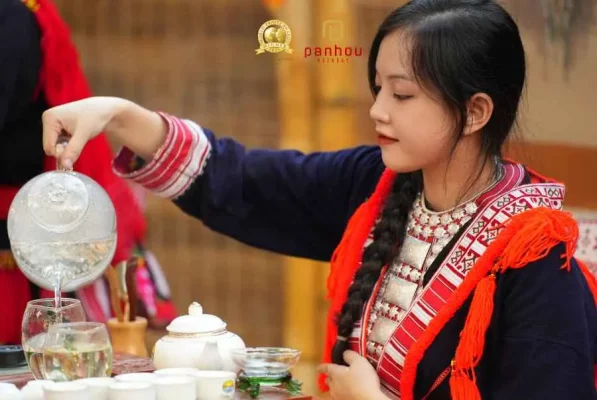
Furthermore, experts like Mr. Ly Thanh Nhan and tea master Ms. Ly Mui Nhat will guide you through this world of aroma, teaching you how to distinguish varieties based on brewing techniques, flavor profiles, and the best times of day to enjoy them.
5. The Art of Enjoying Shan Tuyet: Expert Tips
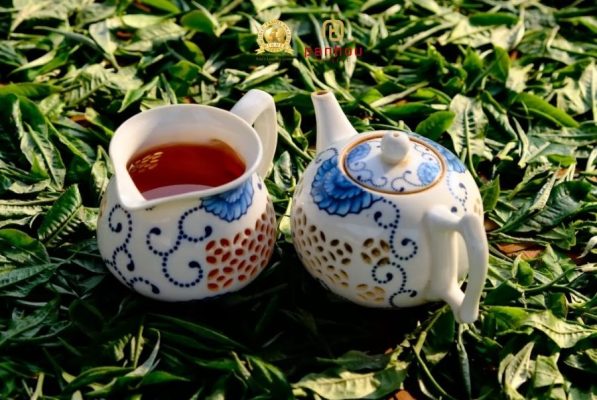
Enjoying ancient tea cannot be rushed. Use a clay or Bat Trang ceramic teapot with a micro-porous structure to maintain a stable temperature.
The Standard Brewing Process:
• Rinse the Set: Use boiling water to warm the teapot and cups.
• Awaken the Tea: Place the tea in the pot, pour in hot water, and discard it quickly (2-3 seconds) to let the aroma bloom.
• Infusion: Pour in hot water and steep for 15-20 seconds. Shan Tuyet tea can be brewed 6-8 times.
• Savoring: Hold the cup near your nose to catch the fragrance, then take small sips to let the sweetness spread from the tongue to the throat.
Note: Avoid using boiling water at exactly 100°C as it can “burn” the tea; do not steep for too long to avoid bitterness.
6. A Soul-Healing Therapy at Panhou Retreat
Amidst the rush of modern life, sitting under the canopy of a primary forest at Panhou Retreat, listening to birdsong while sipping Shan Tuyet tea, is a powerful form of healing.
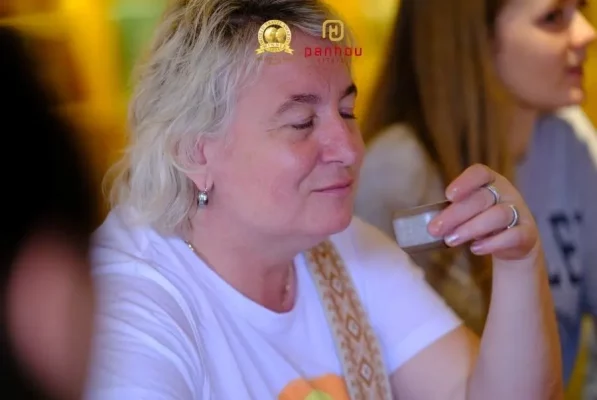
Here, tea is not just a drink; it is a bridge between humans and nature. Paola Bertoni, an Italian travel blogger, once shared: “The Shan Tuyet tea at Phin Ho is the most delicious and refreshing tea I have ever tasted in Vietnam.”
Shan Tuyet Ancient Tea is a living cultural heritage. If you ever visit the deep green wilds of Hoang Su Phi, do not forget to bring back a little of this “spiritual essence of heaven and earth” as a gift for your loved ones and for yourself.
FAQ
1. What is Shan Tuyet Ancient Tea and where does it originate?
Shan Tuyet (meaning “Snow on the Mountain”) is a rare heirloom tea variety that grows naturally at altitudes above 1,400 – 2,000 meters in Ha Giang (Hoàng Su Phì, Bắc Quang, v.v.). These trees are decades to over 300 years old, featuring large trunks covered in white lichen. Its most unique trait is the fine, white, snow-like down covering the buds.
2. What makes the processing of Shan Tuyet tea at Phin Ho Cooperative unique?
The production follows a meticulous 5-step manual process to preserve the “snow” layer:
• Dawn Harvest: Hand-picked by the Red Dao people between 5:00 AM and 9:00 AM to ensure succulent buds.
• Natural Withering: Spread on bamboo mats to reduce moisture without bruising.
• Fixation (Kill-green): Artisans use bare hands to feel the heat (up to 150°C) while tossing leaves to keep the white fuzz intact.
• Rolling: Skilled shaping to release nutrients and mellow bitterness.
• Sorting: Final evaluation by tea masters to grade the premium quality.
3. How is the tea classified and what are its health benefits?
Depending on the oxidation level, it is classified into Green Tea (astringent and sweet), White Tea (pure wildflower fragrance), Black Tea (honey and forest wood notes), and Jasmine Scented Tea. Because it grows in the wild, its antioxidant content is significantly higher than industrial tea, helping to stabilize blood pressure, prevent aging, aid digestion, and reduce stress.
4. Why is Phin Ho Tea (Fin Ho Tea) considered a prestigious brand?
With 18 years of development, Phin Ho Tea holds EU Organic certification and OCOP standards. The brand is deeply rooted in Red Dao culture, featuring the 96-year-old Mrs. Trieu Mui Nghinh on its packaging as a symbol of the enduring spirit and heritage of the ancient tea regions.
5. What is the expert-recommended way to enjoy this tea?
To avoid “burning” the delicate leaves and to capture the full flavor:
• Temperature: Do not use boiling water at 100°C; slightly cooler water is better.
• Process: Warm the pot. Awaken” the tea (2-3 seconds). Infuse for 15-20 seconds.
• Persistence: High-quality Shan Tuyet can be brewed 6 to 8 times while maintaining its sweetness and aroma.