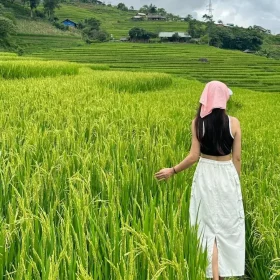
Best Time to Visit Hoang Su Phi: The Golden Rice Season You Shouldn’t Miss
| ExperiencesThe best time to visit Hoang Su Phi is usually from late September to early October, when the terraced rice fields turn golden. However, each season reveals a different side of this mountain destination, from the water-pouring season in late May and June to lush green rice fields in July and August. The quieter months are also ideal for trekking, wellness retreats, and slow travel. Discover the seasonal landscapes, weather, and best months for planning your journey to Hoang Su Phi.
When is the best time to visit Hoang Su Phi?
For most first-time visitors, late September to early October is considered the best time to visit hoang su phi. During this period, the spectacular terraced rice fields gradually change from green to gold, creating one of the region’s most impressive autumn landscapes.
However, the golden season is only one of Hoang Su Phi’s many beautiful faces. Depending on your travel interests, there are four main periods to consider when planning your trip:
| Time | Landscape highlights | Best for | Things to note |
|---|---|---|---|
| Late May – June | Water-filled terraced rice fields | Photography, wellness retreats, slow travel | Occasional rain |
| July – August | Lush green rice terraces | Nature lovers, trekking, outdoor activities | Occasional showers; trails and roads may become slippery |
| Late September – early October | Golden ripe rice terraces | First-time visitors, photography, cultural exploration | Peak season; booking accommodation one month ahead is recommended |
| November – April | Mountains, villages, clouds and mist | Trekking and peaceful retreats | Colder weather; warm jackets are recommended |
Late September to early October: The best time to see golden rice terraces
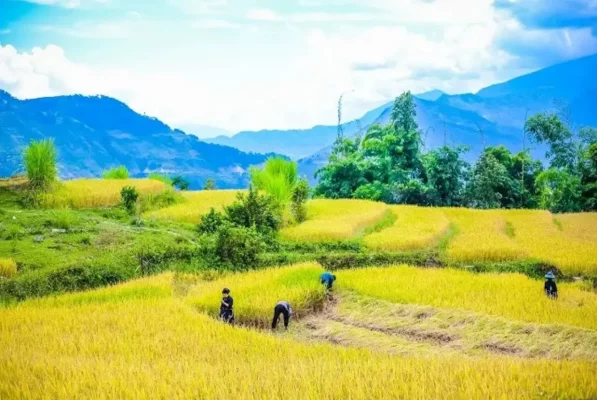
If you dream of seeing mountain slopes covered in golden terraced rice fields, visit from late September to early October. This is when the rice gradually reaches its peak ripening stage.
Viewed from above, the curved terraces wrap around mountainsides and valleys, forming layers of golden waves stretching across the landscape. This period is especially suitable for landscape photography, trekking adventures, and first-time visits to Hoang Su Phi. It is also an ideal opportunity to explore local villages and learn about traditional farming life and highland culture.
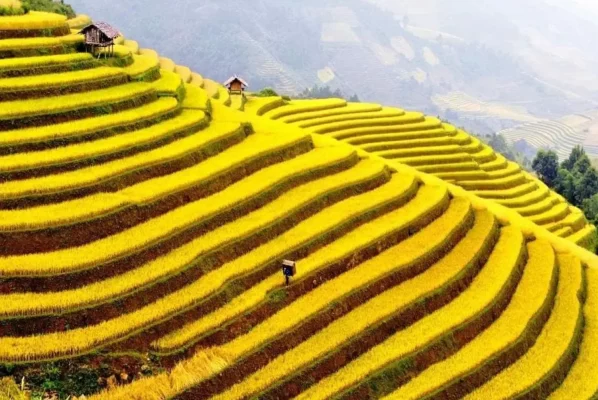
However, rice does not necessarily ripen at the same time in every area. Some terraces may already be completely golden, while others still display a mixture of green and yellow. Harvest dates can also vary depending on elevation, planting schedules, and weather conditions. If your main goal is to experience the golden season, check the actual rice conditions before departure instead of relying solely on previous years’ schedules.
Late May to June: The best time to experience the water-pouring season
The water-pouring season offers a completely different landscape from the golden rice season. Water from mountain streams and natural sources is directed into the terraces in preparation for a new rice crop. The flooded rice fields then transform into giant mirrors reflecting the sky above.
As sunlight changes throughout the day, the terraces may shimmer in silver, blue, or the changing colors of clouds. The atmosphere is generally quieter than during the golden season. This period is particularly attractive to photographers seeking dramatic images of Hoang Su Phi’s water-filled terraces.
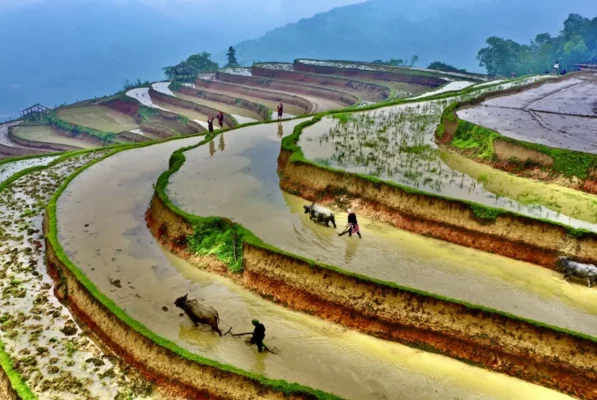
You can also spend time enjoying a peaceful retreat surrounded by the mountains. A traditional Red Dao herbal bath and Shan Tuyet tea at Fin Ho Tea are excellent additions to a slow-travel experience. Rain becomes more frequent during this period, so visitors should prepare shoes with good grip, a lightweight raincoat, and an umbrella.
July to August: The best time to see green rice terraces
After the water-pouring season, young rice plants begin growing and gradually cover the mountainsides in green. July and August bring one of the freshest landscapes of the year, with vibrant green rice terraces stretching continuously between forests and mountains.
If you cannot wait until the golden rice season, this is still a wonderful period to visit. The green season is ideal for nature lovers, active travelers, and visitors who enjoy trekking through mountain villages. You can walk through terraced rice fields, bamboo forests, and local markets before returning for a relaxing afternoon.
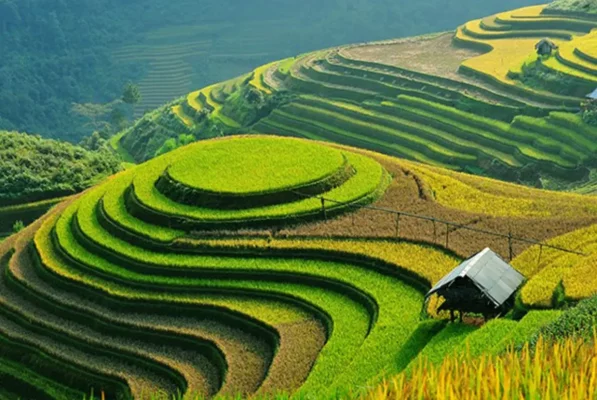
However, July and August are also among the wetter months of the year. Trekking trails may become muddy or slippery after rainfall. Before embarking on a long trek, check the latest weather forecast and local trail conditions.
November to April: A quieter time for retreats
After the harvest, Hoang Su Phi enters a quieter and more contemplative period. The terraces no longer display the brilliant gold or lush green colors of the rice-growing season.
Instead, the landscape reveals harvested fields and rice stubble left behind, which gradually decomposes and contributes organic matter to the soil. This is also an important resting period for the land before the next agricultural cycle begins.
From approximately December to March, some terraced fields may be brightened by mustard flowers and buckwheat blossoms. This period offers another reason for photography lovers to visit and discover a different side of Hoang Su Phi beyond its famous rice season.
It is particularly suitable for travelers seeking wellness retreats or couples looking for peaceful moments surrounded by mountains and forests. During the colder months, especially at higher elevations, morning and evening temperatures can drop considerably. Visitors should prepare warm jackets, layered clothing, and scarves for outdoor activities.
What should you know about Hoang Su Phi weather?
Understanding hoang su phi weather is just as important as choosing the right season to visit. Because of the mountainous terrain, weather conditions may vary between valleys, villages, and higher-altitude areas.
Instead of focusing only on temperature, travelers should consider three important factors: rainfall, seasonal landscapes, and the activities they want to experience. The following seasonal guide also provides a useful overview for travelers researching hoang su phi weather by month.
Spring weather: February to April
Spring marks the transition from cold winter conditions to warmer weather. Temperatures in February quite cold from around 13–21°C, rising to approximately 16–25°C in March. By April, temperatures may reach around 19–29°C.
Rainfall is generally low in February before gradually increasing throughout March and April, although it remains lower than during summer. The landscape becomes greener, while visitor numbers are generally lower than during the golden rice season.

This can be a pleasant period for village exploration, forest walks, and experiencing everyday mountain life. Visitors should still bring a lightweight jacket because early mornings and evenings can feel noticeably cooler.
Early summer weather: May to June
Late spring and early summer bring a noticeable transformation to the landscape. From May, Hoang Su Phi becomes warmer and more humid, with temperatures of approximately 22–31°C. In June, temperatures usually range from around 23–31°C.
Rainfall also increases quickly, from an average of approximately 186 mm in May to more than 276 mm in June. Early summer rainfall contributes to the distinctive water-pouring season, when water fills the terraced fields and reflects the clouds and sky.

Daytime weather can feel warm and humid, with intermittent rainfall. Visitors planning to trek should prepare lightweight rain gear, quick-drying clothing, and shoes with good traction. As rainfall becomes more frequent, a lightweight raincoat, quick-drying clothes, and non-slip footwear can make outdoor activities more comfortable.
Summer weather: July to August
Summer is when Hoang Su Phi displays some of its greenest landscapes of the year. Rice terraces, forests, and mountains are covered in vibrant shades of green, creating a fresh and lively atmosphere. However, summer rainfall can occasionally affect outdoor activities and trekking plans.
July and August are generally among the hottest, most humid, and rainiest months of the year in Hoang Su Phi. Average daytime temperatures typically range from approximately 23–31°C, although high humidity can make the weather feel warmer.

Average rainfall reaches around 356 mm in July and more than 322 mm in August, with more than 20 rainy days in each month according to climate data. If you are planning a hoang su phi tour during this period, pay close attention to the weather forecast.
On days with unfavorable conditions, a short walk or village visit may be more suitable than a long-distance trek.
Autumn weather: September to October
Autumn is the most famous season in Hoang Su Phi. As the rice begins to ripen, the terraced fields gradually change from green to glowing shades of gold.
September remains relatively warm, with temperatures of approximately 21–30°C. October is generally cooler, with temperatures ranging from around 19–27°C. Rainfall also decreases significantly compared with July and August, falling from approximately 164 mm in September to around 103 mm in October.
For many travelers, the combination of golden rice terraces, mountain scenery, and harvest-season atmosphere makes this the best time to visit hoang su phi. As this is also one of the most popular travel periods, booking accommodation early is recommended, especially for late September and early October.
Winter weather: November to January
From November, Hoang Su Phi becomes colder and generally drier. Temperatures usually range from around 15–24°C in November, dropping to approximately 12–21°C in December and 12–19°C in January.
Although the rice terraces no longer display their bright seasonal colors, mist and clouds create a peaceful atmosphere ideal for quiet retreats. Rainfall during this period is relatively low, averaging around 21–51 mm per month.
Fog and colder temperatures may occur, especially in higher-altitude areas. Visitors should prepare sufficiently warm clothing, particularly when planning to explore mountain peaks or elevated villages.
When does the Hoang Su Phi rice harvest season begin?
The hoang su phi rice harvest season is one of the most anticipated periods of the year. The golden rice season generally falls between mid-September and early October.
At first, most terraces remain green. Gradually, golden colors begin appearing across the mountain slopes. When the rice reaches full maturity, entire valleys can turn golden before local farmers begin harvesting.
When does the rice season in Hoang Su Phi usually begin?
From September, visitors can begin seeing rice fields gradually changing color. Late September and early October are usually the most popular periods for travelers hoping to experience the golden season. However, not every location ripens at exactly the same time.
Differences in elevation, planting schedules, and weather conditions mean that rice in different villages may mature at different times. For this reason, travelers hoping to see golden rice terraces should treat the seasonal calendar as a general guide rather than a fixed date.
Is September or October better for visiting Hoang Su Phi?
Both September and October can offer beautiful scenery. During September, many areas display a mixture of green and golden rice fields. This gradual color transition creates particularly attractive layers for landscape photography.
Late September to early October is generally better for travelers hoping to see larger areas of fully ripened golden rice. As October progresses, farmers in some areas may already begin harvesting. The best approach is to choose a suitable travel window and then check the latest rice conditions before your trip.
How long does the golden rice season in Hoang Su Phi last?
The most beautiful stage of the golden rice season usually does not last very long. Once the rice reaches maturity, local farmers begin harvesting, meaning the landscape can change noticeably within only one or two weeks.
A location that appears completely golden one week may already be partially harvested when you return the following week. This is also part of what makes Hoang Su Phi so special.
The rice terraces are not landscapes created solely for tourism. They are living agricultural and residential spaces shaped by local communities, seasonal farming cycles, and the rhythms of nature.
Best places to see golden rice terraces in Hoang Su Phi
Some of the most famous areas for spectacular terraced rice landscapes include Ban Phung, Ban Luoc, Ho Thau, Nam Ty, and Thong Nguyen.
Walking through the terraces and surrounding villages often creates a more memorable experience than continuously traveling between different photo spots.
Hoang Su Phi harvest festival and cultural experiences
September is not only the peak golden rice season but also a period filled with distinctive cultural and tourism activities. Surrounded by golden mountainsides, visitors can immerse themselves in a festive atmosphere while discovering the traditions of local ethnic communities.
One notable event is the cultural tourism week known as “Across the Heritage Regions of Hoang Su Phi Terraced Fields.” The event may feature activities such as golden-season experiences, paragliding above the terraces, and traditional cultural performances.
Visitors can also learn more about local lifestyles and gain a deeper appreciation of the cultural identity of Vietnam’s northern highlands. These experiences make a visit to Hoang Su Phi more diverse, combining spectacular natural landscapes with meaningful cultural discovery. As the exact program and schedule of the hoang su phi harvest festival may vary from year to year, travelers should check official event information before planning their trip.
The best time to stay at Panhou Retreat
There is no single season that can be considered the only best time to experience Panhou Retreat. Surrounded by the natural landscapes of Hoang Su Phi, Panhou Retreat offers a convenient base for discovering rice terraces, mountains, forests, and nearby villages.
At the same time, guests can slow down and enjoy a more peaceful rhythm of travel. Each season brings a different experience.
Panhou Retreat during the water-pouring season
From late May to June, the terraced fields enter the beautiful water-pouring season. The flooded terraces form mirror-like surfaces reflecting the sky and clouds across the surrounding mountains.
You can trek through local villages, photograph the landscapes, and observe farming activities at the beginning of the growing season. After a day of exploration, guests can relax with a traditional Red Dao herbal bath or essential oil massage. These wellness experiences help the body unwind and recover after outdoor activities.
Panhou Retreat during the green rice season
During July and August, Hoang Su Phi is covered in the vibrant green colors of rice terraces and mountain landscapes. Alongside trekking and exploring the surrounding nature, guests can enjoy gentler activities at Panhou Retreat.
You may try painting on Do paper, wear traditional Red Dao clothing, or join a cooking activity. These experiences offer another way to learn about local culture and everyday life.
Panhou Retreat during the golden rice season
Late September to early October is an ideal time to admire Hoang Su Phi’s glowing golden rice terraces. Visitors can explore beautiful rice terrace viewpoints and visit villages inhabited by Red Dao communities. After a day outdoors, a Red Dao herbal bath, essential oil massage, or local cuisine can complete the experience.
Panhou Retreat in winter
After the rice season ends, from approximately November to March, Hoang Su Phi becomes quieter and better suited to slow travel and peaceful retreats. This period is also ideal for cloud hunting and discovering seasonal flowers. Travelers can trek to Chieu Lau Thi or Nam Hong to search for seas of clouds in the early morning.
Those interested in flowers can explore Nam Ty for pear and white plum blossoms. In the higher mountains around Giang Ha, visitors may also encounter pale pink wild peach blossoms.
What should you pack for Hoang Su Phi in each season?
Preparing the right clothing and equipment will make your journey more comfortable, especially when trekking or traveling through mountainous areas.
From May to August
- Lightweight raincoat
- Water-resistant, quick-drying clothing
- Trekking shoes with good grip
- Waterproof bags for electronic devices
- Compact umbrella
- Insect repellent
- Small backpack
From September to October
- Comfortable walking or trekking shoes
- Layered clothing
- Sunscreen
- Sun hat
- Reusable water bottle
- Lightweight jacket
- Rain cover or protective bag for your camera
From November to March
- Warm clothing
- Windproof jacket
- Thick long trousers
- Comfortable walking shoes
- Scarf or thermal layers for higher-altitude areas
Essential items throughout the year
Whatever season you choose to visit Hoang Su Phi, bring comfortable walking shoes, a water bottle, personal medication, a small backpack, sunscreen, and rain protection.
If you plan to go trekking, keep your luggage light and avoid carrying unnecessary items on mountain trails.
Tips for choosing the best time to visit Hoang Su Phi
Choosing the right month is important, but a successful trip also depends on careful preparation.
- Check the rice conditions before your trip. Rice does not ripen on exactly the same date every year or simultaneously across every village.
- Monitor the weather forecast. Mountain weather can affect visibility, trekking routes, and overall travel times.
- Keep your itinerary flexible during the rainy season. A relaxed schedule makes it easier to adjust activities when weather conditions change.
- Book accommodation early during the golden season. Late September and early October are among the most popular travel periods.
- Do not try to travel too quickly. Hoang Su Phi is best experienced slowly. Staying two or three nights gives you more time to walk, explore villages, and appreciate the landscape.
- Choose your season based on what you truly want to experience. The golden season is the most famous, but it is not necessarily ideal for everyone. Photographers may prefer the water-pouring season, nature lovers may choose the green rice season, while those seeking rest may enjoy the quieter months.
Is Hoang Su Phi worth visiting outside the golden rice season?
Yes. Every season in Hoang Su Phi offers a different kind of beauty. The water-pouring season brings mirror-like terraces reflecting the sky, while summer covers the mountains in vibrant green.
The colder months are better suited to peaceful retreats, cloud hunting, flower viewing, and deeper cultural experiences. Ultimately, the best time to visit hoang su phi depends on what you personally want from your journey.
Visit in late September or early October if you dream of seeing golden rice terraces stretching across the mountainsides. Choose late spring and early summer if you want to photograph shimmering water-filled terraces.
Travel in July and August if you prefer the lush scenery of the green rice season. Or choose the quieter final months of the year if you are looking for a slower pace of travel.
Perhaps the true beauty of Hoang Su Phi is not about finding one perfect season. It is about choosing the version of the mountains that you most want to keep in your memories.
FAQ
1. When is the best time to visit Hoang Su Phi?
The best time to visit hoang su phi for golden rice terraces is usually from late September to early October. Travelers can also visit from late May to June for the water-pouring season or during July and August for lush green rice terraces.
2. What is the best month to visit Hoang Su Phi?
September is one of the most popular months because the rice terraces begin turning golden. Late September and early October are generally suitable for travelers hoping to see widespread golden fields before harvesting begins.
3. When is the Hoang Su Phi rice harvest season?
The hoang su phi rice harvest season generally falls between September and October. The exact timing may vary depending on location, elevation, local planting schedules, and weather conditions each year.
4. Is September or October better for visiting Hoang Su Phi?
In mid-September, the rice begins transitioning from green to gold, creating a landscape with mixed colors. Late September to early October usually offers a better chance of seeing larger areas of fully ripened golden rice. By mid- or late October, some locations may already have completed their harvest.
5. When is the water-pouring season in Hoang Su Phi?
The water-pouring season usually takes place from late May to late June. During this period, local farmers begin directing water into the terraced fields in preparation for the new rice crop.
6. What is Hoang Su Phi weather like in September?
September marks the transition into autumn and the beginning of the golden rice season. Temperatures are generally comfortable, although early mornings and evenings can feel cooler. A lightweight windbreaker or jacket is useful, particularly when staying in higher-altitude areas.
7. What is Hoang Su Phi weather like in October?
October is often one of the final opportunities to experience the golden rice season before harvesting is completed. The weather generally becomes cooler than in September, with temperatures varying according to elevation and local conditions. By mid- to late October, some rice fields may already have been harvested, creating a quieter and more subdued landscape.
8. When does the Hoang Su Phi harvest festival take place?
The hoang su phi harvest festival and related cultural tourism activities are generally associated with the golden rice season in September. This is an ideal period to combine the spectacular scenery of the terraced fields with cultural experiences involving local ethnic communities. As event dates and programs may vary each year, travelers should check the latest official festival information before visiting.
Ngoc Van

3D2N NATIONAL DAY OFFER | JOURNEY INTO GREEN SEASON
From 125 USD/Guest/Combo
3D2N GOLDEN SEASON IN HOANG SU PHI
From 114 USD/Guest/Combo