Cloud Hunting Vietnam: Best Places, Seasons, Map & Where to Stay
| ExperiencesCloud Hunting in Vietnam requires early starts, flexible plans and careful preparation. Check recent weather, ask local guides, pack warm waterproof clothing and always prioritize road safety. Since mountain conditions can change quickly, choose a destination that remains rewarding even when the clouds do not appear.
When is the best Cloud Hunting Vietnam season?
There is no single cloud hunting Vietnam season that applies to every destination.
In Northern Vietnam, late autumn through early spring generally offers favourable conditions for cloud hunting, particularly when cool air, high humidity and temperature inversions cause clouds to settle below mountain ridges.
Ta Xua is particularly well known between January and March. Y Ty has a longer cloud-hunting window, commonly considered to run from September to April, with clouds often appearing in the early morning or late afternoon. Sapa becomes chilly between November and March, while its clearer periods in April–May and September–October can also offer beautiful mountain visibility.
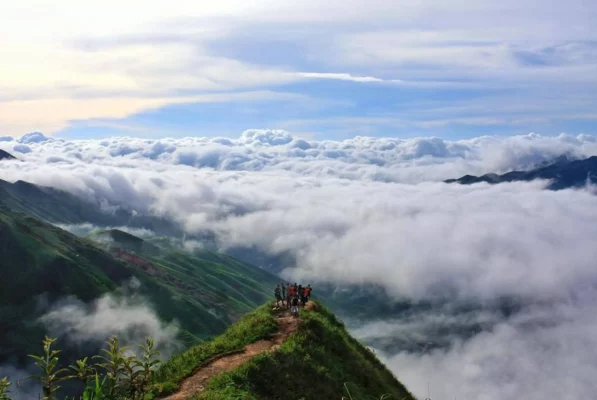
In Hoang Su Phi, cloud hunting is closely connected to local mountain conditions rather than a fixed calendar. Higher areas such as Nam Hong and Chieu Lau Thi can experience dramatic cloud layers during cooler periods, particularly after humid weather followed by clearer conditions.
The most important rule is simple: cloud hunting is never guaranteed. Check the weather forecast a few days before your trip, ask your local guide or accommodation provider about recent conditions and always plan alternative activities.
Cloud hunting Vietnam map: Where should you go?
A useful cloud hunting Vietnam map would place most of the country’s best-known destinations across the northern mountains, with Da Lat representing the most accessible option for travelers exploring Southern Vietnam.
| Destination | Approximate access | Best for | Suggested stay | Reference rate |
|---|---|---|---|---|
| Ta Xua | Around 240 km from Hanoi | Classic sea of clouds | Ta Xua Ecolodge | From about US$20–24/night |
| Hoang Su Phi | Around 5–6 hours from Hanoi | Clouds, trekking & slow travel | Panhou Retreat | Trekking package from US$85/guest |
| Sapa | Around 300–350 km from Hanoi | First-time mountain travelers | Topas Ecolodge | From VND 4.9 million/night on selected offers |
| Y Ty | Via Lao Cai, then mountain road | Remote cloud hunting | Local homestays | Budget stays from around US$7/night |
| Ma Pi Leng | Best combined with a northern road trip | Mountain-pass scenery | Ma Pi Leng EcoLodge | From about US$68/night |
| Ta Chi Nhu | Hanoi to Tram Tau, then trek | Serious trekking | Zoni Home Tram Tau | Check live rates |
| Tam Dao | Around 75–80 km from Hanoi | Weekend cloud trip | Venus Hotel Tam Dao | From about US$63/night |
| Da Lat | Fly or drive to Da Lat | Southern Vietnam | Cloud9 & Cloud View Glamping | From about US$38/night |
Hotel prices change according to travel dates, weekends and peak seasons, so these figures should be treated as booking references rather than fixed rates.
Best Cloud Hunting Vietnam: 8 places worth traveling for
1. Ta Xua
For many travelers, Ta Xua is the first destination that comes to mind when searching for cloud hunting Vietnam.
Located in the northern mountains, Ta Xua sits at elevations of roughly 1,500–1,800 metres. Vietnam’s official tourism website identifies January to March as the most suitable period for cloud hunting, when thick clouds frequently gather around the mountain ridges.
Popular viewpoints include the Dinosaur Spine and elevated mountain roads around the commune. An early start gives you the best chance of watching clouds settle beneath the ridges before the temperature rises.

Ta Xua from Hanoi: How to Get There
A journey to Ta Xua from Hanoi is best planned as at least a two-day trip.
Travelers can choose between:
- Coach or limousine services towards Bac Yen and Ta Xua
- Private car for greater flexibility
- Motorbike for experienced riders comfortable with steep mountain roads
For accommodation, Ta Xua Ecolodge is one option with mountain views. Current booking platforms show indicative starting rates around US$20–24 per night, although prices vary by date.
Is Ta Xua Cloud Hunting Worth It?
For travelers whose primary goal is to see a dramatic sea of clouds, Ta Xua cloud hunting remains one of the strongest options in Northern Vietnam.
Its disadvantage is also its popularity. Weekends and peak cloud season can attract large numbers of visitors. Staying overnight and choosing a weekday can make the experience more relaxed.
Best for: First-time cloud hunters, photographers and short mountain escapes.
2. Hoang Su Phi
Hoang Su Phi offers a different interpretation of cloud hunting.
Instead of driving directly to a viewpoint, taking photos and leaving, travelers can build the experience into a slower journey through terraced rice fields, Red Dao villages and mountain trails.
One of the most rewarding areas to explore is Nam Hong, a Red Dao village surrounded by mountains and rice terraces.
Cloud Hunting and Trekking in Nam Hong
Nam Hong is located approximately 6 km from Panhou Retreat. The surrounding routes lead through terraced fields, forests and local villages, making the area particularly suitable for travelers who want to combine cloud hunting with trekking rather than simply reaching a roadside viewpoint. Panhou Retreat’s own travel information lists Nam Hong among its nearby destinations and regularly includes the village in its trekking experiences.
A practical way to experience the area is to stay at Panhou Retreat and begin your trekking journey towards Nam Hong from there.
Depending on your schedule and fitness level, you can choose:
- A day trek to explore Nam Hong and return to Panhou Retreat
- A two-day trekking journey with more time in the mountains
- A three-day trekking itinerary that goes deeper into the villages and surrounding landscapes
Starting early gives you the opportunity to look for clouds around Nam Hong while the valleys are still cool. As with every cloud-hunting destination, sightings depend on the weather, but even when the clouds do not appear as expected, the route still offers terraced landscapes, village encounters and forest scenery.
This makes Hoang Su Phi particularly attractive for travelers who do not want their entire journey to depend on one sunrise.
Where to Stay: Panhou Retreat
Panhou Retreat is located in Lang Giang Hamlet, in the Thong Nguyen area of Hoang Su Phi. The retreat has 40 eco-bungalows and a three-bedroom villa designed around the surrounding gardens and mountain environment. Its experiences include trekking, Red Dao cultural activities and traditional herbal bathing.
After an early-morning trek towards Nam Hong, travelers can return to the retreat for a slower afternoon, enjoy a Red Dao herbal bath or simply rest among the gardens.
For travelers seeking a compact trekking trip, Panhou Retreat currently offers a 2D1N Trekking & Local Life package from US$85 per guest per combo, with a minimum booking of two guests. Rates and inclusions should be checked again for the actual travel dates.
Best for: Couples, families and travelers who want cloud hunting to be part of a wider journey involving trekking, local culture and relaxation.
Cloud Hunting in Chieu Lau Thi
Travelers who want to reach a significantly higher viewpoint can consider adding Chieu Lau Thi to their Hoang Su Phi itinerary.
According to Panhou Retreat’s official travel information, Chieu Lau Thi is approximately 40 km from the retreat, with around 800 metres of walking required for the final approach to the peak.
The practical journey is to travel by private car or suitable motorbike from Panhou Retreat towards the Ho Thau area and the access road near the mountain, before continuing on foot for the final section. Local reporting notes that a 10.7 km concrete road was completed from Tan Phong towards the upper mountain area, although conditions on mountain roads can still change with rain, fog or landslides.
Because of the terrain, it is sensible to allow generous travel time rather than planning the trip based purely on the 40 km distance.
Chieu Lau Thi rises to roughly 2,400 metres and is particularly known for temperature inversions that can create extensive cloud layers below the summit. Local coverage highlights winter, especially around late December and early January, as an impressive period for seeing seas of clouds.
Temperatures on the summit are noticeably colder and can change quickly. There is no single year-round temperature range that accurately represents conditions at the peak, but during strong winter cold spells the temperature has been recorded at around 0°C, with frost forming on the mountain. Warm layers and wind protection are therefore essential for winter or early-morning visits.
For travelers staying at Panhou Retreat, Chieu Lau Thi works better as a dedicated excursion, while Nam Hong is the more natural choice for trekking directly into the surrounding landscape.
3. Sapa and O Quy Ho
Sapa is one of Vietnam’s most established mountain destinations and an easy choice for travelers who want cloud scenery combined with comfortable tourism infrastructure.
The journey from Hanoi is roughly 300–350 km, with road transfers generally taking around five hours. Travelers can take a sleeper bus, limousine, private car or overnight train to Lao Cai followed by a road transfer to Sapa.
For higher viewpoints, head towards O Quy Ho Pass and Heaven Gate. The pass area lies roughly 15 km from central Sapa and offers wide views across the Hoang Lien mountains.
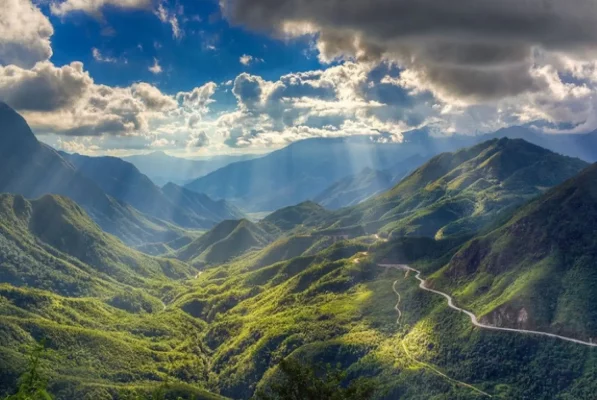
Sapa is chilly from November to March, while April–May and September–October generally offer clearer conditions for sightseeing. Cloud visibility, however, still depends on the individual day.
Suggested stay: Topas Ecolodge, approximately 45 minutes outside Sapa town. Selected official offers have listed stays from VND 4.9 million per bungalow per night, while rates vary significantly according to room category and season.
Best for: First-time visitors, couples and travelers who want a wider choice of hotels and services.
4. Y Ty
For travelers looking beyond the busiest mountain destinations, Y Ty offers a more remote experience.
Cloud season is widely considered to run from September to April, with clouds often appearing early in the morning or late in the afternoon. On particularly cold days, temperatures in the area can fall to around 0–5°C.
Most travelers reach Y Ty by first traveling from Hanoi to Lao Cai, then continuing by private vehicle or motorbike through mountainous roads.
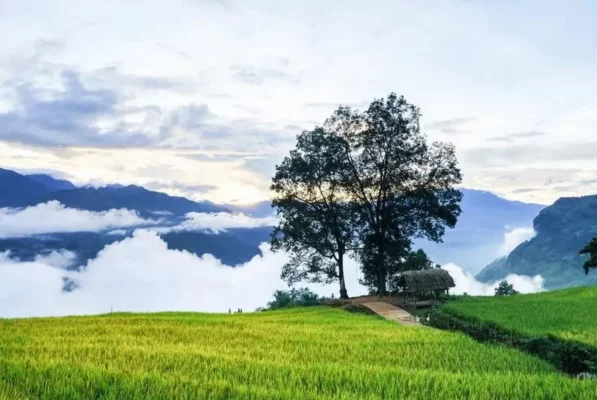
Because road conditions can be affected by heavy rain and landslides, checking weather and local transport conditions before departure is important.
Ngai Thau and the surrounding highland landscapes are among the areas associated with cloud hunting.
Suggested stay: Local homestays. Nhìu Cồ San Homestay has displayed budget accommodation from approximately US$7 per night on a homestay booking platform, although facilities are simpler than at a lodge or resort.
Best for: Adventurous travelers, photographers and those seeking less-developed destinations.
5. Ma Pi Leng
Ma Pi Leng is less about a classic stationary sea-of-clouds viewpoint and more about the combination of clouds, limestone mountains, deep valleys and one of Northern Vietnam’s most dramatic mountain roads.
Most travelers visit as part of a multi-day road journey, continuing through Dong Van and Meo Vac.
The experience can include:
- Ma Pi Leng Pass
- Nho Que River
- Tu San Canyon
- Mountain viewpoints along the road
Because fog can sharply reduce visibility on the pass, travelers should avoid riding in unsafe conditions and consider an experienced driver or easy rider if they are unfamiliar with mountain roads.
Suggested stay: Ma Pi Leng EcoLodge. Current accommodation listings show reference rates from around US$68 per night, depending on dates.
Best for: Road-trip travelers and those combining cloud scenery with a wider northern mountain itinerary.
6. Ta Chi Nhu
At approximately 2,979 metres, Ta Chi Nhu is one of the higher trekking destinations featured in this guide and requires significantly more physical effort than Ta Xua or Tam Dao.
A common route begins with the journey from Hanoi to Tram Tau. One trekking operator places this drive at approximately 250 km and 5.5 hours, followed by a mountain transfer and trekking route.
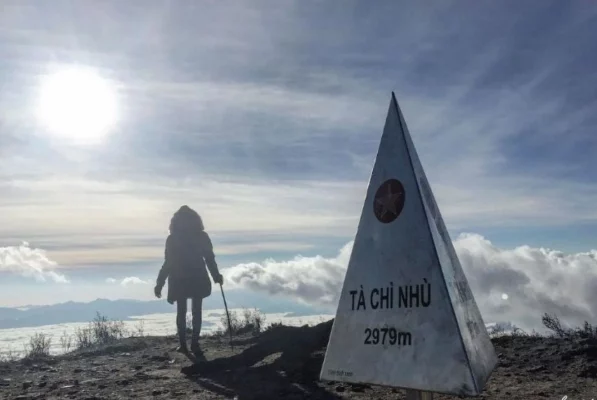
The trip is normally planned as an overnight trek rather than a quick sunrise stop. One local tourism source describes a two-day, one-night itinerary covering around 16 km round trip, noting that trails become more difficult in wet weather.
Suggested stay before or after the trek: Zoni Home Tram Tau, which offers private rooms and dormitory-style accommodation and is approximately 17 km from Ta Chi Nhu mountain according to the property. Check current rates directly for your dates.
Best for: Fit travelers whose priority is trekking and high-mountain scenery.
7. Tam Dao
For travelers short on time, Tam Dao is one of the easiest mountain escapes from Hanoi.
Tam Dao National Park is approximately 75 km from Hanoi, making the area accessible by private car, motorbike or transfer service.
Its elevation and cooler mountain climate create frequent mist and cloud, although visitors should remember that thick fog can sometimes obscure the view rather than produce a clear sea of clouds.
Suggested stay: Venus Hotel Tam Dao, located centrally in the resort town. Recent booking data has shown rates from approximately US$63 per night, although weekend prices may be higher.
Best for: Weekend travelers and people who want a cloud-hunting trip without a long journey from Hanoi.
8. Da Lat
Travelers in Southern Vietnam do not necessarily need to travel north to experience misty mountain mornings.
Da Lat is surrounded by elevated countryside, pine forests and agricultural hills where early-morning cloud hunting has become increasingly popular.
One of the best-known areas is Cau Dat, approximately 20–23 km from central Da Lat and around 1,650 metres above sea level. Early morning is the key time to visit, with many cloud-hunting trips departing the city before sunrise.
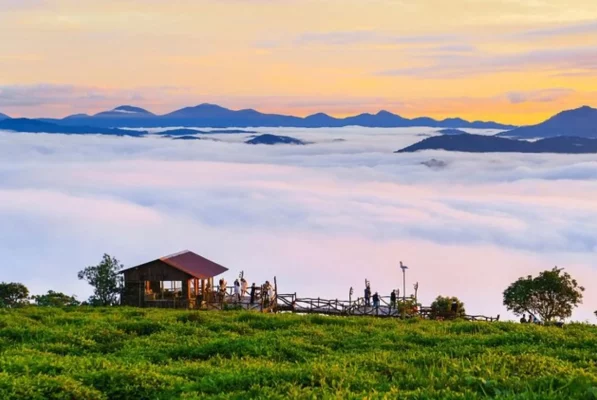
Travelers can reach the area by motorbike, taxi or private car.
Suggested stay: Cloud9 & Cloud View Glamping, where current Traveloka listings show prices starting from approximately US$38 per room per night.
Best for: Travelers exploring Southern Vietnam and those who prefer glamping or easy-access sunrise trips.
Which Cloud Hunting destination in Vietnam is best for you?
The right destination depends on what you want from the journey.
- Choose Ta Xua if seeing a classic sea of clouds is your main objective.
- Choose Hoang Su Phi and Nam Hong if you prefer to combine cloud hunting with trekking, terraced rice fields, local culture and several days of slow travel.
- Choose Chieu Lau Thi if you are already visiting Hoang Su Phi and want to add a higher mountain viewpoint.
- Choose Sapa if this is your first trip to Northern Vietnam and you want convenient tourism infrastructure.
- Choose Y Ty for a quieter and more remote journey.
- Choose Ma Pi Leng for a scenic road trip.
- Choose Ta Chi Nhu for a challenging trekking adventure.
- Choose Tam Dao for a short weekend escape from Hanoi.
- Choose Da Lat if your journey is focused on Southern Vietnam.
Where to stay for Cloud Hunting in Vietnam?
Accommodation can have a major impact on a cloud-hunting trip. Staying directly near a viewpoint allows you to wake up early and travel less before sunrise. However, remote mountain accommodation may offer fewer facilities.
Another option is to choose a comfortable base and incorporate cloud hunting into a longer journey. This is particularly relevant in Hoang Su Phi. Travelers can stay at Panhou Retreat, trek towards Nam Hong in search of morning clouds and spend the rest of the trip exploring terraced fields, villages and Red Dao culture.
The advantage is that the journey remains rewarding even when weather conditions are not perfect for cloud hunting.
Cloud Hunting Vietnam Itineraries
2 Days 1 Night: Ta Xua from Hanoi
Day 1: Hanoi → Ta Xua → mountain viewpoints → overnight stay
Day 2: Early cloud hunting → breakfast → return to Hanoi
Best for travelers whose primary objective is Ta Xua cloud hunting.
3 Days 2 Nights: Panhou Retreat and Nam Hong Cloud Hunting
Day 1: Hanoi → Panhou Retreat → check-in and rest
Day 2: Early trekking towards Nam Hong → cloud hunting depending on conditions → explore terraced rice fields and the Red Dao village → return to Panhou Retreat → herbal bath or massage
Day 3: Slow morning at Panhou Retreat → local experience → return to Hanoi
Travelers with more time can extend the journey into a two- or three-day trekking route around Nam Hong and nearby mountain villages.
3 Days 2 Nights: Panhou Retreat and Chieu Lau Thi
Day 1: Hanoi → Panhou Retreat
Day 2: Early departure by car towards Chieu Lau Thi → final hike to the summit → cloud hunting and mountain views → return to Panhou Retreat
Day 3: Relaxation or short local trek → Hanoi
Because Chieu Lau Thi is around 40 km from Panhou Retreat and involves mountain roads plus a walking section, it is better treated as a dedicated day excursion rather than combined with a long Nam Hong trek on the same day.
Tips for a better Cloud Hunting experience in Vietnam
- Check the weather two or three days before departure, but remember that mountain weather can change quickly.
- Wake up early. Many of the most memorable cloud formations appear around sunrise before warmer temperatures change the conditions.
- Ask local guides or your accommodation provider. They often have a better understanding of recent cloud and road conditions than a general weather app.
- Bring warm and waterproof clothing, especially at higher destinations such as Chieu Lau Thi, Y Ty and Ta Chi Nhu.
- Never prioritize a photograph over road safety. Heavy fog can severely reduce visibility on mountain passes.
- Most importantly, choose a destination where there is more to experience than clouds alone.
FAQ
1. What is the best cloud hunting Vietnam season?
Northern Vietnam generally offers good cloud-hunting opportunities from autumn through early spring, but the ideal months vary by destination. Ta Xua is particularly popular from January to March, while Y Ty’s cloud season is commonly considered to run from September to April.
2. Where is the best cloud hunting in Vietnam?
Ta Xua is one of the best-known choices for a classic sea of clouds. Hoang Su Phi offers a more immersive alternative combining Nam Hong trekking, rice terraces and local culture, while Chieu Lau Thi provides a higher mountain experience.
3. How far is Ta Xua from Hanoi?
The journey is generally treated as a multi-hour mountain drive from Hanoi, and most travelers plan at least one overnight stay rather than attempting a same-day return.
4. Where can I combine cloud hunting with trekking?
Nam Hong in Hoang Su Phi is an excellent option for travelers who want to combine cloud hunting with village and rice-terrace trekking. You can stay at Panhou Retreat and choose a day trek or a longer two- to three-day trekking journey.
5. How far is Chieu Lau Thi from Panhou Retreat?
Panhou Retreat lists Chieu Lau Thi at approximately 40 km from the property, followed by around 800 metres of walking to reach the peak area.
6. How cold is Chieu Lau Thi?
Conditions vary considerably throughout the year and even during a single day. Because the summit is around 2,400 metres high, it is significantly cooler than lower valleys. During severe winter cold spells, temperatures have reached approximately 0°C and frost has formed around the summit.
7. Can I see clouds in Nam Hong?
Nam Hong’s mountainous terrain offers opportunities to encounter morning clouds, especially under suitable weather conditions. However, no destination can guarantee a sea of clouds on a specific day.
8. How many days should I spend on a cloud-hunting trip?
Two days are enough for destinations such as Ta Xua or Tam Dao. Three days or more are better for Hoang Su Phi, particularly if you want to combine Nam Hong cloud hunting with trekking, local experiences and time to relax.

3D2N NATIONAL DAY OFFER | JOURNEY INTO GREEN SEASON
From 125 USD/Guest/Combo
3D2N GOLDEN SEASON IN HOANG SU PHI
From 114 USD/Guest/Combo