Decoding the Red Dao Bell Dance: A Cultural Heritage Revived at Panhou Retreat This April 30 Holiday
| ExperiencesAmid the mountains of Hoang Su Phi, the Bell Dance and Bamboo Dance are not merely folk performances, but distinctive cultural symbols reflecting the spiritual life of the Red Dao people – where belief and community intertwine. The Bell Dance (Púa Chu) carries a sacred meaning, as each chime resonates like an invitation for ancestors and deities to witness the sincerity of their descendants. Meanwhile, the Bamboo Dance embodies the vibrant rhythm of village life, where people connect through coordinated steps and shared laughter, creating a cultural space that feels both intimate and full of vitality.
At Panhou Retreat, these dances are not staged performances, but an integral part of an immersive cultural journey, allowing guests to understand the philosophy of life and the deep-rooted gratitude of the Red Dao community toward their origins.
Bell Dance (Púa Chu) – A Sacred Connection Between Spirit and Ancestors
Origin and symbolic meaning
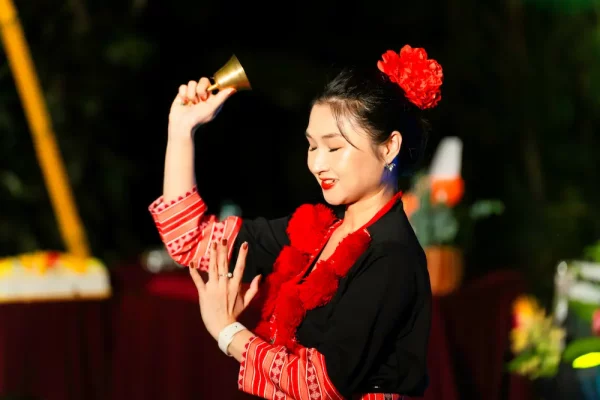
The Bell Dance, known as Púa Chu in the Dao language, originates from rituals dedicated to Ban Vuong, the ancestral founder of the Dao people. For the local community, the sound of bronze bells is not merely music; it is a spiritual language.
Each rhythmic chime, synchronized with deliberate footsteps, is believed to dispel negative energies, purify the space, and guide ancestral spirits to return and join the community in celebration.
Performance art and instruments
The main prop of the dance is a set of small handheld bronze bells. The performers, often male or experienced village artisans, coordinate their hands, feet, and body movements with precision and fluidity. Each step is both decisive and graceful, creating a continuous and vibrant sequence of sounds.
At Panhou Retreat, guests can also admire the intricately embroidered costumes worn by the performers, highlighted by the signature red color symbolizing fire and the enduring vitality of the Red Dao people in the mountains.
Alongside the sacred Bell Dance, guests may also experience the elegance of the traditional scarf dance. This performance reflects the beauty, skill, and emotions of Red Dao women. The hand-embroidered brocade scarf becomes the soul of the dance, telling stories of love and daily life. Through each movement, the viewer can sense a graceful, modest, yet deeply vibrant feminine spirit of the highlands.
Bamboo Dance – A Must-Try Community Experience
The Bamboo Dance, also known as “múa sạp,” is a traditional folk dance performed with rhythmic bamboo poles, vividly reflecting the labor and spirit of the Red Dao community. Unlike in other regions, the bamboo dance in Hoang Su Phi carries a strong ritual element, often appearing during important ceremonies such as the coming-of-age ritual, harvest celebrations, or communal gatherings that strengthen unity and wish for prosperity.
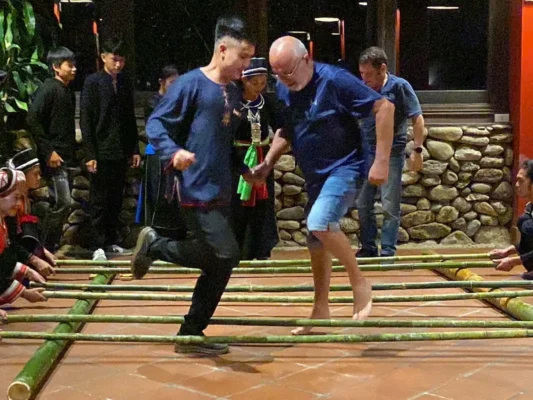
This dance requires perfect coordination between the “pole keepers” and the dancers. Such harmony symbolizes solidarity and mutual support in the challenging conditions of mountainous life. It also acts as a natural form of emotional release, helping individuals overcome isolation and rediscover a sense of belonging within a community.
Cultural Experiences at Panhou Retreat – Healing Through Heritage
Within the lush greenery of ancient forests and herbal gardens at Panhou Retreat, the sound of traditional Pí Lè horns and bronze bells creates a unique space for emotional and sensory healing. Rather than commercial performances, Panhou focuses on preserving authentic cultural expressions.
Guests staying during special occasions such as Hung Kings’ Commemoration Day or Reunification Day (April 30) will have the opportunity to:
- Witness Red Dao artisans performing rituals in open natural settings, surrounded by misty mountain landscapes
- Learn about cultural knowledge deeply connected to the daily lives of the performers
- Experience the slow passage of time while immersing themselves in the peaceful rhythm of local life
Engaging with these heritage dances allows guests to release stress, awaken curiosity and empathy, and naturally return to a balanced and tranquil state of mind.
FAQ
1. What is the significance of the Bell Dance for the Red Dao people?
It is an important intangible cultural heritage that connects people with their ancestors and the spiritual world, reflecting a way of life deeply rooted in nature.
2. What does the Bell Dance (Púa Chu) represent?
It is a ritual of gratitude toward ancestors, using the sound of bronze bells to dispel negative energies, purify the space, and invite deities to witness human sincerity.
3. What message does the Bamboo Dance convey?
The dance requires collective participation – from those controlling the bamboo poles to the dancers and the audience. Its core message is community spirit, where everyone moves in harmony to create shared joy.
4. What makes experiencing these dances at Panhou Retreat unique?
They are not commercial performances. Instead, they take place in natural settings and retain their authenticity, allowing guests to genuinely connect with local culture.
5. Why is this experience considered healing?
The combination of sound, rhythm, and the surrounding mountain environment helps reduce stress, strengthen the connection with nature, and bring the mind back to a calm and balanced state.

3D2N NATIONAL DAY OFFER | JOURNEY INTO GREEN SEASON
From 125 USD/Guest/Combo
3D2N GOLDEN SEASON IN HOANG SU PHI
From 114 USD/Guest/Combo