Fire Festival Ha Giang: When & Where To See It Clearly
| ExperiencesRed Dao fire festival Ha Giang is a topic that often causes confusion when travelers explore northern highland culture. The famous Ha Giang fire jumping festival recognized as national cultural heritage belongs to the Pa Then ethnic community.
Meanwhile, Red Dao communities also practice sacred fire-related rituals connected with ancestral beliefs, spiritual protection and traditional ceremonies. Understanding the differences between these traditions helps travelers appreciate each community and approach local rituals with greater respect.
Which ethnic group does the Ha Giang fire festival belong to?
This question requires clarification because online information often confuses the traditions of different ethnic communities in northern Vietnam. The well-known Ha Giang fire jumping festival recognized as national intangible cultural heritage belongs to the Pa Then people.
Pa Then communities mainly live in Quang Binh, Bac Quang and several neighboring areas around the northern highlands. Their festival is famous for images of young men stepping barefoot into glowing embers during an extraordinary spiritual ceremony.
Red Dao communities in Ha Giang and Dien Bien also maintain traditional rituals involving fire and ancestral spiritual practices. However, these rituals are often connected with the Cap Sac ceremony, Lunar New Year or other important community occasions.
They may symbolize spiritual maturity, ancestral protection and the transmission of traditional religious knowledge between generations. Therefore, the Red Dao fire festival Ha Giang should not automatically be understood as the Pa Then public fire festival. The two traditions share certain spiritual elements but differ significantly in ethnic origin, ceremonial context and organization.
When does the fire festival Ha Giang take place?
The Pa Then fire festival usually takes place between the sixteenth day of the tenth lunar month and mid-January. This period begins after the main harvest, when agricultural work slows and the northern highlands enter the colder season.
The community organizes the ceremony to thank heaven and spiritual forces while praying for peace and prosperity. There is no single date applied to every Pa Then village, family or community where the festival takes place. The ritual master usually helps select an appropriate date, meaning schedules may change between different locations and years.
When do Red Dao fire rituals take place?
For the Red Dao, fire-related rituals do not always follow the same seasonal schedule as the Pa Then festival. They are often connected with Cap Sac ceremonies, which may take place during winter or early Lunar New Year.
The exact date usually depends on an auspicious day selected by each family and the local ritual master. Therefore, travelers should understand that some traditional Red Dao festival practices remain connected with individual families or lineages. These ceremonies are not necessarily public events with fixed annual schedules or permanent access for outside visitors.
The meaning of fire dancing rituals
Fire rituals across northern Vietnam share several similarities, although their cultural meanings vary between different ethnic communities. Fire is often associated with supernatural power, spiritual protection, courage and the connection between people and unseen forces.
For the Pa Then, fire jumping traditionally expresses gratitude after harvest and prayers for a peaceful new year. The ritual also reflects hopes of driving away evil spirits, illness and misfortune from families and communities.
For the Red Dao, fire-related rituals may carry meanings of purification, spiritual protection and connection with ancestral beliefs. Within Cap Sac ceremonies, these traditions can also mark an important stage in a man’s spiritual and cultural maturity.
The Red Dao fire dance should therefore be understood within its specific cultural and ceremonial context. It is not simply a dramatic performance created for entertainment or for tourists visiting the northern mountains.
Opening ritual: Inviting the spirits to witness the ceremony
The Red Dao fire ritual begins with a ceremony asking permission from deities and ancestors before fire dancing starts. A ritual master leads the worship and performs traditional prayers according to the spiritual customs of the Red Dao.
In front of the large fire, he recites prayers in the Red Dao language during the sacred ceremony. He asks for spiritual protection and calls the names of each young man who will participate in fire dancing. Offerings are carefully prepared on a long wooden table placed near the main area of the ceremony.
They commonly include boiled chicken, white rice, ritual paper money, rice wine, water, incense and ceremonial candles. These offerings carry important spiritual meanings within the traditional beliefs and religious practices of the Red Dao community.
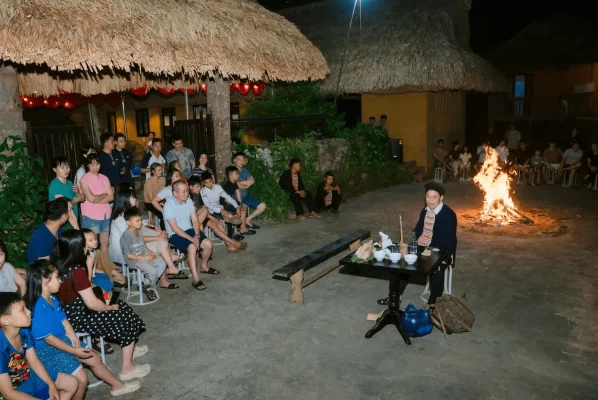
During the ceremony, participating young men sit quietly on low benches positioned in front of the burning fire. They close their eyes, place their hands on their knees and remain deeply focused throughout the waiting period.
According to traditional belief, they are waiting for deities and ancestors to return and witness the sacred ritual. The participants believe these spiritual forces provide strength before they enter the most intense part of the ceremony.
This opening is considered one of the most sacred and solemn moments of the entire Dao fire dancing ceremony. Visitors should remain respectful, avoid unnecessary noise and always follow instructions provided by members of the local community.
How does the fire dancing moment happen?
Who can take part in the fire dancing?
Participants in Red Dao fire rituals are usually men from the community who have completed the required worship ceremony. They are believed to have received spiritual permission or strength before approaching and entering the burning embers.
Not everyone attending the ceremony is allowed to participate directly in the Red Dao fire dance. Visitors should never attempt the ritual themselves for excitement, photography or the desire to experience something adventurous. Fire dancing remains a sacred community tradition and should always be approached according to local spiritual customs.
Conditions and taboos before joining the ritual
Before participating, the selected men must keep their bodies and clothing clean according to traditional Red Dao beliefs. This preparation demonstrates respect and spiritual devotion toward the deities and ancestors honored during the ceremony.
Male participants traditionally avoid marital intimacy for approximately three days to one week before the ritual begins. Clothing worn during fire dancing must remain clean and free from grease, dirt or easily flammable substances. Before the ceremony, participants also bathe carefully to cleanse their bodies according to Red Dao spiritual traditions.
The preparation process forms an important part of the discipline surrounding the Red Dao fire jumping ritual. Fire dancing is a sacred ceremony and never an adventure activity available for everyone attending the event. Visitors should never step onto burning embers or imitate participants without explicit permission from the local community.
The fire dancing moment – “put tong”
When the ritual master’s final prayers are completed, the atmosphere gradually becomes more energetic, mysterious and spiritually intense.
According to Red Dao belief, deities and ancestors may provide spiritual strength to the young men participating. The participants may begin shaking and moving strongly when they are believed to have received this spiritual power.
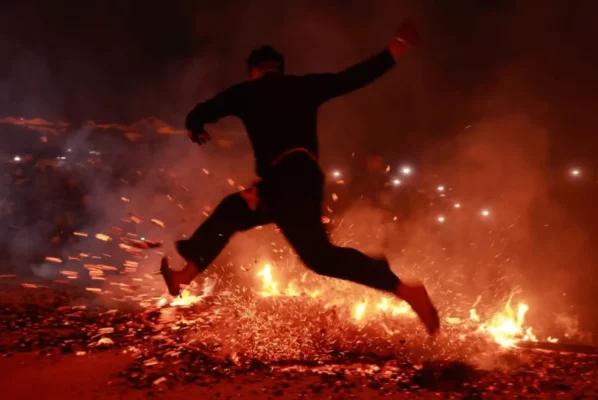
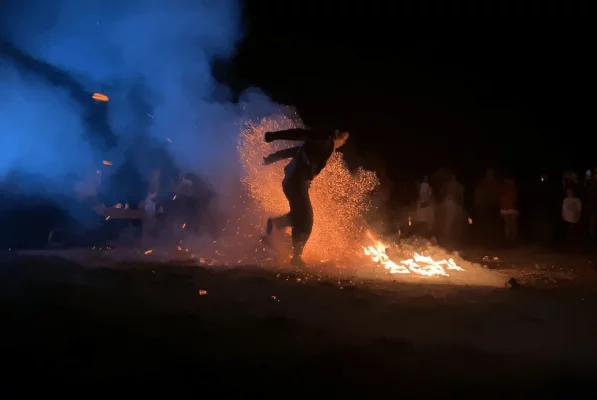
As drums, gongs and community cheers intensify, barefoot participants move toward the glowing embers in front of them. They dance across the burning coals and sometimes scoop glowing embers before throwing them upward into the night. Some participants may also scatter the hot embers around their bodies during this dramatic moment of the ceremony.
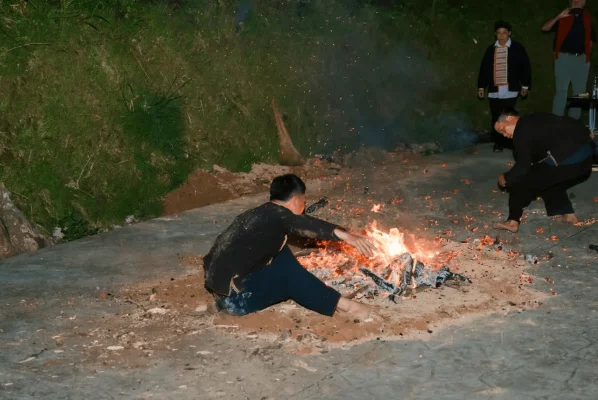
This special practice is described as “bathing in fire”, traditionally known among the community as “put tong”. Glowing embers flying through the darkness create a spectacular scene resembling bright flowers blooming against the night sky.
The moment represents courage, spiritual strength and the deep beliefs maintained within generations of the Red Dao community. These beliefs remain closely connected with ancestors, deities and the spiritual world surrounding traditional Red Dao life. Participants may appear to finish the ritual without obvious injuries after moving through the intensely heated embers.
However, the Red Dao fire jumping ritual still involves real flames and extremely hot burning materials. The ceremony can therefore be dangerous, and visitors should never attempt to imitate the participants under any circumstances.
Where can travelers see fire dancing in Ha Giang?
The famous Pa Then fire festival is traditionally associated with Tan Bac commune in the Quang Binh area. Similar Pa Then cultural activities may also take place in neighboring communities across the surrounding northern highland region.
The festival has a strong community character and may occasionally welcome visitors during organized local cultural events. Red Dao fire rituals, particularly those connected with Cap Sac ceremonies, are generally more family-oriented and spiritually private.
Therefore, outside visitors may not always receive permission to freely observe, photograph or record every traditional ceremony. Travelers should contact local guides, village hosts or accommodation providers before visiting communities specifically to observe spiritual rituals.
Anyone researching the Red Dao fire dancing festival should understand that public access cannot always be guaranteed. Likewise, travelers searching for fire dancing in Hoang Su Phi should confirm local arrangements before planning their journey.
Respecting community decisions is essential when approaching rituals connected with ancestors, spiritual beliefs and sacred ceremonial spaces.
Experiencing Red Dao culture at Panhou Retreat
Panhou Retreat is located in Hoang Su Phi, an area renowned for terraced rice fields and diverse ethnic communities. Among these communities are the Red Dao, whose cultural life includes distinctive customs, spiritual beliefs and traditional practices.
From the retreat, travelers can combine trekking, village visits and cultural exploration at a slower, more meaningful pace. These experiences provide valuable context for travelers interested in learning more about Red Dao rituals in Vietnam.
When attending spiritual ceremonies or activities associated with Cap Sac traditions, visitors should always show appropriate respect. Travelers should follow local instructions carefully to avoid unintentionally disturbing sacred spaces or important ceremonial activities.
Panhou Retreat can help connect guests with local guides who understand regional traditions, customs and community culture. With appropriate local guidance, travelers can move beyond simple observation and gain deeper understanding of traditional rituals.
The experience also encourages visitors to recognize that fire dancing in Hoang Su Phi belongs within a broader cultural landscape. It is connected with community memory, ancestral beliefs and generations of traditions maintained throughout the northern mountains.
Why the Red Dao fire dance matters for cultural tourism
The Red Dao fire dance attracts attention because its visual impact can be powerful, dramatic and unforgettable. However, the real value of the ritual lies in the spiritual beliefs and cultural traditions surrounding the fire.
Responsible cultural tourism should allow local communities to decide when and how their sacred traditions are shared. Visitors can contribute by choosing knowledgeable local guides, respecting community boundaries and asking thoughtful questions about local customs.
They should also understand that some ceremonies may remain private and unavailable to tourists at certain times. When approached respectfully, the Red Dao fire festival Ha Giang topic offers valuable insights into highland spiritual traditions.
Understanding the difference between Pa Then fire jumping and Red Dao rituals also prevents cultural traditions from being incorrectly combined. Meaningful cultural travel is not only about witnessing extraordinary scenes but also understanding the people behind those traditions.
FAQ
1. When does the Ha Giang fire festival take place?
The Pa Then fire festival usually occurs between the sixteenth day of the tenth lunar month and mid-January. This period follows the harvest season, when agricultural activities slow and communities have more time for traditional ceremonies.
Red Dao fire rituals may occur during winter or early Lunar New Year, often alongside important Cap Sac ceremonies. Exact dates depend on individual families, lineages, local customs and the decisions made by ritual masters.
2. Which ethnic group does the Ha Giang fire festival belong to?
The famous Ha Giang fire jumping festival recognized as intangible cultural heritage belongs to the Pa Then ethnic community. The Red Dao also maintain separate fire-related rituals, although these are often associated with Cap Sac ceremonies.
The two traditions share certain spiritual elements but remain different in cultural origin, meaning and ceremonial context. Therefore, the term Red Dao fire festival Ha Giang should be used carefully when describing these traditions.
3. Who can participate in the Red Dao fire dance?
The Red Dao fire dance is generally performed by selected men after completing the required spiritual ceremony.
Participants follow the ritual master’s guidance and observe traditional preparation rules before approaching the burning embers.
Visitors should never participate without explicit permission and guidance from the community responsible for organizing the ritual.
4. Is the Red Dao fire jumping ritual dangerous?
The Red Dao fire jumping ritual involves real flames and burning embers, making it potentially dangerous for unprepared participants.
Only individuals following the community’s traditional preparations and ceremonial guidance should participate directly in the ritual. Visitors should remain at a safe distance and never attempt to copy what they see during the ceremony.
5. Where can travelers learn about fire rituals in Ha Giang?
The Pa Then fire festival is traditionally associated with communities around Tan Bac and the Quang Binh area. For Red Dao ceremonies, travelers should ask local guides or accommodation providers before visiting a village or private ritual.
Panhou Retreat in Hoang Su Phi offers a suitable starting point for travelers interested in exploring highland cultural traditions. Through local connections, visitors can better understand Red Dao rituals in Vietnam while respecting community customs and sacred spaces.
Conclusion: Understanding the sacred fire traditions of Ha Giang
Ha Giang’s famous fire jumping festival is an important cultural tradition associated primarily with the Pa Then community. It generally takes place between the tenth lunar month and mid-January, after the main agricultural harvest has ended.
The Red Dao also maintain their own fire-related traditions, particularly within Cap Sac and other important spiritual ceremonies. These rituals carry different meanings and are often more closely connected with individual families, lineages and ancestral beliefs.
The Red Dao Fire Dancing Festival should therefore be understood carefully within the specific traditions of each community. Regardless of which tradition travelers explore, every ritual should be approached with patience, understanding and genuine cultural respect.
Learning about the community beforehand allows visitors to experience highland traditions more responsibly, meaningfully and safely. Panhou Retreat in Hoang Su Phi provides a peaceful starting point for discovering Red Dao culture and northern highland life. Here, the journey can extend beyond observation toward a deeper understanding of local people, beliefs and living traditions.

3D2N NATIONAL DAY OFFER | JOURNEY INTO GREEN SEASON
From 125 USD/Guest/Combo
3D2N GOLDEN SEASON IN HOANG SU PHI
From 114 USD/Guest/Combo