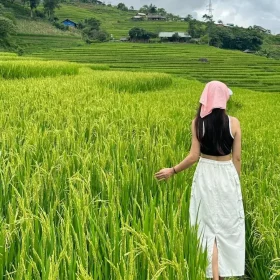
Ha Giang Loop In August: Best Travel Guide
| ExperiencesThe Ha Giang Loop in August rewards travelers with majestic mountains, lush rice fields, and layers of clouds drifting through deep valleys. Summer rainfall brings northern Vietnam’s forests, waterfalls, and farmland to life. However, the Ha Giang Loop August weather can be unpredictable because August falls within the rainy season. Travelers should prepare for sudden showers, dense fog, slippery roads, and rapidly changing visibility across high mountain passes.
Is August a good time to do the Ha Giang Loop?
Yes, August can be a good time to complete the Ha Giang Loop, especially for travelers who enjoy green landscapes. The mountains, rice valleys and roadside vegetation appear particularly vivid after the summer rains.
The official Vietnam tourism website describes July and August in Ha Giang as potentially very hot, with regular monsoon conditions. This means beautiful scenery often comes with unpredictable rain, humidity and changing road conditions.
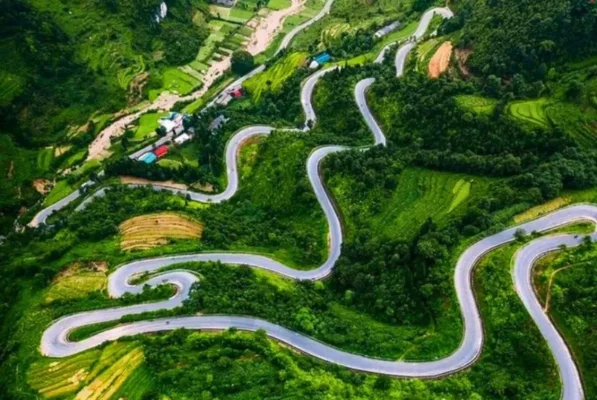
August is not the easiest month for first-time motorbike riders who want consistently dry roads. It is better suited to travelers prepared to slow down, change plans and wait for difficult weather to pass.
A four-day itinerary is generally more suitable than a rushed three-day journey during this period. Extra time allows riders to leave later when fog clears or stop earlier during heavy rain.
Who should visit the Ha Giang Loop in August?
August suits travelers who appreciate green rice fields, misty mountains and powerful waterfalls. It also appeals to photographers seeking dramatic clouds and changing light after summer showers.
The month works well for visitors who can maintain a flexible schedule without fixed sightseeing times. Travelers should be comfortable removing attractions when road or weather conditions become unsuitable.
People joining an organized tour can also enjoy August without driving independently. An experienced local driver understands mountain roads and can adjust the journey when conditions change.
Who may prefer another month?
Travelers seeking dry roads, clear skies and uninterrupted mountain views may prefer the cooler autumn months. September through November generally brings more comfortable conditions to Ha Giang, although popular destinations may become busier.
August may also be unsuitable for inexperienced riders attempting their first mountain motorbike journey. Wet roads require controlled braking, careful cornering and confidence when visibility falls.
Families with young children or elderly relatives may prefer a private car with a driver. This provides greater protection from rain while reducing physical strain during long mountain journeys.
Ha Giang Loop August weather: What should travelers expect?
The Ha Giang Loop August weather is generally warm, humid and influenced by the northern summer monsoon. Rain may arrive as short afternoon showers, evening thunderstorms or longer periods of unsettled weather.
Conditions vary considerably between Ha Giang City, Quan Ba, Yen Minh, Dong Van and Meo Vac. Lower valleys can feel hot and humid, while mountain passes become cooler during rain or heavy fog.
Weather can also differ across nearby districts on the same day. Travelers should therefore check the forecast before each stage rather than relying only on monthly averages.
Temperature in August
Daytime conditions are usually warm to hot, particularly around Ha Giang City and lower valleys. Direct sunlight and high humidity can make midday riding feel more tiring than the temperature suggests.
Dong Van, Meo Vac and high sections of the Loop are generally cooler than the city. Temperatures may fall noticeably when rain begins or clouds cover the mountains.
Travelers should wear lightweight clothing during the day and carry a windproof or waterproof jacket. A thin outer layer is particularly useful on exposed passes and during early morning departures.
Rainfall and thunderstorms
August falls within northern Vietnam’s active rainy season, so regular monsoon rainfall should be expected. However, this does not necessarily mean continuous rain across the entire Loop every day.
Some showers pass quickly and leave brighter skies behind. Other weather systems may bring prolonged rain that affects several sections of the route.
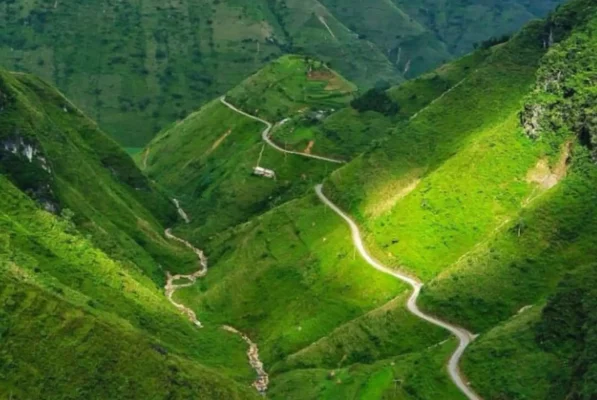
Rainfall is especially important because it changes road conditions immediately. Painted surfaces, loose gravel, mud and leaves can become slippery even during a relatively short shower.
Travelers should never assume that morning sunshine guarantees dry weather for the remaining journey. Waterproof equipment should remain accessible instead of being packed at the bottom of a bag.
Fog and visibility on mountain passes
Fog can gather around Quan Ba, Yen Minh, Dong Van and Ma Pi Leng Pass. Visibility may change quickly as clouds move through valleys and across exposed mountain roads.
Mist creates atmospheric photography conditions, but it also hides approaching vehicles, bends and roadside obstacles. Riders should reduce speed, increase following distance and avoid overtaking when visibility becomes poor.
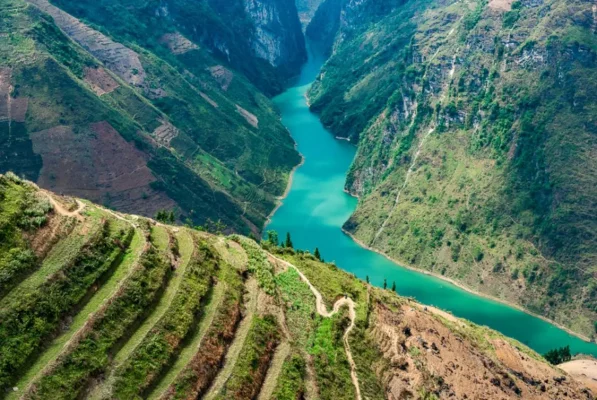
Ma Pi Leng is one of Ha Giang’s most famous mountain sections, rising above dramatic valleys and the Nho Que River. Its spectacular scenery should never encourage travelers to stop at unsafe corners or narrow road edges.
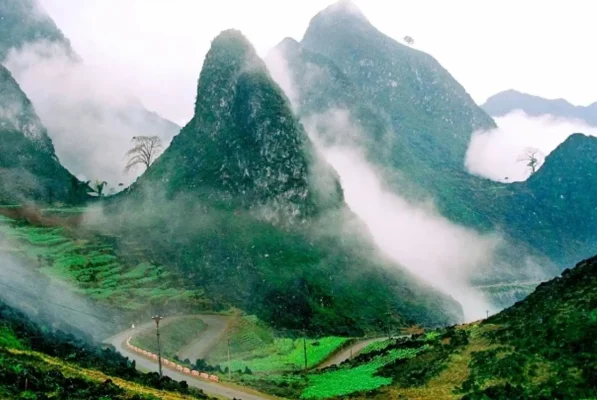
Ha Giang Loop August weather overview
| Weather factor | Typical August conditions | Possible travel impact |
|---|---|---|
| Daytime temperature | Warm or hot in lower valleys | Sun protection and regular hydration are necessary |
| Rainfall | Frequent showers or summer thunderstorms | Roads and walking trails may become slippery |
| Humidity | Generally high | Clothes dry slowly and physical activity feels harder |
| Fog | Possible around high passes and mountain valleys | Visibility can fall within a short period |
| Landscape | Green rice fields, forests and mountains | Excellent scenery for summer photography |
| Road conditions | Variable after heavy rain | Routes may require delays or adjustments |
Early, mid or late August: When should you go?
Weather patterns cannot be predicted reliably using fixed ten-day periods. Nevertheless, understanding the seasonal landscape can help travelers choose an appropriate travel style.
Early August
Early August usually presents deeply green rice fields and dense vegetation throughout the mountain valleys. The summer monsoon remains active, so regular rain and high humidity are possible.
Travelers should leave room for delayed departures and slower driving. A tightly scheduled three-day Loop may become stressful when visibility or road conditions change.
Mid-August
By mid-August, rivers, streams and waterfalls often carry substantial summer water. The landscape can appear exceptionally lively, especially after rainfall followed by clearer skies.
However, visitors should avoid approaching waterfalls or fast-moving rivers during heavy rain. Water levels and currents may change quickly in mountainous terrain.
Late August
Toward late August, some rice fields may begin changing color depending on elevation and local planting schedules. Nevertheless, travelers should not expect every valley to enter the golden season simultaneously.
Hoang Su Phi generally offers more extensive terraced rice landscapes than the eastern Ha Giang Loop. Visitors interested in seasonal rice photography should request recent local updates before finalizing their route.
Why is the Ha Giang Loop still worth visiting in August?
August presents challenges, but it also reveals a particularly vibrant side of Ha Giang. Rain transforms limestone mountains, forests and farming valleys into layered green landscapes.
Mountains and rice fields at their greenest
Summer rain nourishes rice fields and vegetation across the region. Valleys become greener, while fields create softer contrasts against the grey limestone mountains.
The eastern Loop contains smaller rice valleys between karst formations and villages. Travelers seeking vast terraced landscapes can later continue toward Hoang Su Phi.
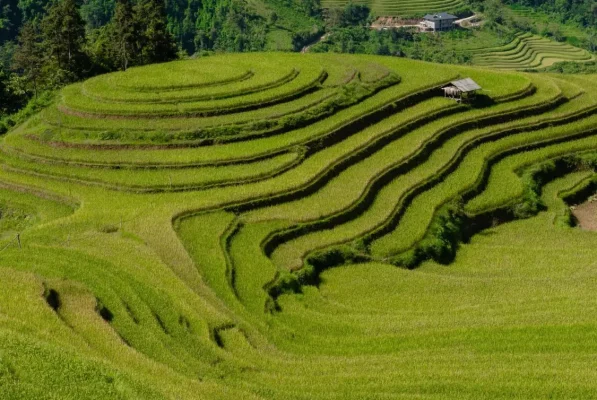
Dramatic clouds and mist after rain
After a shower, clouds frequently rise from the valleys and separate into layers around mountain ridges. This creates changing views that cannot always be experienced during consistently dry weather.
Photographers should remain patient at safe viewpoints rather than moving constantly in search of clearer skies. A valley hidden by fog may become visible after only a short wait.
Camera bags, phones and lenses require waterproof protection. High humidity can affect equipment even when rainfall is brief.
Waterfalls and rivers become more powerful
Summer rainfall increases the volume of many streams and waterfalls along the journey. These natural features can look more dramatic than during the dry season.
The Nho Que River and Tu San Canyon also provide one of the Loop’s most impressive perspectives. Vietnam’s official tourism website highlights the turquoise river beneath the rock walls surrounding Ma Pi Leng Pass.
Boat services and access roads may be affected after severe rainfall. Travelers should confirm local operating conditions before descending toward a pier.
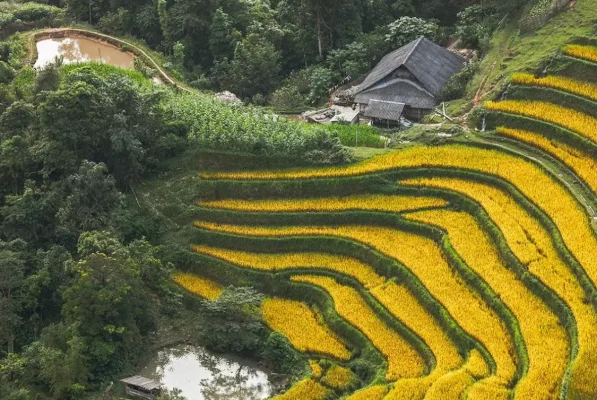
A slower and more meaningful journey
August encourages travelers to spend longer in each destination rather than rushing between viewpoints. An additional night in Dong Van or Meo Vac can reduce daily riding pressure.
Rainy periods also create time to visit markets, old houses, weaving villages and local restaurants. These experiences reveal more about Ha Giang than its mountain roads alone.
Best places to visit on the Ha Giang Loop in August
The Loop connects diverse mountain landscapes, communities and cultural attractions. August visitors should prioritize locations that remain enjoyable even when distant views become temporarily hidden.
Quan Ba Heaven Gate and the Twin Mountains
Quan Ba is often the first major mountain destination after leaving Ha Giang City. Heaven Gate offers views across valleys and limestone scenery when the fog clears.
The Twin Mountains are another recognizable landmark in the district. August greenery adds depth and color to the surrounding farmland.
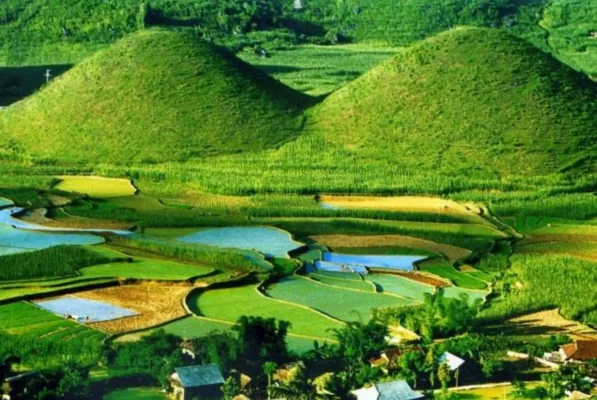
Travelers should use designated parking areas and avoid stopping directly on narrow road sections. Morning fog may delay panoramic views, so a flexible schedule remains helpful.
Yen Minh and its mountain valleys
Yen Minh provides a natural resting point between Quan Ba and Dong Van. Its valleys, forests and villages create a gentler transition toward the rocky plateau.
Staying overnight in Yen Minh can reduce the amount of riding required during uncertain weather. It also prevents travelers from pushing toward Dong Van after darkness.
Dong Van Karst Plateau
The Dong Van Karst Plateau is recognized as a UNESCO Global Geopark. Its geological history extends for more than 550 million years and includes important sedimentary, igneous and metamorphic formations.
The landscape is defined by limestone peaks, narrow valleys and communities adapted to difficult mountain terrain. Visitors can combine geological scenery with Dong Van Old Quarter and surrounding villages.
A night in Dong Van allows travelers to explore the town after completing the day’s mountain journey. It also provides greater flexibility when fog delays the next morning’s departure.
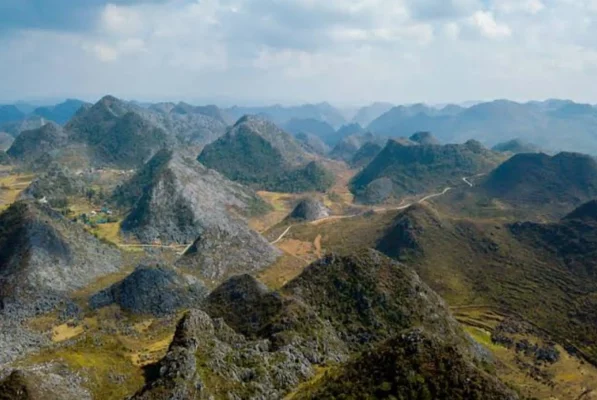
Ma Pi Leng Pass
Ma Pi Leng Pass is one of the most dramatic sections of the Ha Giang Loop. The road curves above deep valleys, limestone walls and the Nho Que River.
Clear conditions reveal expansive views, while clouds can transform the landscape within minutes. Riders should slow down and avoid stopping at blind bends or narrow edges.
The pass reaches approximately 1,500 metres in elevation, according to Vietnam’s official tourism information. High elevation contributes to cooler conditions and rapidly changing visibility.
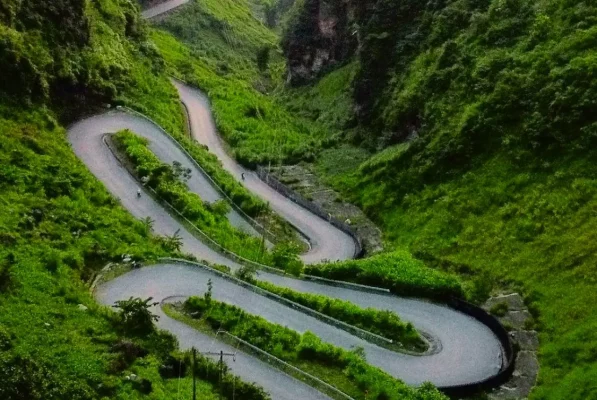
Nho Que River and Tu San Canyon
A boat trip on the Nho Que River offers a low-angle view beneath the cliffs of Tu San Canyon. The experience contrasts with the high viewpoints along Ma Pi Leng.
Travelers should confirm boat schedules, road access and local weather before leaving Dong Van or Meo Vac. Heavy rain may affect both the descent and boat operations.
Life jackets should remain securely fastened throughout the journey. Families should request suitable sizes for children before boarding.
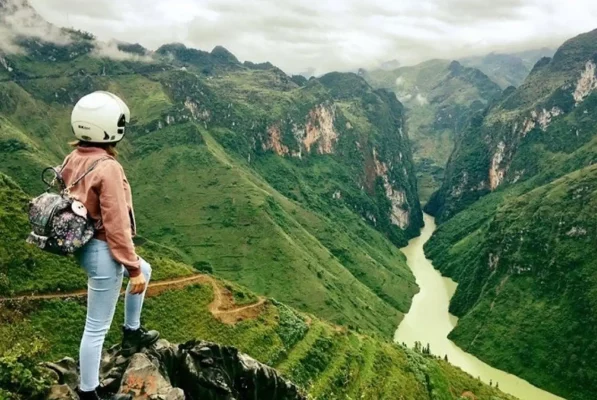
Meo Vac and surrounding villages
Meo Vac is surrounded by striking valleys, mountain roads and culturally diverse communities. It is a suitable overnight destination after crossing Ma Pi Leng.
Visitors can explore local food, markets and nearby villages instead of immediately returning toward Ha Giang City. This slower rhythm is particularly valuable during unpredictable August weather.
Lung Tam Linen Village
Lung Tam offers an opportunity to learn about traditional Hmong linen production. The experience includes local knowledge surrounding hemp preparation, weaving and textile decoration.
A cultural stop works particularly well when rain makes long outdoor viewpoints less appealing. Purchasing directly from local producers can also support community livelihoods.
What are road conditions like in August?
Road conditions represent the most important consideration for an August journey. Even an experienced rider should adjust speed and distance after rainfall.
Slippery mountain surfaces
Mountain roads can become slippery because of water, leaves, mud and loose gravel. Painted road markings may also offer less grip when wet.
Riders should brake before entering bends instead of braking suddenly while turning. Keeping a greater distance provides additional time to react to obstacles.
Waterproof gloves should still allow riders to operate the brakes and controls comfortably. Oversized rainwear should not hang near wheels or moving components.
Fog and loose rocks
Fog reduces the ability to judge bends, oncoming traffic and road width. Riders should use appropriate lights while maintaining a controlled speed.
Heavy rain may also wash small stones onto the road. Travelers should never assume that a familiar section remains unchanged after a storm.
Recording videos while operating a motorbike creates additional risk. Travelers should stop completely at a safe location before using phones or cameras.
Landslides and temporary closures
Mountain roads can be affected by landslides, rockfall or temporary closures following prolonged rain. Conditions may change faster than general travel articles can be updated.
Accommodation staff, guides and drivers often have more recent local information. Travelers should consult them before beginning each stage of the Loop.
A barrier, warning sign or official closure should never be ignored. Completing the planned route is less important than avoiding an unstable road.
When should you delay or cancel the ride?
Travelers should delay the journey during prolonged heavy rain, severe thunderstorms or extremely low visibility. They should also stop when local authorities report landslides, flash floods or road closures.
The journey should not continue when the rider feels exhausted, unwell or unable to control the motorbike confidently. Alcohol must never be combined with mountain riding.
Arriving later than planned is safer than forcing a schedule through dangerous conditions. A missed attraction can be replaced, while road safety cannot.
Self-riding or Easy Rider in August?
Choosing the correct transport option significantly influences safety and enjoyment during August.
| Option | Main advantages | Limitations | Best suited for |
|---|---|---|---|
| Self-riding | Greater freedom and personal control | Requires legal documents and mountain experience | Experienced and confident riders |
| Easy Rider | Local driver manages difficult roads | Less control over riding style and schedule | First-time visitors and non-riders |
| Private car | Better protection from rain | Cannot access every narrow village road | Families and comfort-focused travelers |
| Small guided group | Route support and shared logistics | Quality differs between operators | Travelers seeking structured support |
When is self-riding appropriate?
Self-riding is appropriate only for travelers with valid documents, suitable insurance and genuine mountain experience. City riding experience alone does not prepare someone for wet, steep and foggy roads.
Riders should understand controlled braking, cornering and safe following distances. They must also be willing to stop when conditions exceed their ability.
The official Vietnam tourism website recommends motorcycle rental for experienced drivers and notes that tours by motorbike or private car are alternatives.
Why an Easy Rider may be safer in August
An Easy Rider knows local bends, road surfaces and common stopping points. Experienced drivers can also respond more confidently when rain or fog appears.
Travelers can focus on the landscape instead of controlling the motorcycle. However, they should still select an operator that provides quality helmets and prioritizes safe speeds.
Guests should ask about insurance, protective equipment, luggage arrangements and daily riding hours before booking. The cheapest option may not provide the strongest safety standards.
What to wear on the Ha Giang Loop in August
Clothing should protect travelers from heat, rain, wind and road exposure. The most practical approach is to wear lightweight layers that can be adjusted throughout the day.
Clothing for warm and humid weather
Choose breathable shirts, quick-drying trousers and lightweight underlayers. Long sleeves provide protection from sunlight, insects and wind.
Thick cotton garments absorb moisture and may remain wet for hours. Quick-drying technical fabrics are generally more comfortable during repeated showers.
Pack at least one complete dry outfit inside a sealed bag. This ensures warm clothing remains available after a wet day.
Rain protection
A fitted waterproof jacket is safer than a large poncho that moves in the wind. Waterproof trousers help keep lower clothing dry during long periods on the road.
Backpacks should have rain covers, although important items require additional sealed bags. Passports, phones, batteries and medication need reliable waterproof protection.
Footwear
Closed shoes with strong grip are recommended for riding and walking. Soles should provide stability on wet steps, roadside surfaces and village trails.
Travelers can pack lightweight sandals for accommodation use. Open sandals should not replace protective footwear while riding.
Motorbike safety equipment
A secure, certified helmet is essential. Riders should also use gloves, long trousers and a protective jacket.
Reflective details improve visibility during rain and fog. All equipment should fit properly and remain comfortable for several hours.
Complete August packing checklist
- Lightweight and quick-drying clothes.
- A waterproof and windproof jacket.
- Waterproof trousers or fitted rainwear.
- Closed shoes with reliable grip.
- A certified helmet and riding gloves.
- Waterproof bags for electronics and documents.
- Sunscreen, sunglasses and a hat.
- Insect repellent.
- A reusable water bottle.
- Personal medication and basic first aid.
- A power bank and charging cables.
- A lens cloth and waterproof camera protection.
- One sealed set of completely dry clothing.
Suggested Ha Giang Loop itineraries for August
The official Vietnam tourism website presents the Ha Giang Loop as a four-day road journey. During August, four days offer a more realistic pace than a rushed three-day route.
Three-day itinerary for stable weather
Day 1: Ha Giang City – Quan Ba – Yen Minh – Dong Van
Leave early and stop at Quan Ba Heaven Gate before continuing through Yen Minh. Reach Dong Van before evening to avoid riding mountain roads after dark.
Day 2: Dong Van – Ma Pi Leng – Nho Que River – Meo Vac
Cross Ma Pi Leng only when visibility and road conditions are suitable. Add the Nho Que boat journey when local operations are running normally.
Day 3: Meo Vac – Ha Giang City
Return with regular rest stops and sufficient time for delays. Do not book onward transport immediately after the expected arrival.
This itinerary should only be attempted during relatively stable conditions. It also requires a confident rider or experienced local driver.
Four-day flexible itinerary for August
Day 1: Ha Giang City – Quan Ba – Yen Minh
Travel at a relaxed pace and stop at viewpoints when visibility improves. Stay in Yen Minh instead of pushing toward Dong Van.
Day 2: Yen Minh – Dong Van – Lung Cu
Explore the karst plateau and visit cultural attractions around Dong Van. Return to town before weather or darkness affects the road.
Day 3: Dong Van – Ma Pi Leng – Nho Que River – Meo Vac
Allow additional time around Ma Pi Leng and Tu San Canyon. Remove the boat trip when access or operating conditions are unsuitable.
Day 4: Meo Vac – Ha Giang City
Return with flexible rest stops and avoid rushing to meet an immediate departure. An additional night in Ha Giang City creates the safest buffer.
Rain-adjusted itinerary
During prolonged rain, travelers can remain an extra night in Dong Van or Meo Vac. Cultural experiences can replace exposed viewpoints or long riding stages.
A morning departure can be delayed until fog becomes lighter. Destinations should be removed rather than pushing the journey into darkness.
Transport back to Hanoi should be booked with enough time after the Loop. Weather and road delays can make a tightly timed connection stressful.
Can you see rice terraces on the Ha Giang Loop in August?
Yes, travelers can see rice fields along parts of the Loop during August. Most fields are likely to display rich summer greens rather than uniform golden colors.
Late August may bring changing colors to some valleys, depending on elevation and planting schedules. Rice conditions can differ significantly between nearby communities.
The eastern Loop is primarily known for limestone mountains, high passes and deep valleys. Hoang Su Phi offers more extensive terraced rice landscapes and slower trekking experiences.
Ha Giang Loop versus Hoang Su Phi in August
| Travel factor | Ha Giang Loop | Hoang Su Phi |
|---|---|---|
| Main landscape | Limestone mountains, passes and deep valleys | Terraced fields, forests and villages |
| Travel style | Frequent road travel and scenic stops | Trekking and slower local exploration |
| August highlight | Green mountains, mist and summer waterfalls | Green terraces with possible color changes late in the month |
| Best suited for | Road-trip and adventure travelers | Trekking, culture and wellness travelers |
| Recommended duration | Three to four days | Two to three nights |
Combining the Ha Giang Loop with Hoang Su Phi
Combining both regions creates a more complete picture of Ha Giang. The Loop presents limestone geology and dramatic roads, while Hoang Su Phi introduces terraced agriculture, forests and slower village journeys.
Travelers should not treat the two regions as neighboring attractions. The transfer requires additional time and should not be added to an already compressed itinerary.
Six or seven days provide a more comfortable combined journey. This duration allows travelers to complete the Loop before resting and trekking in Hoang Su Phi.
Suggested combined itinerary
Days 1–4: Complete the Ha Giang Loop at a flexible pace.
Day 5: Travel toward Thong Nguyen and check into the accommodation.
Day 6: Join a guided trek through terraced fields, forests and local villages.
Day 7: Enjoy a cultural or wellness experience before continuing the journey.
A spare half-day remains valuable during August. Weather disruptions may affect either the Loop or the transfer toward Hoang Su Phi.
Panhou Retreat – A peaceful extension after the Ha Giang Loop
Located within the mountain landscape of Hoang Su Phi, Panhou Retreat offers a quieter continuation after several days on the road.
The retreat focuses on nature, local culture, trekking and restorative experiences. Its surroundings include forests, streams, terraced fields and communities connected to Red Dao traditions.
Guests can exchange long riding hours for guided walks, tea experiences and quiet time in nature. This contrast creates a more balanced journey through Ha Giang.
A two-night or three-night stay also provides greater flexibility during August. Trekking routes can be adjusted according to rain, trail conditions and individual fitness.
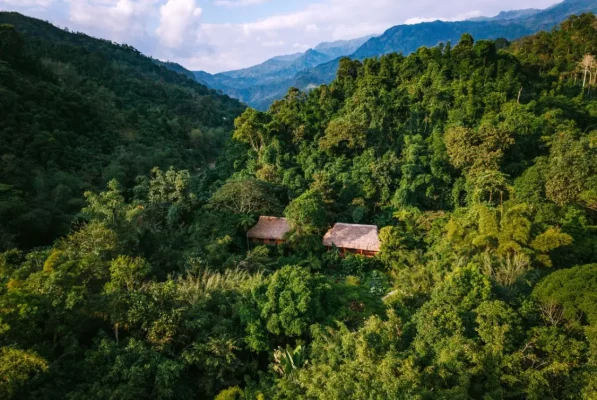
Experiences at Panhou Retreat in August
Trekking through green rice terraces
Guided routes can take travelers through terraced fields, forests and villages hidden among the Hoang Su Phi mountains. Local guides help select a suitable trail according to weather and physical ability.
August fields are often intensely green, while clouds move between forested slopes after rain. The landscape feels different from the rocky scenery of the eastern Loop.
A shorter route may suit travelers recovering from several days on a motorbike. More active guests can choose longer trekking experiences when trail conditions remain safe.
Discovering Red Dao culture
Travelers can learn about Red Dao architecture, medicinal plants, food and daily mountain life. Cultural understanding develops through respectful conversations rather than staged performances.
Guests should request permission before photographing residents or private homes. Supporting local guides and producers also helps tourism benefits remain within the community.
Enjoying Shan Tuyet tea
A tea experience introduces the relationship between mountain forests, highland climates and local livelihoods. Travelers can learn how Shan Tuyet tea is collected, processed and prepared.
Warm tea provides a gentle pause after trekking through humid summer landscapes. It also encourages visitors to experience Hoang Su Phi at a slower pace.
Recovering with a Red Dao herbal bath
Panhou Retreat offers a Red Dao herbal bath within its slower nature and cultural experience. The warm bathing ritual is particularly appealing after trekking or several long days on the Loop.
Guests can combine the bath with massage, foot soaking or quiet relaxation. Any wellness description should focus on comfort and recovery rather than guaranteed medical outcomes.
Explore packages at Panhou Retreat
Travelers can review special packages at Panhou Retreat that combine accommodation with trekking, meals or wellness activities.
Package inclusions may reduce the need to organize every service separately. Guests should still confirm room categories, transportation, activity schedules and cancellation conditions before booking.
Hoang Su Phi Trekking Package
The trekking package suits travelers who want to continue exploring after the Ha Giang Loop. Routes may pass through terraces, forests and mountain villages with local guidance.
Trail selection can be adjusted according to fitness, rainfall and current conditions. This flexibility is particularly important during August.
Herbal Healing Retreat
The Herbal Healing Retreat combines mountain accommodation with rest and wellness experiences. It provides a slower conclusion after several days of continuous travel.
Guests may enjoy a Red Dao herbal bath, massage, gentle activities and quiet time in nature. The experience is suitable for travelers seeking balance between movement and recovery.
Rice Season Package
This package focuses on the changing terraced landscapes of Hoang Su Phi. Conditions depend on local planting schedules, elevation and weather.
Late August may reveal early color changes in selected areas, but the golden season cannot be guaranteed on fixed dates. Guests should request recent updates before choosing their stay.
Pros and cons of doing the Ha Giang Loop in August
| Advantages | Limitations |
|---|---|
| Exceptionally green mountains and valleys | Regular rain and high humidity |
| Dramatic clouds and mist after showers | Slippery mountain roads |
| Waterfalls and streams carry more water | Visibility may change quickly |
| Green rice fields create vivid scenery | Possible landslides or temporary closures |
| A slower journey encourages cultural stops | Daily plans may require adjustment |
When should you avoid the Ha Giang Loop?
There is no single month when every traveler must avoid the Loop. The decision should be based on actual weather, road conditions and personal experience.
Visitors should postpone the journey during severe rain, flash-flood warnings or landslide alerts. Official road closures and local safety warnings must always be followed.
Travelers should also avoid self-riding without valid documents or suitable mountain experience. A short holiday does not justify attempting the entire Loop in unsafe conditions.
The Loop should never be ridden after drinking alcohol or when the rider feels exhausted. Poor concentration becomes particularly dangerous on wet mountain bends.
Is July a good time for the Ha Giang Loop?
July can still offer green landscapes and rewarding mountain scenery. However, like August, it falls within the hot and rainy summer period in Ha Giang.
Neither month guarantees uninterrupted rain or clear weather. Conditions vary between years, weeks and individual districts.
Travelers choosing between July and August should examine current forecasts and road updates. Their ability to maintain a flexible itinerary matters more than selecting a supposedly perfect week.
Frequently asked questions about the Ha Giang Loop in August
1. Is August a good time to do the Ha Giang Loop?
Yes, August can be rewarding for green scenery, clouds and vibrant rice valleys. Travelers must prepare for rain and maintain a flexible schedule.
2. Is the Ha Giang Loop good in August?
The Loop remains beautiful in August, but it is more demanding than during drier periods. Road conditions and visibility should determine each day’s route.
3. Does it rain every day in Ha Giang in August?
Not necessarily. Rain may appear as brief showers, thunderstorms or longer unsettled periods. Completely dry weather cannot be guaranteed during the summer monsoon.
4. Is it safe to ride the Ha Giang Loop in August?
Safety depends on road conditions, weather, riding experience and protective equipment. Beginners should consider an Easy Rider or private vehicle.
5. What should I wear on the Ha Giang Loop in August?
Wear lightweight, quick-drying layers with a fitted waterproof jacket. Closed shoes, gloves and a quality helmet remain essential for motorbike travel.
6. When should you avoid the Ha Giang Loop?
Avoid riding during severe rain, landslide alerts, road closures or extremely low visibility. Travelers should also avoid self-riding without suitable experience.
7. Can you see rice terraces in August?
Yes. Most rice fields are green during August, although selected areas may begin changing color toward the end of the month.
8. Is July a good time for the Ha Giang Loop?
July can still be enjoyable, but it is generally hot, humid and rainy. It requires the same flexibility and safety preparation as August.
9. How many days are best for the Loop in August?
Four days are preferable because they reduce daily riding hours and allow adjustments. A three-day route should only be considered during stable conditions.
10. Should beginners self-ride in August?
Beginners should not use the Loop as their first experience riding mountain roads. An Easy Rider provides a safer and more comfortable alternative.
Final verdict: Is the Ha Giang Loop worth doing in August?
The Ha Giang Loop is worth visiting in August for travelers prepared to experience its rainy-season character. Green mountains, summer rice fields and clouds rising after rain create memorable scenery.
However, August demands greater patience than drier months. Travelers must check conditions daily, avoid rigid schedules and select transport appropriate to their experience.
A four-day route with an experienced driver provides a more comfortable approach. Visitors can then continue toward Hoang Su Phi for trekking, local culture and restorative time at Panhou Retreat.
The most successful August journey is not the one covering every attraction. It is the one that respects the mountains, responds to changing weather and allows Ha Giang to be experienced slowly.

3D2N NATIONAL DAY OFFER | JOURNEY INTO GREEN SEASON
From 125 USD/Guest/Combo
3D2N GOLDEN SEASON IN HOANG SU PHI
From 114 USD/Guest/Combo