Ha Giang Loop Tour: Complete Adventure & Wellness Retreat Guide
| ExperiencesA Ha Giang Loop tour is more than a road trip through northern Vietnam. It is a journey across towering limestone mountains, winding passes, deep river canyons and remote villages shaped by generations of local life.
For many travellers, the Loop represents the most adventurous part of a Vietnam itinerary. Each day brings a different landscape, from the valleys of Quan Ba to the rocky plateau of Dong Van and the dramatic cliffs above the Nho Que River.
However, several consecutive days on mountain roads can also be physically demanding. Travellers often finish the route with unforgettable photographs, but also tired shoulders, legs and backs after spending long hours on a motorbike.
A more balanced journey combines the excitement of the Ha Giang adventure with a slower stay in Hoang Su Phi. After completing the Loop, travellers can continue to Panhou Retreat for trekking, Red Dao cultural experiences and restorative time among rice terraces, forests and streams.
This guide explains where the Loop is, how to plan a practical Ha Giang Loop itinerary, how much a tour may cost and how to add Panhou Retreat to a longer northern Vietnam journey.
What Is the Ha Giang Loop and Where Is It?
The Ha Giang Loop is a circular mountain route in Ha Giang Province, in the far north of Vietnam near the border with China.
The journey usually begins and ends in Ha Giang City. From there, travellers continue through destinations such as Quan Ba, Yen Minh, Dong Van, Ma Pi Leng Pass, Meo Vac and, depending on the route, Du Gia.
The total distance varies according to the selected itinerary, road conditions and additional detours. Most versions cover approximately 350 to 400 kilometres over three or four days.
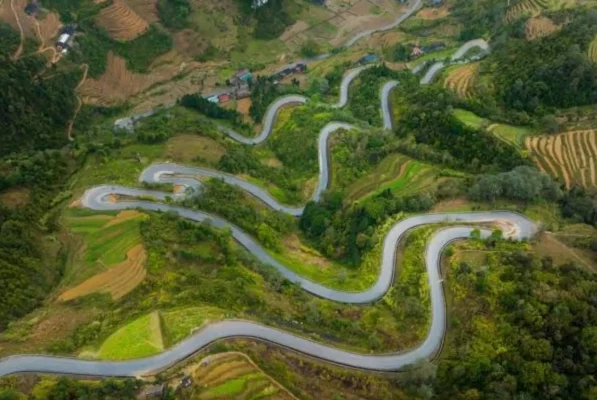
Although this distance may appear manageable, mountain travel is much slower than travelling on a highway. The roads include steep gradients, sharp bends, narrow sections and frequent scenic stops.
What makes the route special?
The Loop crosses some of the most distinctive landscapes in northern Vietnam. Travellers move through limestone plateaus, deep valleys, terraced fields and communities belonging to different ethnic groups.
Common highlights include:
- Quan Ba Heaven Gate and the Twin Mountains.
- The mountain valleys around Yen Minh.
- Dong Van Karst Plateau.
- Dong Van Old Quarter.
- Ma Pi Leng Pass.
- The Nho Que River and Tu San Canyon.
- Traditional villages and local markets.
- The quieter valleys and streams around Du Gia.
Ma Pi Leng is often considered the most spectacular section. The road follows steep mountainsides above the Nho Que River, creating wide views across one of the deepest canyon landscapes in the region.
How do you get to the Ha Giang Loop?
Most international travellers begin in Hanoi. Sleeper buses and limousine vans connect Hanoi with Ha Giang City, where motorbike tours and private journeys usually start.
The road transfer generally takes several hours, depending on the service, traffic and departure time. Many travellers choose an overnight sleeper bus to save daytime and begin the Loop the following morning.
When comparing transport options, consider more than the ticket price. Check the arrival location, luggage allowance, seat type and whether the bus arrives early enough for you to rest before starting the tour.
Suggested Ha Giang Loop Itinerary
A standard Ha Giang Loop itinerary usually requires three or four days. Three days are suitable for travellers with limited time, while four days provide a slower pace and more flexibility.
The following itinerary presents a common three-day structure. The exact route may change because of weather, road conditions or the tour operator’s accommodation plan.
Day 1: Ha Giang City – Quan Ba – Yen Minh – Dong Van
The first day introduces travellers to Ha Giang’s mountain roads and limestone scenery.
After leaving Ha Giang City, the route climbs toward Bac Sum Pass and Quan Ba Heaven Gate. From higher viewpoints, travellers can see valleys, villages and the distinctive Twin Mountains.
The journey then continues through Can Ty and Yen Minh. Depending on the itinerary, stops may include pine forests, roadside viewpoints, local villages or cultural attractions before reaching Dong Van.
Most travellers spend the first night in Dong Van Town. The old quarter offers cafés, restaurants and a convenient place to rest before the most dramatic section of the Loop.
Day 2: Dong Van – Ma Pi Leng Pass – Nho Que River – Meo Vac
The second day is often the visual highlight of a Ha Giang Loop tour.
The road between Dong Van and Meo Vac crosses Ma Pi Leng Pass, with viewpoints overlooking the Nho Que River and Tu San Canyon.

Some tours include a boat trip on the Nho Que River. Others offer it as an optional activity, so travellers should confirm whether tickets and transportation to the boat station are included.
The night may be spent in Meo Vac, Du Gia or another nearby destination. The chosen location affects the distance and pace of the third day.
Day 3: Meo Vac or Du Gia – Ha Giang City
The final day returns toward Ha Giang City through valleys, villages and changing mountain landscapes.
A route through Du Gia provides a greener contrast to the rocky scenery around Dong Van and Meo Vac. Travellers may pass rice fields, small streams and rural communities before returning to the city.
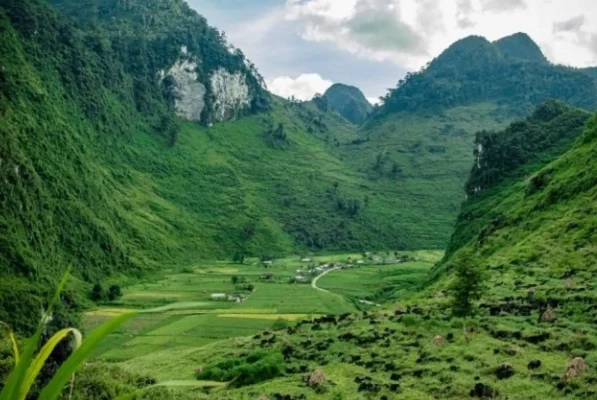
Other tours return through Yen Minh and Quan Ba. The operator should select the route according to road conditions, weather and the group’s pace.
Most three-day tours reach Ha Giang City in the late afternoon. Travellers can then rest, take an evening bus to Hanoi or continue to another destination in northern Vietnam.
Should you choose three or four days?
| Tour length | Best for | Main advantages | Limitations |
| 3 days and 2 nights | Travellers with limited time | Covers the main highlights at a lower overall cost | Longer riding periods and less flexibility |
| 4 days and 3 nights | First-time visitors and slower travellers | Shorter daily distances and more cultural stops | Requires an extra day and a larger budget |
A three-day itinerary works well when your Vietnam schedule is fixed and you mainly want to see the best-known landscapes.
Choose four days if you prefer slower mornings, longer photography stops, village walks or greater flexibility during uncertain weather.
Choosing A Ha Giang Loop Guided Tour
A Ha Giang Loop guided tour can be organised in several ways. The right option depends on your riding ability, budget, comfort expectations and preferred group size.
| Tour type | Suitable for | Advantages | Considerations |
| Shared Easy Rider tour | Solo and budget travellers | Social atmosphere and lower price | Less control over pace and stops |
| Private Easy Rider tour | Couples and comfort-focused travellers | Flexible itinerary and personalised service | Higher cost than a shared tour |
| Self-drive tour | Experienced riders | Independence and direct riding experience | Greater personal risk and responsibility |
| Private Jeep or car tour | Families and non-riders | Comfortable during rain and cold weather | Less open-air adventure |
Easy Rider or self-drive?
An Easy Rider is a local driver who controls the motorbike while the guest sits behind. This allows travellers to experience the open road without personally handling steep slopes, sharp bends or unpredictable traffic.
It is generally the most suitable option for first-time visitors and travellers without substantial mountain-riding experience.
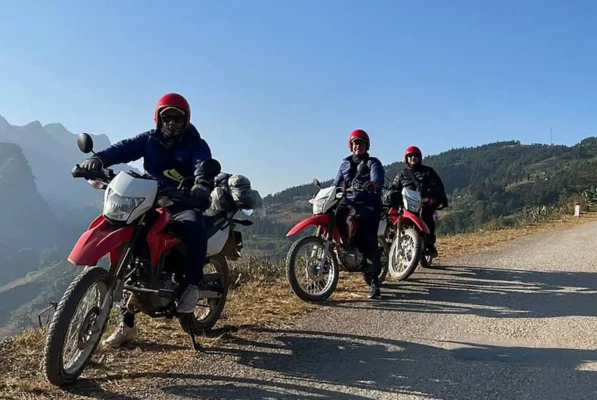
Self-driving provides greater independence but requires appropriate skills, documents and insurance. Ha Giang should not be treated as a destination for learning how to ride a motorbike for the first time.
Before choosing self-drive, confirm:
- Which driving licence and documents are required.
- Whether your insurance covers motorbike riding in Vietnam.
- The engine capacity and condition of the motorbike.
- Whether helmets and protective equipment are included.
- What technical support is available.
- Whether you can change to an Easy Rider during the tour.
Shared group or private tour?
Shared tours suit travellers who want to control costs and meet other visitors. However, the actual group size can vary significantly.
Ask whether the group will travel independently or join other motorbike groups at major stops. Large convoys can affect comfort, noise levels and the amount of time available at each location.
Private tours cost more but provide greater flexibility. Travellers can adjust departure times, stop longer for photographs and choose accommodation that better matches their expectations.
This option is particularly suitable for couples, families, older travellers and guests planning a wider itinerary with Panhou Retreat.
How Much Is The Ha Giang Loop?
A common question is: How much is the Ha Giang Loop?
The price varies according to tour duration, transport type, group size, accommodation and included activities.
As a general planning estimate, small-group or Easy Rider tours may range from approximately USD 150 to USD 300. Private Jeep or premium car tours may range from around USD 250 to USD 500 or more.
These prices are indicative rather than fixed. Travellers should request an updated quotation for their exact dates and preferred room category.
What affects the price?
The main price factors include:
- Three-day or four-day duration.
- Shared or private departure.
- Easy Rider, self-drive or private vehicle.
- Dormitory, homestay or private room.
- Meals and entrance tickets.
- Nho Que River boat trip.
- Transfers between Hanoi and Ha Giang.
- Motorbike type and fuel.
- English-speaking guide.
- Peak-season or holiday surcharges.
Questions to ask before booking
Before paying a deposit, ask the operator:
- How many travellers and motorbikes will be in the group?
- Will the same Easy Rider accompany me throughout the tour?
- Does the price include a private or shared room?
- Are meals, entrance tickets and the boat trip included?
- Which safety equipment is provided?
- How will the route change during bad weather?
- What is the cancellation or date-change policy?
- Are Hanoi transfers included in the package?
The cheapest tour does not always provide the lowest final cost. Extra charges for private rooms, tickets, transport and optional activities can make an initially inexpensive package more expensive.
Extend the Ha Giang Adventure to Panhou Retreat
The classic Loop is designed around continuous movement. Travellers spend several hours on the road each day and usually change accommodation every night.
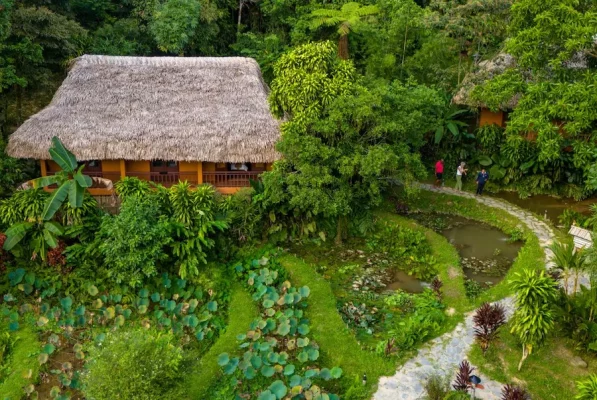
After this active journey, Panhou Retreat offers a slower experience in Hoang Su Phi. The retreat is surrounded by terraced fields, forested hills, streams and Red Dao communities.
Panhou Retreat is not directly located on the traditional Loop. It should be considered a separate extension before or after the road journey.
Why combine the Loop with Hoang Su Phi?
The two destinations reveal different sides of Ha Giang.
| Ha Giang Loop | Hoang Su Phi and Panhou Retreat |
| Limestone plateau and dramatic passes | Terraced rice fields and forest landscapes |
| Motorbike or private vehicle | Trekking and village walks |
| Frequent movement between overnight stops | Slower stay in one natural setting |
| Road-based adventure | Culture, wellness and restoration |
At Panhou Retreat, travellers have time to experience the region beyond roadside viewpoints. Depending on the chosen package and availability, activities may include:
- Guided trekking through rice terraces and forests.
- Visits to Red Dao villages.
- Traditional Red Dao herbal bathing.
- Local dishes and regional ingredients.
- Shan Tuyet tea experiences.
- Walks through bamboo forests and tea hills.
- Quiet time among gardens, streams and mountain scenery.
A recommended five-to-seven-day combination
A balanced itinerary may follow this structure:
- Days 1–3 or 1–4: Complete the Ha Giang Loop.
- Day 4 or 5: Transfer to Hoang Su Phi.
- Following 1–2 days: Stay at Panhou Retreat, trek and rest.
- Final day: Return to Hanoi or continue through northern Vietnam.
Travellers may also begin in Hoang Su Phi before continuing to Ha Giang City. Starting at Panhou Retreat creates time to adjust to the mountain environment before the more active road journey.
Adding Ha Giang to a longer Vietnam trip
A 2 week Vietnam itinerary with Ha Giang Loop should allocate enough time for both transport and recovery.
Rather than completing the Loop and returning immediately to Hanoi, spending one or two additional nights in Hoang Su Phi creates a more balanced northern section.
A possible two-week route is:
- Days 1–2: Hanoi.
- Days 3–6: Ha Giang Loop.
- Days 7–8: Panhou Retreat and Hoang Su Phi.
- Days 9–10: Return to Hanoi or continue to another northern destination.
- Days 11–14: Explore central or southern Vietnam.
This structure gives travellers enough time to enjoy the adventure without making the entire northern journey feel rushed.
Practical Tips for a Better Ha Giang Loop Tour
Choose the right season
March to May and late September to November are commonly selected for their relatively comfortable temperatures and seasonal scenery.
Summer brings green mountains and stronger waterfalls but also more rain. Winter offers quiet roads and misty landscapes but can be cold at higher elevations.
Pack light and protect valuables
Leave large luggage in Ha Giang City and carry only essential clothing and personal items. Use waterproof bags for your passport, phone, camera and electronic equipment.
Wear several light layers
Temperatures can vary between valleys and mountain passes. Layered clothing is easier to adjust than one heavy jacket.
Prioritise safety over the itinerary
Do not pressure the driver to travel faster or continue during severe rain and low visibility. A responsible operator should be willing to shorten or change the route when necessary.
Book early during popular seasons
Private Easy Riders, small-group tours and preferred room categories can sell out in autumn and around public holidays.
FAQ
1. What is the Ha Giang Loop?
The Ha Giang Loop is a circular mountain route in northern Vietnam. It usually begins in Ha Giang City and travels through Quan Ba, Yen Minh, Dong Van, Ma Pi Leng, Meo Vac and other mountain destinations.
2. How many days do you need for the Ha Giang Loop?
Most travellers need three or four days. Three days cover the main highlights, while four days allow shorter riding periods and more cultural stops.
3. How much is the Ha Giang Loop?
Small-group and Easy Rider tours may cost approximately USD 150 to USD 300. Private Jeep or premium tours may range from USD 250 to USD 500 or more. Final prices depend on duration, accommodation, inclusions and travel dates.
4. Is a Ha Giang Loop guided tour worth it?
A guided tour is useful for travellers who are unfamiliar with mountain roads or local conditions. An experienced guide or Easy Rider can manage navigation, accommodation and weather-related route changes.
5. Should beginners drive the Ha Giang Loop?
Beginners should normally choose an Easy Rider or private vehicle. Self-driving is appropriate only for travellers with relevant experience, valid documents and suitable insurance.
6. Where does the Ha Giang Loop begin?
Most tours begin and end in Ha Giang City. Travellers generally reach the city from Hanoi by sleeper bus or limousine van.
7. What is the best Ha Giang Loop itinerary?
A practical three-day itinerary travels from Ha Giang City to Quan Ba, Yen Minh and Dong Van, continues through Ma Pi Leng and Meo Vac, and returns through Du Gia or Quan Ba.
8. Is Panhou Retreat on the Ha Giang Loop?
No. Panhou Retreat is located in Hoang Su Phi, outside the traditional Loop. It is best planned as a separate extension before or after the road journey.
9. How long should I stay at Panhou Retreat?
Travellers should allow at least two nights when possible. This creates time for trekking, cultural activities, herbal bathing and rest after the Loop.
10. Can I include Ha Giang in a two-week Vietnam itinerary?
Yes. A two-week itinerary can include three or four days on the Loop and one or two additional nights in Hoang Su Phi before continuing to another region of Vietnam.

3D2N NATIONAL DAY OFFER | JOURNEY INTO GREEN SEASON
From 125 USD/Guest/Combo
3D2N GOLDEN SEASON IN HOANG SU PHI
From 114 USD/Guest/Combo