Hoang Su Phi & Ha Giang Loop: How to Combine Two of Northern Vietnam’s Most Beautiful Destinations
| ExperiencesHoang Su Phi lies outside the traditional Ha Giang Loop, but it can easily be added to your journey if you have extra time. So, how should you plan the route, how many days do you need, and is Hoang Su Phi worth the detour? This guide explains everything you need to know.
Is Hoang Su Phi on the Ha Giang Loop?
The short answer is no. Hoang Su Phi is not a standard stop on the traditional Ha Giang Loop. The Ha Giang Loop is a famous mountain road journey in northern Vietnam, covering roughly 300–350 kilometres. A typical route follows: Ha Giang City → Quan Ba → Yen Minh → Dong Van → Meo Vac → Ha Giang City.
The journey is best known for dramatic mountain passes, limestone peaks, Tu San Canyon, the emerald Nho Que River and the spectacular Ma Pi Leng Pass. Hoang Su Phi is located away from this main route. Therefore, travellers who want to combine both destinations need additional time and a carefully planned itinerary.

The two destinations also offer very different experiences. The Ha Giang Loop is about dramatic roads, mountain passes and the sense of adventure that comes with a long-distance journey. Hoang Su Phi, meanwhile, is known for its terraced rice fields, especially during the golden rice season from September to October. It also offers trekking, Red Dao culture and peaceful stays surrounded by nature.
If you have enough time, combining the Hoang Su Phi Ha Giang Loop experience can give you two contrasting perspectives of northern Vietnam.
What does the traditional Ha Giang Loop include?
There is no single fixed route for the Ha Giang Loop. However, most journeys follow: Ha Giang City → Quan Ba → Yen Minh → Dong Van → Meo Vac → Ha Giang City.
Longer itineraries may include additional villages or alternative roads on the return journey.
The main attraction of the Ha Giang Loop is travelling through some of Vietnam’s most dramatic mountain scenery. Ma Pi Leng Pass is one of the most memorable sections of the journey.
If you want to visit Hoang Su Phi, it is better to consider it an additional destination on your Ha Giang journey, rather than somewhere you can quickly visit for a few hours.
Hoang Su Phi – Ha Giang Loop map: How should you combine the two?
Looking at a Hoang Su Phi Ha Giang Loop map makes it easier to understand how the journey can be organised. One possible route is: Hanoi → Hoang Su Phi → Ha Giang City → Quan Ba → Yen Minh → Dong Van → Meo Vac.
Travellers continuing through northeastern Vietnam can extend the route towards: Bao Lac → Cao Bang → Ban Gioc Waterfall. Hoang Su Phi should not be treated as a quick stop along the way. Ideally, you should spend at least two days exploring the area. You can choose: Hanoi → Hoang Su Phi → Ha Giang Loop → Hanoi if you want to focus on these two main destinations.
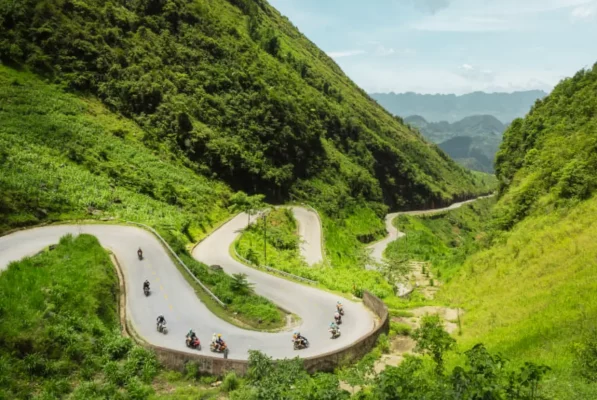
Travellers with more time can continue: Hanoi → Hoang Su Phi → Ha Giang Loop → Cao Bang for a longer northern Vietnam journey. This route combines several types of landscapes, from terraced rice fields and forests to limestone mountains and dramatic passes.
How much extra time should you spend in Hoang Su Phi?
If Hoang Su Phi is an important part of your journey, consider staying for at least two nights. One night may be enough for a short rest before continuing your journey, but it leaves little time for exploring.
With two or three nights, you can enjoy a half-day or full-day trek with a local guide, walk through terraced fields and villages, try local food and learn about Red Dao culture. This slower pace can also provide a welcome break between long travel days, especially when Ha Giang is part of a larger northern Vietnam itinerary.
Why add a Hoang Su Phi detour to your Ha Giang journey?
The biggest reason to make a Hoang Su Phi detour from Ha Giang is the contrast between the two destinations. They offer completely different ways to experience northern Vietnam.
A different landscape from the Ha Giang Loop
The Ha Giang Loop is famous for Tu San Canyon, Ma Pi Leng Pass, Tham Ma Pass, Chin Khoanh Pass. Hoang Su Phi has a different landscape, dominated by spectacular terraced rice fields around Ban Luoc, Ban Phung and Nam Ty.
Cloud-hunting destinations such as Nam Hong and Chieu Lau Thi also offer memorable mountain scenery. The terraced fields change throughout the year.
During the water season, the flooded terraces reflect the sky. In the green rice season, the mountains are covered in fresh shades of green. During the harvest season, the fields gradually turn golden and stretch across the mountain slopes.
Unlike stopping briefly at roadside viewpoints, Hoang Su Phi allows you to walk directly through the landscape. This is one of the biggest differences between exploring Hoang Su Phi and completing a traditional mountain road trip.
Trekking instead of spending every day on a motorbike
The Ha Giang Loop usually involves several consecutive days of travelling by motorbike or car. For many travellers, this is the highlight of the journey.
However, for those who prefer slower travel, trekking in Hoang Su Phi provides a refreshing change of pace. Trekking routes can take you through terraced fields, bamboo forests, ancient Shan Tuyet tea hills and Red Dao villages.
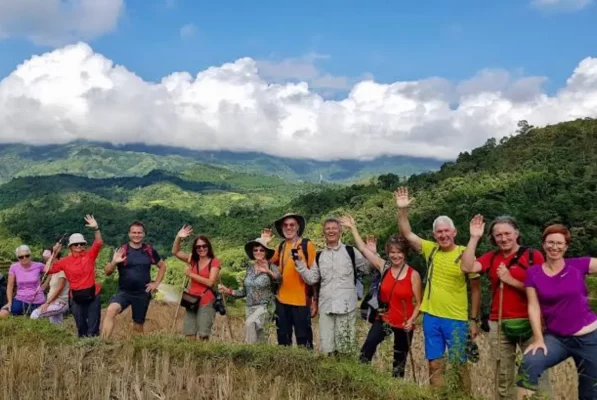
After spending hours travelling through mountain passes, walking allows you to observe mountain life at a much slower rhythm. You may see local people working on hillsides, farming or gathering plants in the forest. You can also experience the gradual changes in scenery as you walk from villages into forests and rice terraces.
Discover another side of local culture
Both the Ha Giang Loop and Hoang Su Phi are culturally diverse. However, experiences in Hoang Su Phi often unfold at a slower pace, giving travellers more opportunities to connect with village life.
Through trekking, local meals and traditional activities, visitors can learn more about the Red Dao community and other ethnic groups living in the region. One distinctive experience is the traditional Red Dao herbal bath, alongside local cuisine and cultural activities. For travellers who want to understand more about the places they visit, Hoang Su Phi can be a valuable addition to the journey.
Is Hoang Su Phi off the beaten path?
For travellers searching for a quieter destination, Hoang Su Phi off the beaten path experiences remain one of the area’s main attractions. The Ha Giang Loop has become one of Vietnam’s best-known mountain road journeys.
Hoang Su Phi, meanwhile, remains more focused on trekking, village walks, nature and slow travel. This does not mean Hoang Su Phi is completely free of visitors. The main difference lies in how travellers experience the destination.
Instead of moving continuously between famous viewpoints, a day in Hoang Su Phi may involve several hours of trekking, walking through a village or simply relaxing surrounded by nature. This makes Hoang Su Phi particularly suitable for travellers interested in trekking, photography, nature and local culture. Couples and travellers looking for a peaceful break after several days on the Ha Giang Loop may also appreciate the slower pace.
However, if you only have three or four days and your main goal is to complete the Ha Giang Loop, adding Hoang Su Phi may make the trip feel rushed. In that case, consider saving Hoang Su Phi for another journey or extending your trip.
How to combine Hoang Su Phi with the Ha Giang Loop
There are three common ways to combine the two destinations, depending on your available time and preferred travel pace.
Option 1: Visit Hoang Su Phi before starting the Ha Giang Loop
Hanoi → Hoang Su Phi → Ha Giang City → Ha Giang Loop
This is a natural route for travellers starting from Hanoi. Begin your journey at a slower pace in Hoang Su Phi, with time for trekking and exploring the terraced rice fields.
You can then continue towards Ha Giang City and begin the more adventurous section of the journey. This option is suitable for travellers who want one or two peaceful days surrounded by nature before several consecutive days on the road.
Option 2: Visit Hoang Su Phi after completing the Ha Giang Loop
Hanoi → Ha Giang → Ha Giang Loop → Hoang Su Phi → Hanoi
This itinerary offers the opposite experience. You begin with the adventure of the Ha Giang Loop before finishing your journey in the quieter surroundings of Hoang Su Phi.
After several days of travelling, you can slow down, enjoy a Red Dao herbal bath, try local cuisine and relax in nature. This option is particularly suitable for couples or travellers who want to end their trip with a slower travel experience.
Option 3: Combine Hoang Su Phi, Ha Giang and Cao Bang
Travellers with more time can plan an extended journey: Hoang Su Phi → Ha Giang Loop → Cao Bang.
This is no longer simply a Ha Giang Loop itinerary. It becomes a longer exploration of northern Vietnam. A Cao Bang Ha Giang Loop journey combined with Hoang Su Phi is best suited to travellers with flexible schedules.
When planning, avoid estimating travel time based only on kilometres. Mountain roads, weather, traffic and rest stops can make actual journey times considerably longer. Instead of visiting too many places in a short period, allow enough time to properly experience each destination.
Suggested Hoang Su Phi Ha Giang Loop itinerary
5-Day Hoang Su Phi Ha Giang Loop itinerary
This itinerary is suitable for travellers with limited time, although the pace will be relatively fast.
Day 1: Hanoi – Hoang Su Phi
Travel from Hanoi to Hoang Su Phi. After checking in, spend the rest of the day relaxing and adjusting to the mountain environment.
Day 2: Explore Hoang Su Phi
Spend the day trekking through terraced rice fields, forests or nearby villages. This allows you to experience Hoang Su Phi before beginning the longer road journey.
Day 3: Hoang Su Phi – Ha Giang City
Travel to Ha Giang City and prepare for the next stage of your journey.
Day 4: Explore the Dong Van – Meo Vac route
Continue through some of Ha Giang’s most dramatic mountain scenery and stop at viewpoints along the way.
Day 5: Return to Ha Giang city
Complete the short loop and continue with your onward travel plans. A five-day itinerary allows you to experience both Hoang Su Phi and part of the Ha Giang Loop, but time at each destination will be limited.
7-Day Hoang Su Phi Ha Giang Loop Itinerary
Seven days is a better option for travellers who want to properly experience both destinations.
Day 1: Hanoi – Hoang Su Phi
Arrive in Hoang Su Phi and enjoy a quiet evening surrounded by mountains.
Day 2: Trekking in Hoang Su Phi
Spend a full day exploring terraced rice fields, forests and local villages. A full-day trek helps you appreciate the contrast between Hoang Su Phi and the road journey ahead.
Day 3: Hoang Su Phi – Ha Giang City
Travel to Ha Giang City, rest and prepare for the Ha Giang Loop.
Day 4: Ha Giang – Quan Ba – Yen Minh
Begin the Ha Giang Loop and explore the region’s characteristic limestone mountain landscapes.
Day 5: Yen Minh – Dong Van
Continue through the highlands with time for scenic stops along the route.
Day 6: Dong Van – Meo Vac
Travel through one of the most impressive sections of the journey, including the Ma Pi Leng Pass area.
Day 7: Complete the Loop and Return to Ha Giang City
Follow your chosen route back to Ha Giang City and complete the journey. A seven-day itinerary offers a better balance between road travel, trekking, nature and relaxation.
What should you experience in Hoang Su Phi?
A common mistake is adding Hoang Su Phi to an itinerary without allowing enough time to experience it. The real character of Hoang Su Phi begins when you leave the main roads behind.
Explore the terraced rice fields
Walking is one of the best ways to experience the landscapes of Hoang Su Phi. Trekking routes often pass through terraced fields, forests, tea hills and mountain villages.
Some experiences may also include visiting local homes, trying Red Dao clothing or enjoying a local lunch.
A half-day trekking is suitable for travellers looking for moderate physical activity. A full-day trekking provides more time to explore forests, villages and local culture.
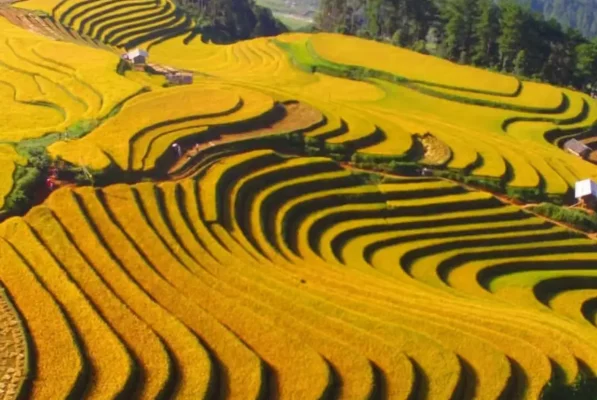
Trekking through local villages
Walking through villages allows travellers to experience northern Vietnam from a different perspective. It is not only about seeing beautiful landscapes but also understanding how people live among mountains and terraced fields.
Along the way, you may encounter Red Dao villagers gathering medicinal herbs, farming or tending livestock. Some experiences may include picking vegetables, planting rice, harvesting tea or learning how local tea is processed. When visiting villages, travellers should respect local customs and ask permission before photographing residents.
Experience Red Dao Culture
Hoang Su Phi is home to a significant Red Dao community. Visitors can learn about local culture through trekking, food and traditional wellness experiences such as Red Dao herbal baths.
These experiences add cultural depth to the journey and help travellers better understand the people behind the landscapes.
Where to stay: Ha Giang Loop with private room and Panhou Retreat
Not everyone travelling the Ha Giang Loop wants to stay in dormitories or shared homestays throughout the entire journey. For a longer trip, spending a few nights in a private room can make a significant difference.
A private space allows you to rest better, organise your luggage and enjoy some quiet time after several days of travelling. For travellers searching for a Ha Giang Loop with private room experience, adding Hoang Su Phi can provide a comfortable break between more adventurous stages.
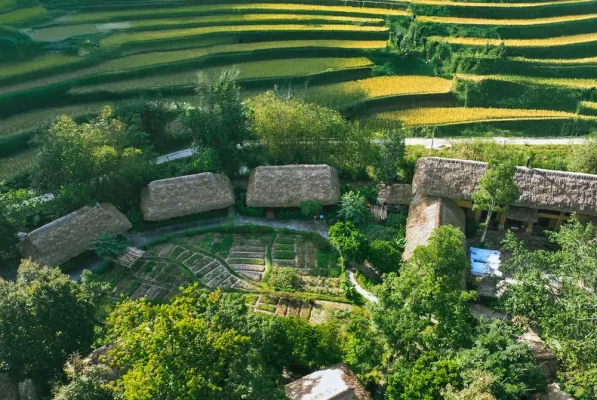
Panhou Retreat can be a suitable stop for travellers spending time in Hoang Su Phi. Beyond accommodation, it can also serve as a base for trekking, exploring the surrounding landscapes and learning about local culture. After several days on the Ha Giang Loop, spending time surrounded by nature creates a pleasant change of pace.
Hoang Su Phi – Ha Giang Loop Price: How much does the trip cost?
There is no fixed Hoang Su Phi Ha Giang Loop price. Your total budget depends on the length of your journey, transportation choices and preferred travel style.
Transport options include public buses, private vehicles, motorbike rental, local drivers and private transfers. Combining Hoang Su Phi with the Ha Giang Loop also means budgeting for additional transportation between destinations.
For travellers staying at Panhou Retreat, selected packages may cost approximately VND 1,950,000–2,100,000 per guest per night, depending on the season and package inclusions.
The retreat offers different room categories suitable for couples, families and groups. Your total budget will also depend on meals and activities.
Additional experiences may include Red Dao herbal baths, aromatherapy massage, traditional Do paper painting or private transportation. Red Dao herbal baths and selected spa services may cost approximately VND 300,000–350,000.
Rather than relying on a single estimated figure, calculate your budget according to your itinerary and travel preferences. A self-guided budget trip will cost considerably less than a journey combining private accommodation, trekking, wellness and cultural experiences.
Hoang Su Phi – Ha Giang Loop tickets: Do you need to buy tickets?
There is no single Hoang Su Phi Ha Giang Loop ticket because the Ha Giang Loop is a road journey, not one attraction with a single entrance gate. However, you may still need to pay admission fees for individual attractions or activities.
Additional costs may include sightseeing tickets, guided trekking, motorbike tours, local drivers or private transportation. International visitors should also check current regulations concerning driving licences and restricted border areas. If you plan to drive independently or visit specific border zones, verify the latest requirements before travelling.
Best time to combine Hoang Su Phi and the Ha Giang Loop
There is no single best season for every traveller. The ideal time depends on the scenery and experiences you want.
Water season: April to June
During the water season, flooded rice terraces reflect the sky and surrounding mountains.
This period is particularly attractive for photographers and travellers interested in the structure of the terraced landscapes.
Green rice season: July to August
From July to August, the rice terraces are covered in fresh green colours. The landscape feels vibrant and full of life.
However, periods of heavy rain can affect trekking conditions and mountain roads. Check the weather forecast before travelling and prepare suitable footwear and clothing.
Golden rice season: September to October
September and October are among the most popular months to visit Hoang Su Phi. The terraced fields gradually turn golden, creating one of the region’s most spectacular landscapes.
This is also a busy travel period.Travellers planning to stay in Hoang Su Phi during peak harvest season should consider booking accommodation early.
Winter and early spring: November to February
The landscape becomes quieter and more subdued during winter. December and January may bring white reed grass and buckwheat flowers to some areas.
January and February are associated with spring blossoms, including peach, plum and pear flowers. The peaceful atmosphere and cooler temperatures make this an enjoyable season for families and photography.
Travellers may also have opportunities to learn about traditional Red Dao celebrations and rituals, depending on the local calendar. Remember that beautiful scenery does not always mean favourable road conditions. Always check weather forecasts before long journeys or trekking days.
Hoang Su Phi – Ha Giang Loop review: Is it worth combining both?
Is adding Hoang Su Phi to the Ha Giang Loop worth the extra time? For many travellers, the answer is yes.
The greatest value of combining the two destinations comes from their contrast. The Ha Giang Loop offers adventure, mountain roads and dramatic viewpoints. In Hoang Su Phi, you can walk directly among mountains, forests and terraced rice fields.
One destination is about high passes and spectacular roads. The other offers forests, villages, rice terraces and a slower rhythm of travel. When planned carefully, the two experiences complement each other very well.
What are the disadvantages?
The biggest limitation is time. Trying to fit both destinations into a three- or four-day journey means spending a significant amount of time travelling.
The trip can quickly become a journey of simply passing through destinations rather than properly experiencing them. If your schedule is limited, it may be better to choose one destination and explore it more deeply.
Hoang Su Phi vs Ha Giang Loop: Which should you choose?
| Criteria | Hoang Su Phi | Ha Giang Loop |
|---|---|---|
| Main highlight | Terraced rice fields | Ma Pi Leng Pass, Tu San Canyon and dramatic mountain roads |
| Main experience | Trekking and slow travel | Long-distance road journey |
| Travel style | Relaxed and immersive | Active and adventurous |
| Landscape | Terraced fields, forests, Ban Phung, Ban Luoc, Chieu Lau Thi and Nam Hong | Limestone mountains, valleys and mountain passes |
| Best for | Nature, trekking and local culture | Adventure and scenic road travel |
| Suggested time | 2–3 nights | 3–5 days |
If you enjoy trekking, terraced rice fields and slow travel, Hoang Su Phi may suit you better. If you are looking for dramatic mountain roads and an adventurous journey, the Ha Giang Loop may be more appealing.
However, if you have enough time, you do not necessarily have to choose between them. The experiences are different enough that they do not replace one another. When combined thoughtfully, they can create a more complete northern Vietnam journey.
Practical tips for combining Hoang Su Phi with the Ha Giang Loop
If you genuinely want to explore Hoang Su Phi, stay for at least two nights rather than visiting for one day. When planning your itinerary, do not estimate travel times based solely on distances shown on maps.
Mountain roads and poor weather can make journeys considerably longer than expected. Before long travel or trekking days, check the weather and prepare suitable clothing.
Good walking shoes are essential when trekking through rice terraces, mountain paths and villages. For remote or unfamiliar trekking routes, travelling with a local guide can make the journey easier.
Local guides can also provide valuable insights into regional culture, daily life and traditions. Carry enough cash when travelling to remote areas and carefully consider your driving experience before riding independently. Mountain roads require experience, concentration and confidence in handling unexpected conditions.
FAQ
1. Is Hoang Su Phi part of the Ha Giang Loop?
No. Hoang Su Phi is not part of the traditional Ha Giang Loop route. However, it can be added as an additional destination if you have enough time.
2. Can I combine Hoang Su Phi with the Ha Giang Loop?
Yes. A suggested route is:Hanoi → Hoang Su Phi → Ha Giang City → Ha Giang Loop. You can also reverse the route and visit Hoang Su Phi after completing the loop.
3. How many days do I need for Hoang Su Phi and the Ha Giang Loop?
Around seven days allows for a more comfortable journey, including trekking in Hoang Su Phi and exploring the Ha Giang Loop. A five-day trip is possible, but the itinerary will be faster and you will have less time at each destination.
4. Is Hoang Su Phi worth adding to a Ha Giang itinerary?
Yes, especially for travellers interested in terraced rice fields, trekking, local culture and slow travel. If your only goal is to complete the Ha Giang Loop quickly, consider visiting Hoang Su Phi on a separate trip.
5. Can I visit Hoang Su Phi without a motorbike?
Yes. You can reach Hoang Su Phi using other transportation options, including private cars and transfers. From the Dong Van–Meo Vac area, Hoang Su Phi is approximately 180–210 kilometres away, depending on the route. From Ha Giang City, the journey to Hoang Su Phi is approximately 80 kilometres.
6. Is Hoang Su Phi less touristy than the Ha Giang Loop?
Travel in Hoang Su Phi focuses more on nature, trekking and local culture than long-distance road travel. It is particularly suitable for travellers who prefer a slower and more immersive style of travel.
7. Can I combine Hoang Su Phi, Ha Giang and Cao Bang?
Yes, if you have enough time. However, this should be considered a longer northern Vietnam journey rather than a short Ha Giang Loop trip. Allowing enough time for each region will create a deeper travel experience and reduce the need for continuous long-distance travel.

3D2N NATIONAL DAY OFFER | JOURNEY INTO GREEN SEASON
From 125 USD/Guest/Combo
3D2N GOLDEN SEASON IN HOANG SU PHI
From 114 USD/Guest/Combo