Breathtaking Hoang Su Phi Trekking Routes
| ExperiencesHoang Su Phi trekking routes offer experiences that go far beyond simply stopping for photographs, allowing you to explore terraced rice fields and the mountains of northern Vietnam more deeply. Hoang Su Phi has a wide range of walking routes, from half-day itineraries around Thong Nguyen to multi-day journeys through Nam Nghi, Giang Ha, Phin Ho, Yen Son, Nam Ty, and Ban Luoc. Below are our recommended routes.
When is the best time for Hoang Su Phi trekking?
The scenery along Hoang Su Phi trekking routes changes significantly with the cultivation cycle of the terraced rice fields. At certain times, the fields become mirrors reflecting the sky. A few months later, young rice covers the mountain slopes in layers of green. By early autumn, the terraces gradually turn golden before the harvest begins.
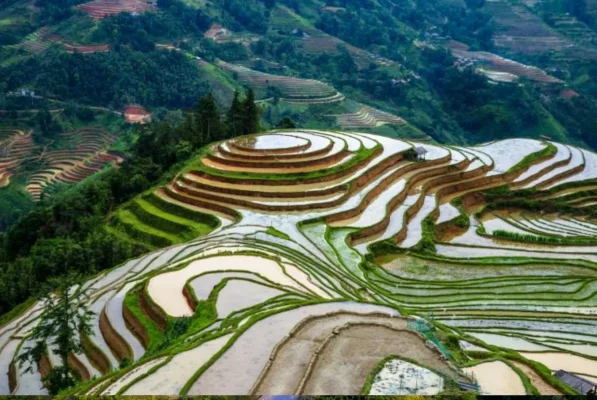
Water-pouring season (May–June)
When local farmers channel water from mountain streams and springs into the fields to prepare for a new rice crop, the terraces begin to fill and create remarkable reflections. The color of the water changes with the light, clouds, and weather, giving the landscape greater depth and a soft appearance.
Trekking during this period allows you to observe farmers repairing field edges, guiding water, preparing the soil, and getting ready for planting. The journey offers a deeper understanding of the terraces as working farmland rather than simply a scenic backdrop.
Note: Early seasonal rain makes dirt paths wetter and more slippery. Wear shoes with good traction, avoid stepping into the fields, and do not stand on irrigation banks solely for photographs. Watering schedules can also vary between villages, so check with your accommodation before departing.
Green rice season (July–August)
After planting, the terraces gradually turn green from the valley floor to the mountain slopes. However, rice develops at different rates across villages and locations. Fields planted earlier may appear darker and denser, while later crops remain lighter and younger.
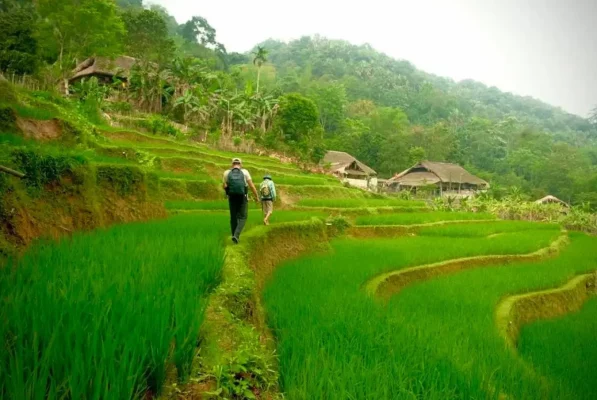
This period also falls within the rainy season, when forests are lush, streams are full, and vegetation is abundant. It is particularly suitable for routes combining forests, tea hills, and valleys.
Note: Heavy rain can still occur, creating muddy trails, rising stream levels, and reduced visibility on higher sections. Choose non-slip footwear and carry reliable rain protection.
Golden rice season (September–October)
Many travelers choose hoang su phi tours during this period as the terraces gradually change from green to gold. When sunlight appears, the curves and layers of the fields become more defined across the slopes, while their colors shift throughout the day.
The weather is generally milder than in summer, with cooler mornings, softer light, and favorable walking conditions unless unseasonal rain occurs.
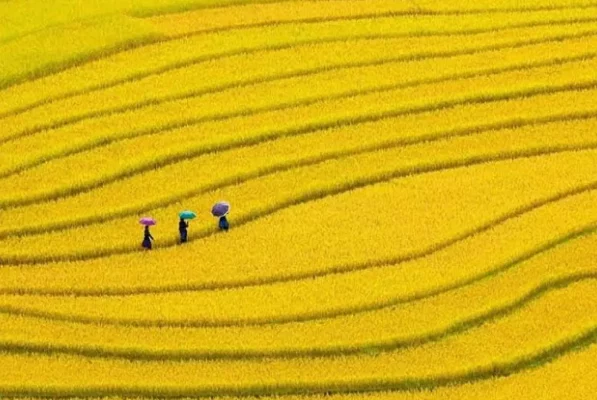
Rice does not ripen simultaneously in every location. Harvest schedules may vary depending on altitude, rice varieties, planting dates, and local weather in areas such as Thong Nguyen, Nam Ty, and Ban Luoc.
Note: Check the condition of the terraces about one week before your trip. Weekend accommodation should be reserved early because rooms can sell out quickly.
Harvest season (October–November)
Once the rice has ripened, the landscape changes quickly according to each household’s harvesting schedule.
Some terraces may remain golden, while others have already been harvested, leaving rice stubble across the slopes. Kitchen smoke, fresh straw, and rice transportation create a working rural landscape that differs from the brilliant golden season.
This is no longer the ideal period for classic terrace views. However, harvest season suits travelers interested in agricultural life and local cultural experiences.
The air is often clearer after the rainy season, although mornings can be cold. Bring a light jacket and confirm current scenery before choosing where to stay.
Winter and spring (November–April)
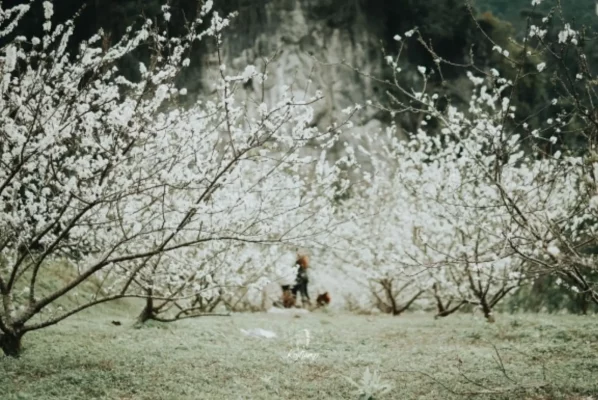
After the harvest, the terraces no longer display vivid green or gold. In return, Hoang Su Phi becomes quieter. This is also the flowering season, with buckwheat and mustard flowers appearing in November. From January to April, white plum and pear blossoms brighten the old forests.
This period is suitable for soaking in 48°C mineral water or taking a Red Dao herbal bath for recovery. Travelers can follow shorter routes toward Nam Ty and Nam Hong to see blossoms and fields of white reed grass.
Early mornings are often misty, with low temperatures and reduced visibility, so caution is necessary on the trails. The season is best for peaceful sightseeing, spring travel, and photography among flowering forests.
Beautiful trekking routes in Hoang Su Phi
Hoang Su Phi offers short walks around valleys and multi-day journeys connecting remote villages. Difficulty depends on more than distance. Gradient, trail surfaces, rainfall, consecutive walking hours, and luggage weight all affect the actual experience.
Thong Nguyen – Nam Hong
The journey usually begins in Thong Nguyen and follows village roads and narrow paths between terraced rice fields. Travelers continue through forested sections, streams, and villages inhabited by the Red Dao community.
The complete route may cover approximately 14 kilometers. The actual itinerary can be adjusted according to weather, fitness levels, and the final vehicle pick-up point.
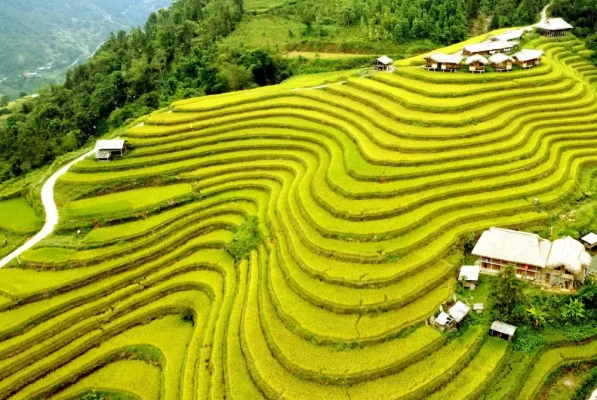
The route does not focus on reaching a mountain summit. Its main value lies in the landscape and local life, allowing travelers to observe farming activities, traditional homes, and everyday village routines.
Travelers who exercise infrequently should choose a half-day journey. Those with average fitness and regular walking experience can complete a full-day trek.
Accommodation and room rates
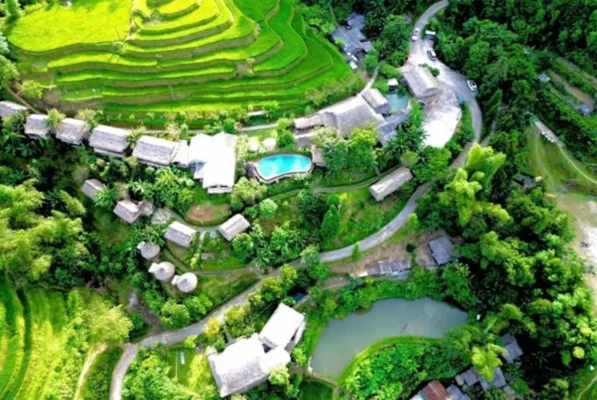
Panhou Retreat is a convenient base for journeys around Thong Nguyen and Nam Hong. The retreat is located in Lang Giang, Thong Nguyen, among gardens, a stream, and Red Dao villages.
Panhou Retreat has 40 bungalows and one three-bedroom villa. Deluxe Balcony rooms with breakfast are currently listed from VND 3,200,000 per night.
Panhou Retreat suits travelers who want to trek during the day while returning to a private room and comfortable surroundings in the evening.
Nam Ty – Thong Nguyen
This route suits travelers interested in terraced rice fields and local farming. Compared with Thong Nguyen – Nam Hong, it leads toward striking rounded rice hills surrounded by primary forest, particularly impressive during the golden season.
The journey is not especially difficult in dry weather. Travelers should begin early to avoid midday heat and reduce the risk of late-afternoon summer rain. This route suits those who enjoy slow travel and want strong photography opportunities during the rice season.
Accommodation and room rates
In Thong Nguyen, Guyen Homestay is a budget-friendly choice, with an average rate of approximately VND 315,000 per night.
Mong Ngua Homestay offers mountain and rice-field views, with rates generally ranging from VND 960,000 to VND 2,640,000 per night.
Panhou Retreat offers a more comfortable stay, with packages typically ranging from VND 1,950,000 to VND 2,100,000 per night.
Travelers seeking privacy and recovery services after trekking can return to Panhou Retreat in Thong Nguyen instead of staying overnight in a village.
Ban Luoc – Nam Ty
Ban Luoc – Nam Ty is distinguished by broad layers of terraced fields extending across multiple hillsides. The route suits photography enthusiasts and travelers who want to spend more time observing the rice landscape.
Unlike Nam Ty – Thong Nguyen, this route offers more open space and wider panoramic views. The terrain rises and falls continuously. Individual sections are not always steep, but extended walking can still cause fatigue.
Travelers can complete a shorter section in one day. A two-day itinerary is more suitable for those who want to stay in a village and photograph the landscape in both late-afternoon and early-morning light.
Accommodation and room rates
Hoang Su Phi Lodge is listed from VND 1,379,000 per night for single occupancy. Rates for two guests, meals, and seasonal supplements should be confirmed when booking.
Bong Benh Retreat in Ban Luoc has an indicative rate of approximately VND 680,000 per room per night. Ban Luoc Ecolodge has a swimming pool, garden, and restaurant, but rates vary by booking date.
Xuan Sang Homestay is located in Nam Pien hamlet, Nam Ty. Basic accommodation is available from approximately VND 100,000 per night.
Thong Nguyen – Nam Hong – Ban Luoc
Thong Nguyen – Nam Hong – Ban Luoc combines several major terraced-rice areas in one journey. It suits travelers with good fitness and a strong interest in exploration.
Compared with the routes above, this itinerary offers more varied scenery, including Rua Vang Waterfall and Phin Ho Stream. The journey usually lasts two to three days.
On the first day, travelers can depart from Thong Nguyen, pass through Red Dao villages, and stay overnight in Nam Hong. The following day, the route continues toward Ban Luoc, known for broad terraces and numerous viewpoints.
Accommodation and room rates
In Thong Nguyen, Panhou Retreat offers bungalows surrounded by mountain scenery, with rates of approximately VND 2,730,000 per night. When beginning or ending the route in Thong Nguyen, it is suitable for the first or final night.
Guyen Homestay is another budget-friendly choice, with online rates of approximately VND 314,000 per night.
In Ban Luoc, Bong Benh Retreat is listed online from approximately VND 679,000 per night.
Nam Hong – Xin Man
Nam Hong – Xin Man is a longer and more challenging route for travelers with previous multi-day trekking experience. The journey usually lasts three to four days and often involves more than 20 kilometers of walking per day.
Compared with Thong Nguyen – Nam Hong – Ban Luoc, this route feels considerably more remote. Travelers cross small villages, forests, rice fields, and areas far from major roads.
The terrain includes continuous ascents and descents, requiring endurance and the ability to adapt to simple services. Groups should travel with a local guide who understands the terrain and has a suitable communication plan. Participants should prepare their fitness before departure.
Accommodation and room rates
In Nam Hong, Hoang Su Phi Lodge offers bungalows overlooking rice fields, with rates ranging from VND 1,379,000 to VND 2,305,000 per night.
Hoang Su Phi Bungalow offers double and family rooms, generally priced from VND 500,000 to VND 1,500,000 per night.
Mong Ngua Homestay is surrounded by the terraced fields of Nam Hong, with online rates from approximately VND 312,000 per night.
Travelers should not expect luxury facilities at the end of a long route. A clean room, hot water, and a convenient location are often more important than design or scenery.
How to choose the right Hoang Su Phi trekking tour
The best tour is not necessarily the longest itinerary or the one covering the greatest number of destinations.
Before booking hoang su phi tours, travelers should ask about:
- The actual walking time each day.
- The total elevation gain and descent.
- Whether the main terrain consists of rice fields, forests, or mountain paths.
- The number of travelers in the group.
- Whether the guide is from the local area.
- Whether meals and drinking water are provided.
- The overnight accommodation conditions.
- How luggage is transported.
- The policy for changing the route during rain.
- Available transport support if a traveler cannot continue.
Distance alone does not fully represent difficulty. An eight-kilometer route with mud and steep slopes can be harder than a longer journey on relatively level ground.
Beginners should start with a half-day or one-day route. Families with children should provide their ages and previous physical activity experience in advance.
Travelers with knee conditions, cardiovascular concerns, or balance difficulties should consult a doctor and the tour operator before departure.
What should you prepare for trekking?
Footwear is the most important item. Choose shoes that have already been worn several times, with good traction and reasonable drainage. Completely new shoes can increase the risk of foot pain and blisters.
When descending, take short steps and keep your center of gravity stable. Do not run or attempt to overtake others on narrow paths.
During the rainy season, maintain enough distance to prevent multiple people slipping together. Do not cross a stream when the current is strong or before the guide has checked conditions.
Trekking packages at Panhou Retreat
Panhou Retreat is located in Lang Giang hamlet, Thong Nguyen commune, Tuyen Quang province. The retreat serves as a starting point for routes through rice fields, forests, tea hills, and Red Dao villages.
At the time of writing, the Panhou Retreat website presents three packages directly suited to trekking travelers.
3-day, 2-night village discovery – short trek
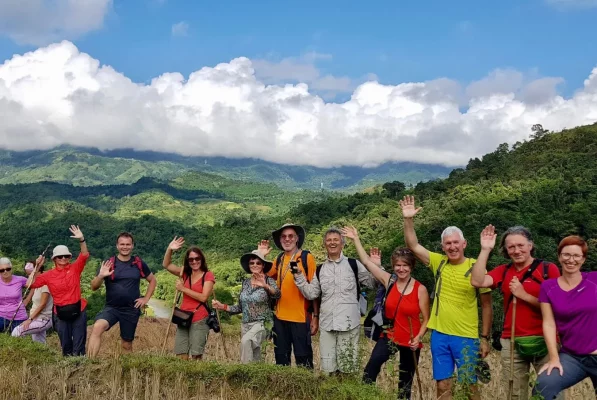
This package suits beginners who want a light walking experience while staying both nights at the retreat.
It includes two nights at Panhou Retreat, two breakfasts, and two dinners. A half-day trek of approximately 3–5 kilometers with a local porter is also included.
Travelers can also learn to prepare and enjoy tea, use the swimming pool and hot mineral pool, join vegetable-picking activities, and visit the museum with children.
The package is currently listed from VND 3,980,000 per package, based on a minimum booking of two guests and two nights. Travelers can choose Yen Son, Giang Ha, or Nam Nghi.
3-day, 2-night cultural discovery – long trek
This package suits travelers who want to explore village life more deeply and spend one night at a homestay.
The program includes one night at Panhou Retreat, one night in a village, two breakfasts, two lunches, and two dinners.
Travelers complete a long-distance trek with a guide, experience traditional tea culture, and use the mineral pool, swimming pool, and other retreat facilities.
The package is currently listed from VND 4,050,000 per guest, based on a minimum booking of two guests and two nights.
The two main itineraries are Nam Nghi – Giang Ha – Thong Nguyen and Nam Nghi – Phin Ho – Yen Son – Lang Giang.
3-day, 2-night family holiday
This package combines a full day of village trekking with lighter activities for young children. It includes two nights in a garden-view bungalow, two breakfasts, two dinners, and one lunch during the trek.
Families can also pick vegetables, visit the museum, use the hot mineral pool and swimming pool, and borrow bicycles. The package is currently listed from VND 3,731,500 per guest.
The trekking route can be selected from Yen Son, Giang Ha, or Nam Nghi and should be adjusted according to each child’s age and fitness.
Panhou Retreat also offers seasonal and holiday packages. Rates and inclusions may change.
Why begin your journey at Panhou Retreat?
Panhou Retreat follows a hospitality model connected with nature conservation and the preservation of local culture. As a result, trekking journeys not only help travelers explore Hoang Su Phi but also support livelihoods within surrounding communities.
More than 95% of the retreat’s employees are ethnic minority residents from Hoang Su Phi. They work in many roles, including food preparation and accommodation services. Their knowledge of the terrain, customs, and local life makes each journey more personal and authentic.
Revenue is contributed to the Panhou Sustainable Development Fund and reinvested in community projects. This approach creates employment, supports livelihoods, and encourages local people to continue protecting the landscape and cultural traditions.
Panhou Retreat suits trekkers who need local guidance and travelers seeking a balance between physical activity and relaxation. It is particularly suitable for families who want children to spend time in nature. Visitors interested in culture and responsible travel also value this approach.
Frequently asked questions
1. What are the best trekking tours in Hoang Su Phi?
The best tour depends on your fitness, available time, and preferred scenery. Thong Nguyen – Nam Hong is suitable for beginners, Ban Luoc – Nam Ty emphasizes wide terraced landscapes, while Thong Nguyen – Nam Hong – Ban Luoc offers a varied two- to three-day journey. Experienced trekkers can choose the longer Nam Hong – Xin Man route.
2. Which trekking tour is best for beginners?
The Panhou – Yen Son or Panhou – Nam Nghi routes suit beginners with average fitness. The 3-day, 2-night village discovery package includes one trekking session and two nights at the retreat.
3. Which tour offers the most terraced-rice scenery?
Ban Luoc – Nam Ty suits travelers who prioritize expansive rice-field views. Panhou – Nam Nghi – Phin Ho – Yen Son offers a more balanced combination of terraces, forests, tea hills, and villages.
4. Can I join if I do not exercise regularly?
Yes, but you should begin with a half-day route. Explain your fitness level clearly so the guide can adjust the pace and rest stops.
5. Do I need a local guide?
A guide is recommended, especially for longer routes. Many paths are agricultural tracks without signs, and conditions can change after rain.
6. Which tour should families with young children choose?
The 3-day, 2-night family package is more suitable because it combines trekking with vegetable picking, a museum visit, swimming, and rest time. The route should be adjusted according to each child’s age and mobility.
7. How many days should I spend in Hoang Su Phi?
Three days and two nights are sufficient for one main trekking route. Four to six days suit travelers combining several areas. Longer journeys should be designed individually.
Ngoc Van

3D2N NATIONAL DAY OFFER | JOURNEY INTO GREEN SEASON
From 125 USD/Guest/Combo
3D2N GOLDEN SEASON IN HOANG SU PHI
From 114 USD/Guest/Combo