North Vietnam Trekking: Hoang Su Phi & Best Routes
| ExperiencesNorth Vietnam trekking takes you through some of Southeast Asia’s most beautiful mountain country: hand-built rice terraces, ethnic villages, cloud forests and peaks above 2,000 metres. Many travellers head straight for Sapa, but the quieter valleys of Hoang Su Phi in Ha Giang offer some of the region’s most rewarding walks. Panhou Retreat, set among the terraces of the Thong Nguyen valley, makes a comfortable trekking base, with guided routes to Red Dao villages starting from its doorstep. This guide starts there, then compares the other main trekking areas, with seasons, difficulty and where to stay.
1. Hoang Su Phi, Ha Giang: Rice terraces & Red Dao villages
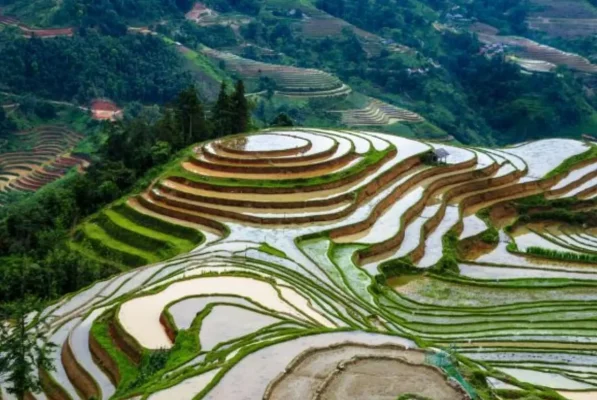
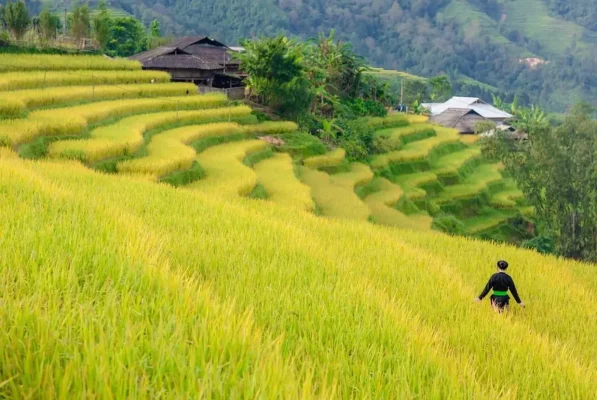
Hoang Su Phi sits on the western side of Ha Giang, now part of Tuyen Quang Province. It is a land of steep valleys, forest streams and terraces that climb whole mountainsides. Around 3,000 hectares of terraced fields cover its slopes, and those in several communes were classified as a national scenic site in 2012.
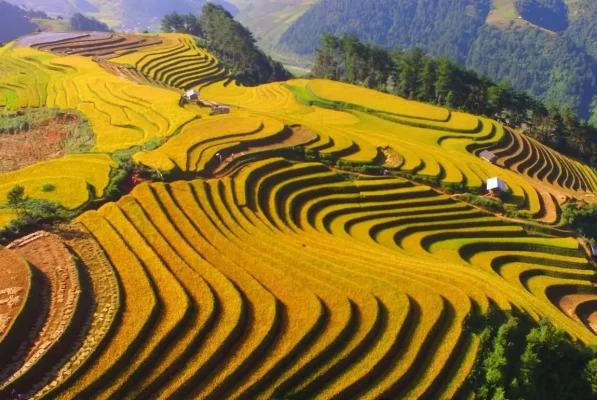
Unlike the motorbike-focused Ha Giang Loop to the east, Hoang Su Phi is best explored on foot. Trails link Red Dao, Nung and La Chi villages, pass through bamboo and old forest, and cross streams on stepping stones.
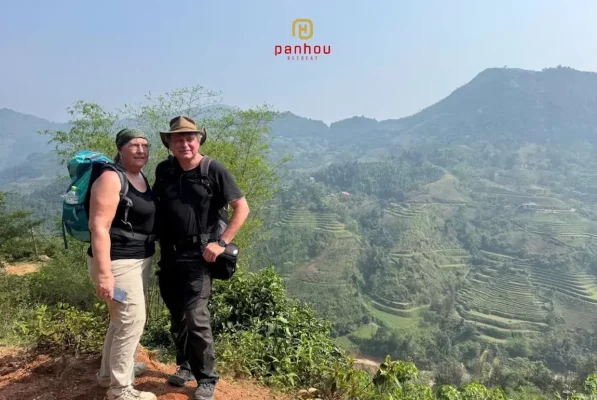
Hoang Su Phi trekking routes
| Route type | Distance / time | Difficulty | Highlights |
|---|---|---|---|
| Half-day village walk | 3–5 km, 3–4 hours | Easy | Terraces, Red Dao houses, tea gardens |
| Full-day valley trek | Full day | Moderate | Remote villages, streams, picnic lunch |
| Village overnight trek | 2 days | Moderate | Homestay with a local family |
| Chieu Lau Thi summit | Long day, early start | Challenging | Sea of clouds at about 2,402 m |
| Tay Con Linh | Multi-day | Hard, guide essential | Highest peak in the area, about 2,428 m |
For more ideas, read our stories on hiking trails in Hoang Su Phi and trekking to Giang Ha village.
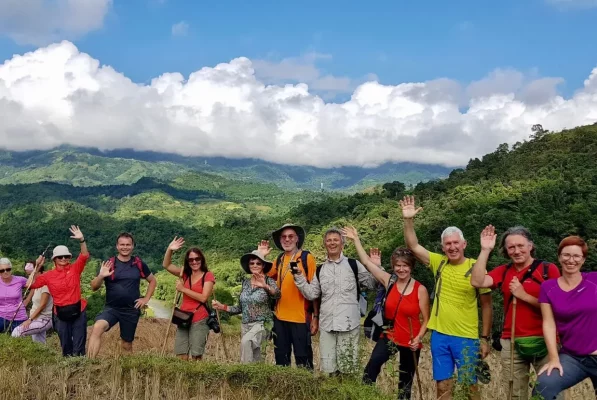
Best time for Hoang Su Phi trekking
- Mid-September to early October: golden rice season, the most popular time
- May–June: water season, when terraces shine like mirrors
- October–April: cool, dry and comfortable for longer walks
- July–August: green but very wet; trails can be muddy and slippery
Where to stay in Ha Giang and Hoang Su Phi
Your base shapes your trek. In Hoang Su Phi, you have three main choices:
- Village homestays: simple, close to local families, usually with shared facilities
- Small guesthouses in the district centre: convenient but less scenic
- Panhou Retreat in Thong Nguyen: a forest retreat with guided treks, hot mineral baths and comfortable bungalows, ideal for combining hiking with proper recovery
For the eastern Ha Giang Loop, Ha Giang city, Dong Van and Meo Vac have homestays and small hotels. Many trekkers do the Loop first and finish with a few days of walking and rest in Hoang Su Phi. Our guide to the best resort for a trekking base in Hoang Su Phi compares options.
2. Sapa and the Hoang Lien Son Range
Sapa is north Vietnam’s best-known trekking hub. Valleys such as Muong Hoa are lined with rice terraces and Hmong, Red Dao and Giay villages. Above them rises Fansipan, at 3,143 metres the highest peak in Indochina.
Sapa is well organised, with many guides and routes for all levels. The trade-off is crowds: popular valleys can feel busy, and a cable car now reaches Fansipan’s summit. Trekkers looking for quieter trails often go further out, or choose Hoang Su Phi instead.
3. Pu Luong nature reserve
Pu Luong, in Thanh Hoa Province, offers gentle treks through rice valleys, bamboo forest and Thai villages. It is around four hours from Hanoi and suits families and beginners. Accommodation ranges from stilt-house homestays to eco-lodges.
4. Mai Chau Valley
Mai Chau is the easiest introduction to north Vietnam trekking. Flat or rolling paths connect White Thai villages across the valley floor, with optional climbs to viewpoints. It works well as a one- or two-night trip from Hanoi.
5. Ha Giang Loop Hikes
The eastern Ha Giang Loop is usually done by motorbike, but short hikes add adventure. Paths around Ma Pi Leng look down on the Nho Que River canyon, and villages near Dong Van and Du Gia reward walkers with rugged karst scenery. This is the place for a Ha Giang adventure that mixes riding with walking.
Comparing North Vietnam trekking areas
| Area | Crowds | Difficulty range | Travel time from Hanoi | Best for |
|---|---|---|---|---|
| Hoang Su Phi | Low | Easy to hard | About 5 hours | Terraces, culture, quiet |
| Sapa | High | Easy to very hard | About 5–6 hours | Variety, Fansipan |
| Pu Luong | Medium | Easy to moderate | About 4 hours | Families, gentle walks |
| Mai Chau | Medium | Easy | About 3–4 hours | First-timers |
| Ha Giang Loop | Medium–high | Easy hikes | About 6 hours | Riding plus short hikes |
Vietnam mountain trekking tips
- Go with a local guide. Trails are unmarked, and guides open doors to villages.
- Wear proper shoes. Terrace edges and forest paths get slippery.
- Pack layers and rain gear, even in the dry season.
- Carry water, snacks and cash.
- Respect fields and homes. Stay on paths and ask before entering houses or taking photos.
- Check insurance covers trekking at altitude.
- Plan recovery. Multi-day treks are tiring; schedule rest days with hot baths and massage.
Trekking from Panhou Retreat, Hoang Su Phi
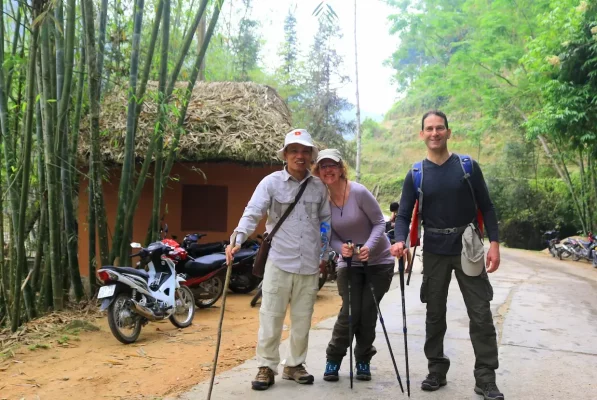
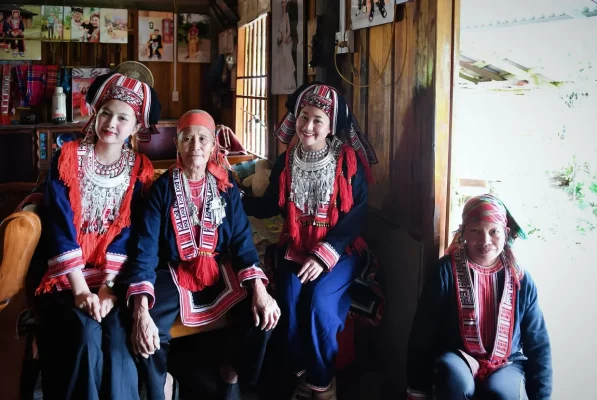
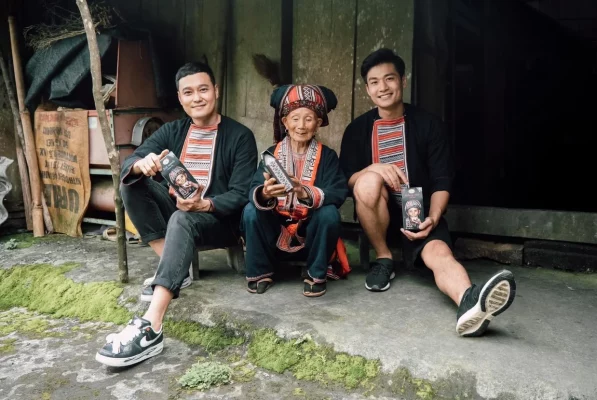
Panhou Retreat is designed as a base for walking Hoang Su Phi. Its trekking routes are curated by the retreat and led by local guides who grew up in these mountains. More than 95% of the Panhou team come from surrounding ethnic communities. See the Panhou trekking tours.
What a trekking day looks like
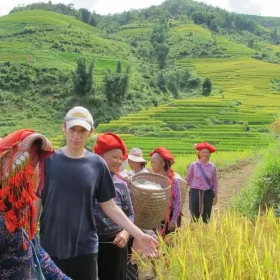
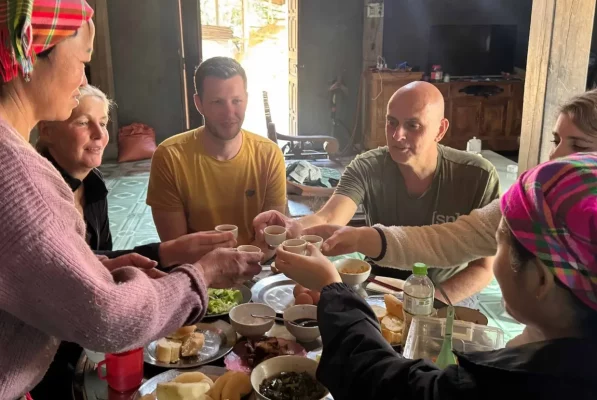
You start with breakfast at Khu Cao Restaurant, then follow your guide across terraced fields and into the emerald forest. Along the way you dip your feet in cool streams, visit Red Dao homes and share warm rice and local rice wine with families. You return in the afternoon to rest.
Recovery built in
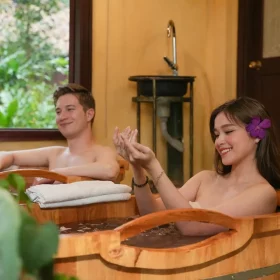
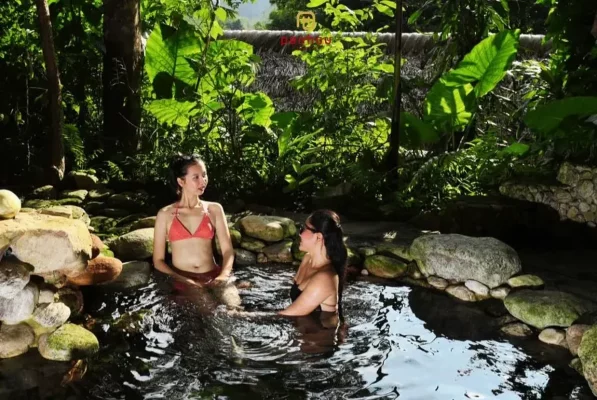
After the trek, soak in Panhou’s natural hot mineral water at around 48°C, free from 16:00 to 18:00. The Red Dao herbal bath, made with fresh leaves from the retreat’s garden, is a traditional way to ease tired legs. Massages with herbal oils are available at the spa.
A comfortable bungalow to come home to
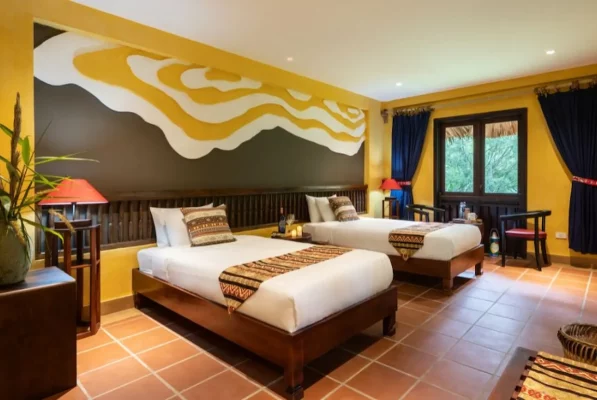
Forty bungalows sit on the hillside beneath old trees, built from bamboo, wood and stone. Choose a Superior Window room for simple comfort or a Suite with its own private hot mineral pool. See accommodation.
Panhou trekking packages
These packages combine your stay with guided treks, so you only need to choose your dates:
| Package | Trek | From (USD/guest) | Best for |
|---|---|---|---|
| 2D1N Trekking & Local Life | Half-day, 3–5 km | 85 | A short taster |
| 3D2N Trekking & Experience Local Life (Half Trek) | Half-day, 3–5 km | 159 | Relaxed pace |
| 3D2N Trekking & Experience Culture (Full Trek) | Full day + village night | 162 | Keen walkers |
| 3D2N Family Retreat | Full day with picnic | 149 | Families |
2D1N Trekking & Local Life: A first taste of Hoang Su Phi trekking
From 85 USD/guest
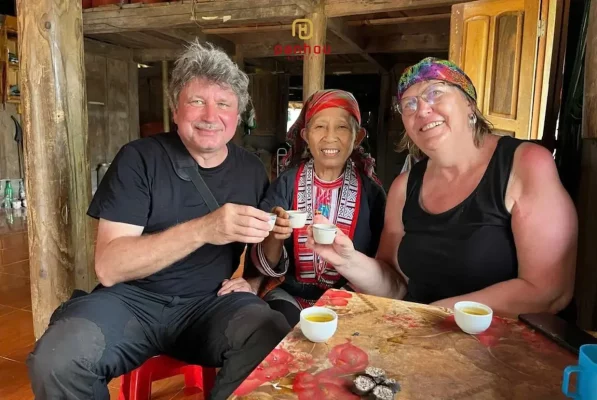
The package includes one night at Panhou, breakfast and a dinner of local cuisine, and a 45-minute natural essential oil massage. It adds a half-day trek of 3–5 km with a local guide, a tea-making tour with traditional tea tasting, and a choice of Do paper painting or a cultural museum visit. The 48°C hot mineral bath is open to guests from 16:00 to 18:00. It is the shortest way to try trekking in Hoang Su Phi.
>> See the 2D1N Trekking & Local Life package
3D2N Trekking & Experience Local Life (Half Trek): A relaxed pace
From 159 USD/guest
The package includes two nights at Panhou with two breakfasts and two dinners of local cuisine, a half-day trek of 3–5 km with a local guide, and a tea-making tour with traditional tea tasting. Children can join vegetable picking and a museum visit, and everyone has free use of the infinity pool and the 48°C hot mineral bath from 16:00 to 18:00. It is ideal for walkers who prefer shorter trails and more time to rest.
>> Explore the 3D2N Half Trek package
3D2N Trekking & Experience Culture (Full Trek): For keen walkers
From 162 USD/guest
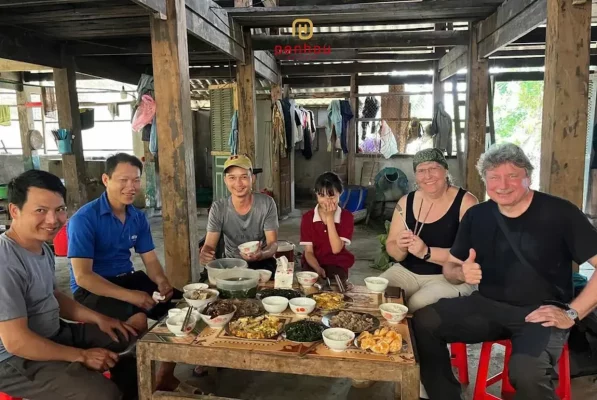
The package includes one night at Panhou and one night in a village homestay, breakfast every morning, and two lunches and two dinners of local cuisine. You trek for a full day with a local guide through forest and rice terraces, via the Red Dao village of Nam Nghi up to Giang Ha or Phin Ho, and join a tea-making tour with traditional tea tasting. It suits trekkers who want a full day on the trail and a night in the village.
>> Discover the 3D2N Full Trek package
3D2N Family Retreat: Trekking with children
From 149 USD/guest
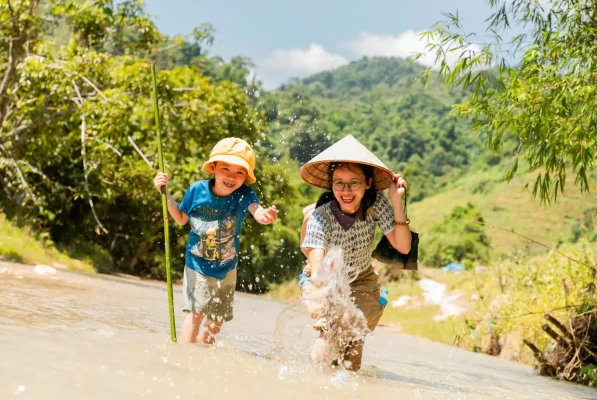
The package includes two nights at Panhou with two breakfast buffets and two dinners at Khu Cao Restaurant, and a full day of trekking and village exploring planned for families, with a picnic lunch of local dishes. Children get free activities such as vegetable picking or a museum visit, and the whole family can use the infinity pool and the 48°C hot mineral bath from 16:00 to 18:00. It is a good way to introduce children to village life on foot.
>> See the 3D2N Family Retreat package
All packages include free hot mineral bathing and bicycle use. Prices are for reference and charged in VND; packages do not apply during Tet. For longer itineraries, see our trekking package in Hoang Su Phi guide or all Panhou packages.
Getting to Hoang Su Phi
Hoang Su Phi is about 5 hours by road from Hanoi. Panhou’s limousine shuttle departs the Hanoi Opera House at 7:30 am on Mondays, Wednesdays and Fridays; private transfers are also available. See how to get to Panhou Retreat.
FAQ
1. Where is the best trekking in north Vietnam?
Hoang Su Phi offers the quietest terrace and village treks. Sapa has the widest range of routes and Fansipan, while Pu Luong and Mai Chau suit beginners.
2. When is the best time for north Vietnam trekking?
From October to April for cool, dry trails, and mid-September to early October for golden rice terraces. Summer is green but rainy.
3. Do I need a guide to trek in Hoang Su Phi?
Yes, a local guide is strongly recommended. Trails are unmarked, and guides help you visit villages respectfully.
4. Is Hoang Su Phi trekking suitable for beginners?
Yes. Half-day village walks of 3–5 km are easy, while summit treks to Chieu Lau Thi or Tay Con Linh suit experienced hikers.
North Vietnam trekking is at its most rewarding where trails still lead through living villages and quiet terraces. Start with Hoang Su Phi, and let Panhou Retreat’s local guides, hot mineral water and forest bungalows turn each day’s walk into a journey worth remembering.
Ngoc Van

3D2N THE STORY OF HERITAGE
From 131 USD/Guest/Combo
3D2N BLACK FRIDAY
From 181 USD/02 Guests/Combo