Red Dao Ethnic Festival: How Is Organized In A Special Way?
| ExperiencesRed Dao ethnic festival reflect the spiritual life, ancestral beliefs and cultural identity of highland communities in Northern Vietnam. From Tet Nhay and the Cap Sac Ceremony to Ban Vuong worship, each ritual reveals how the Red Dao preserve family memory, community values and respect for nature.
From Tet Nhay and the Cap Sac ceremony to Ban Vuong worship, each ritual has its own timing, preparation and meaning. This article introduces the festivals of the Dao ethnic group in detail, helping travelers understand Red Dao culture before exploring Hoang Su Phi.
What are Red Dao ethnic festival?
Red Dao ethnic festivals are a system of rituals, worship ceremonies and community activities practiced by the Dao people. These events are often connected with ancestors, Ban Vuong, harvests, health, family and spiritual maturity.
Not every Red Dao ethnic festival is like a large public celebration with entertainment. Many rituals take place within a family, lineage or small community group.
For the Red Dao, festivals are a way to remember origins and preserve family ethics. Through prayers, dances, clothing and offerings, younger generations learn how to understand their community.
The traditional festivals of the Red Dao ethnic group may vary by region and Dao branch. A ritual in Sapa may differ in detail from one in Hoang Su Phi or Tuyen Quang.
What festivals do the Dao people celebrate?
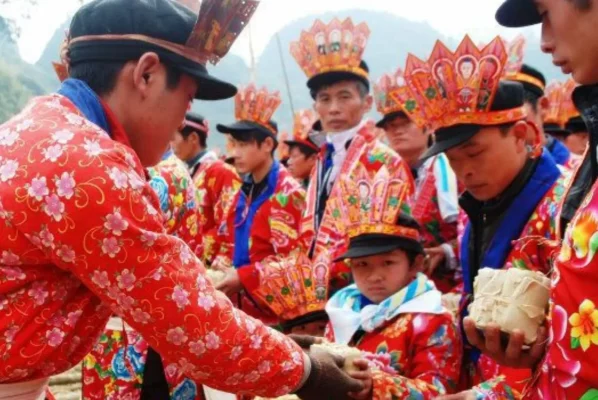
Many travelers often ask: what festivals do the Dao people celebrate? Important rituals usually include Tet Nhay, the Cap Sac ceremony, Ban Vuong worship, promise-and-thanksgiving rituals and New Year ceremonies.
Some ceremonies have a community character, while many others take place within the family. Their timing often depends on the lunar calendar, ritual masters, family conditions and local customs.
For the Red Dao, these festivals are not separated from everyday life. They are connected with daily living, spiritual maturity, ancestral worship and the relationship between people and mountains.
Tet Nhay: The sacred dance of Red Dao ethnic festival
Tet Nhay is a ritual to remember ancestors, thank Ban Vuong and pray for peace in the new year. Depending on the region, this ceremony is also known by local names such as Put Tong among the Red Dao in Lao Cai, where “Put” means dance and “Tong” means together, or Nhiang Cham Dao among the Red Dao in Yen Bai.
The Put Tong ritual of the Red Dao in Lao Cai was recognized as a National Intangible Cultural Heritage by Vietnam’s Ministry of Culture, Sports and Tourism in 2013. The dances are not performed simply for fun, but carry clear ritual meaning.
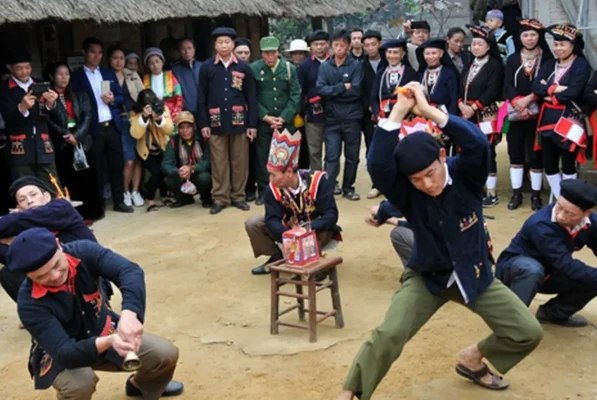
The movements may symbolize journeys, protection, gratitude and community strength. Participants do not dance freely, but follow inherited sequences, and ritual dances in Tet Nhay are usually performed by men.
How do families prepare for Tet Nhay?
Before the ceremony, the family usually chooses an auspicious day and invites an experienced ritual master. The ancestral altar is cleaned, rearranged and prepared with full offerings.
Offerings often include chicken, pork, rice wine, incense, ritual paper, cakes and traditional dishes. Depending on each family’s conditions, the offering tray may be simple or elaborate, but it must remain respectful.
Men often prepare for ritual dances, drums, bells or related ceremonial objects. Women usually prepare food, clothing, guest reception and the family meal.
Relatives and neighbors may come to help before the ceremony begins. Preparation is not only practical work, but also a way for the community to show connection.
How does the Tet Nhay ceremony take place?
The ceremony often begins when the ritual master lights incense and invites the ancestors to witness the event. The family presents offerings at the altar to express gratitude and respect.
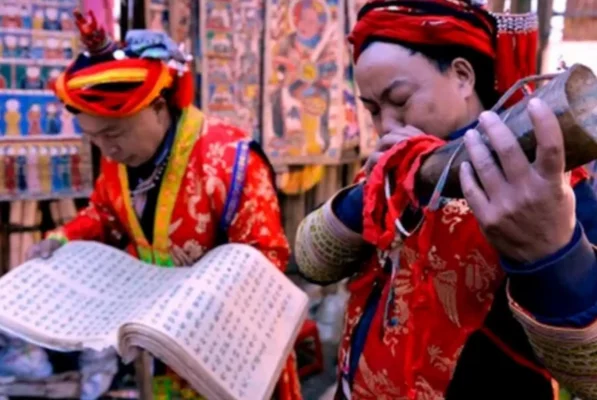
After the opening ritual, the master recites prayers in the ancient Red Dao ritual language. In some families, the prayers may be read from old books or passed down orally.
The dances begin when the ritual master and host allow them to start. Dancers move to the rhythm of drums, bells and ritual instructions.
Some dances may evoke images of fighting, protection, travel or inviting ancestors, such as flag dances, sword dances, bell dances and turtle-offering dances. Each movement has meaning within the spiritual story of the Red Dao.
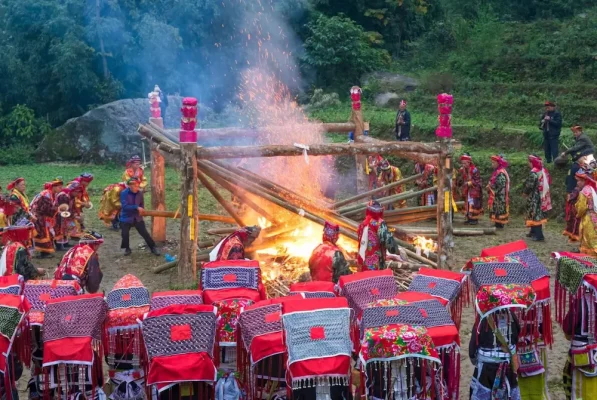
In some areas such as Yen Bai and Lai Chau, the ceremony may include “charcoal bathing” or fire jumping. Men believed to receive strength from Ban Vuong and the ancestors jump into burning embers, creating one of the most striking moments of Tet Nhay, although not every region practices it in the same way.
After the prayers and dances, the family shares a meal with relatives, exchanges New Year wishes and talks together. The atmosphere moves from solemn to warm, while still respecting the sacred space.
Who takes part in Tet Nhay?
The ritual master leads the ceremony and maintains its spiritual order. The host or lineage head usually represents the family during the main offering.
Men often perform ritual dances according to the ritual master’s arrangement. Women play important roles in preparing offerings, clothing, meals and guest reception.
Children, relatives and neighbors may attend depending on the nature of each family ceremony. Guests from outside the community should be invited or permitted before approaching the ritual area.
Cap Sac ceremony: The rite of maturity for Dao men
The Cap Sac ceremony is one of the most important rituals in the life of a Dao man. It is not an entertainment festival, but a sacred rite marking spiritual maturity. Depending on the Dao branch, this ceremony may also be called Lap Tinh, Qua Tang, Lap Tich among the Dao Ho, or Tu Cai among the Dao Dau Bang.
Is the Cap Sac ceremony a festival or a ritual?
The Cap Sac ceremony is mainly a family and lineage ritual, not a public festival. However, because it includes offerings, music, meals and community participation, many people still see it as part of Dao people’s festivals.
This ritual is especially meaningful because it relates to men’s roles in ancestral worship. After the ceremony, the initiated man is recognized as spiritually mature within the community.
When does the Cap Sac ceremony take place?
The Cap Sac ceremony does not have one fixed date for all Dao communities. Families usually choose an auspicious day, and it is most commonly held during the agricultural off-season in winter, around the eleventh, twelfth or first lunar month, after the harvest has finished.
Some ceremonies may last one day, while a full ritual can last several days, often from one to three days. The duration depends on spiritual rank, family conditions and local customs.
The ceremony must also fit the schedule of the main ritual master and assistants. Therefore, travelers cannot predict the date without asking local people.
What does the Cap Sac ceremony mean?
After the Cap Sac ceremony, the man is recognized by the community as spiritually mature. He can take a deeper role in ancestral worship and family rituals.
A central part of the ceremony is the lamp – giving ritual: the lamps or candles symbolize knowledge and enlightenment. There are usually three levels of initiation, corresponding to three, seven and twelve lamps, with more lamps meaning greater rank and responsibility.
The ritual also reminds the initiated man of his responsibilities to ancestors, parents and community. It is an important milestone not only for the individual, but also for the lineage.
How does the family prepare for the Cap Sac ceremony?
The family chooses an auspicious day, invites the main ritual master and prepares the ceremonial space. The altar, ritual paintings, prayer books, ritual paper and offerings are carefully arranged.
Offerings often include chicken, pork, rice wine, rice and food for relatives. Depending on the family’s conditions, the ceremony may vary in scale but remains solemn.
The initiate prepares his clothing, mindset and obedience to the ritual master’s guidance. Relatives and neighbors may help cook, set up the space and welcome guests.
How does the Cap Sac ceremony take place?
The ceremony often opens with the ritual master inviting ancestors and spirits to witness the rite. The initiate presents himself before the altar in a solemn setting.
The ritual master recites prayers, guides movements and performs necessary ritual steps, including the lamp offering that announces the name, age and spiritual position of the initiate. Some places also include the giving of a spiritual name, depending on local Dao customs.
The initiate goes through symbolic stages of learning, testing and receiving responsibility. These details can differ according to each Dao branch and locality.
After the main ritual, the family presents thanksgiving offerings and invites relatives to share a meal. The final meal expresses recognition, shared joy and community connection.
Who participates in the Cap Sac ceremony?
The initiate is the central figure of the entire ceremony. The main ritual master and assistants lead each step of the rite.
Parents, lineage elders and relatives witness the spiritual maturity of the initiate. Women in the family prepare offerings, meals and receive guests.
The community participates to recognize the man’s new role after the ritual. Because the ceremony is sacred, travelers should only attend with family or community permission.
Ban Vuong worship among the Dao people
Ban Vuong worship is an important part of the spiritual life of many Dao communities. This ritual reminds the Dao people of their origins, ancestors and cultural identity.
Who is Ban Vuong in Dao culture?
According to legends widely passed down among Dao communities, Ban Vuong was originally Long Khuyen Ban Ho, a divine dog three feet long with black fur and yellow stripes. The legend says Ban Ho helped a king defeat his enemy, received the princess in marriage and was granted land. Ban Ho and his wife had twelve children, six sons and six daughters, each given a surname and becoming the original Dao lineages. After the king died, Ban Vuong succeeded the throne but still lived simply, teaching people to grow rice and weave cloth. Therefore, Ban Vuong is regarded as the common ancestor of Dao lineages, not merely a general symbol.
Ban Vuong worship is not only about praying for luck, but also about remembering origins. Through this belief, the Dao maintain links between family, lineage and ethnic memory. From this legend, many Dao groups traditionally avoid eating dog meat, although this taboo has become more flexible in some places today.
When is Ban Vuong worship held?
The timing of Ban Vuong worship is not the same everywhere. Some places hold it during the New Year, community festivals or local cultural events. As an important ritual, many lineages organize major Ban Vuong worship in long cycles, such as every three, twelve or twenty years, or even once in a lifetime, rather than every year.
Some families perform the ritual within the lineage or on a special family occasion. The exact schedule must be confirmed by each village, ritual master and local tradition.
Preparing for Ban Vuong worship
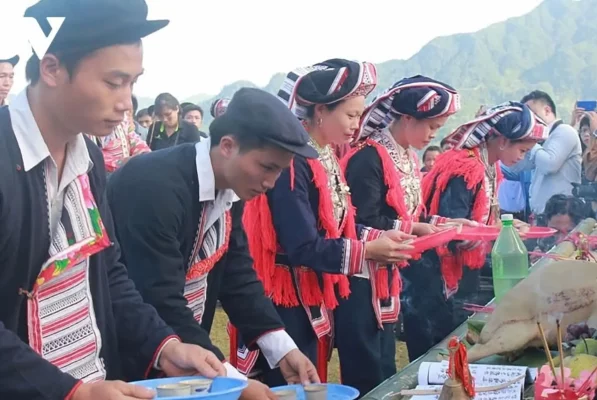
The family or community prepares the altar, incense, ritual paper and ceremonial objects. For a formal ritual, participants may wear traditional Red Dao clothing.
Offerings often include rice wine, chicken, pork, rice, cakes and traditional dishes. The ritual master prepares the prayers, ritual books and proper ceremonial sequence.
How does the ritual take place?
The ritual master opens the ceremony by inviting Ban Vuong and the ancestors to witness the offerings. The host or lineage representative presents offerings before the altar in a solemn atmosphere.
Depending on the locality, the ritual may include ceremonial singing, prayer recitation, dance or drumming. The final part is usually thanksgiving and a shared family or community meal.
Who takes part in the ritual?
The ritual master, lineage head, host and related families usually join the main ceremony. Elders play an important role because they understand genealogy, tradition and lineage rules.
Women, children and invited guests may attend depending on the scope of the ritual. Visitors from outside the community should ask permission before taking photos or approaching the altar.
Seasonal rituals of the Dao people
Some Dao communities have rituals connected with planting, harvest or agricultural cycles. In terraced rice areas such as Hoang Su Phi, seasonal work plays a very important role in daily life.
When do seasonal rituals take place?
Seasonal rituals may take place before planting, after harvest or at the end of an agricultural cycle. The exact timing depends on farming schedules, weather and local customs.
What do seasonal rituals mean?
These rituals often pray for favorable weather, good harvests and family health. They are also a way to thank ancestors, mountain spirits, forest spirits or protective forces.
Through these rituals, the Dao express a deep connection with land and nature. Agriculture is not only a livelihood, but also part of spiritual life.
Who participates in seasonal rituals?
Farming families, elders, lineage heads or ritual masters may participate. If it is a community ritual, neighbors and other village families may also take part.
Learning about Dao ethnic festivals at Panhou Retreat
Panhou Retreat is a four-star retreat located within the cultural landscape of Hoang Su Phi, where many highland communities live. It is a suitable place for travelers who want to understand local life at a slower pace.
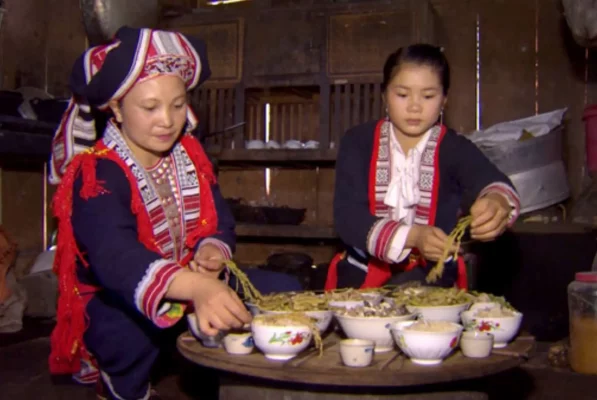
An accessible way to approach Red Dao culture
Hoang Su Phi is not only known for terraced rice fields and mountain scenery. The area also preserves cultural memory, community rituals such as fire jumping, bamboo dancing and bell dancing, which are still re-created at the retreat.
From Panhou Retreat, travelers can combine relaxation with trekking, village visits and Red Dao cultural discovery. This experience helps the journey go beyond ordinary sightseeing.
How does Panhou Retreat help travelers understand local traditions?
Local porters can explain the meanings of clothing, houses, medicinal plants and cuisine. When appropriate, they can also help travelers understand local rituals and customs.
If a festival or ritual takes place in the area, travelers should join under local guidance. Respect is always the most important value when approaching sacred cultural spaces.
Experiencing the highlands
Learning about Dao ethnic festivals helps travelers see the spiritual life of the community. These rituals show that the highlands offer not only scenery, but also cultural depth.
Panhou Retreat can be a meaningful starting point for this journey of discovery. From nature and villages to rituals, travelers can approach Red Dao culture slowly and respectfully.
Red Dao ethnic festivals as a highland tradition
Dao ethnic festivals open a window into the spiritual life of the Red Dao people. Tet Nhay, the Cap Sac ceremony, Ban Vuong worship and promise rituals are connected with ancestors, family and community.
Each ritual has its own timing, preparation, participants and meaning. Therefore, when learning about traditional festivals of the Dao ethnic group, travelers should see them as part of real life.
Travelers should approach these rituals with respect, rather than treating them as performances. Panhou Retreat is a suitable starting point for discovering Red Dao culture in the quiet, natural and distinctive landscape of Hoang Su Phi.
FAQ
1. What festivals do the Dao ethnic group celebrate?
The Dao people celebrate many important festivals and rituals, including Tet Nhay, the Cap Sac ceremony, Ban Vuong worship, promise rituals, New Year rituals and seasonal ceremonies.
2. What is the most important Red Dao ethnic festival?
Tet Nhay is often considered one of the most important festivals of the Red Dao people. It honors ancestors, Ban Vuong and the new year through ritual dances.
3. When does Tet Nhay take place?
Tet Nhay usually takes place during Lunar New Year or the first lunar month. The exact date varies by family, village and local tradition.
4. What is the Cap Sac ceremony of the Dao people?
The Cap Sac ceremony is a maturity ritual for Dao men. After the ceremony, a man is recognized as spiritually mature and gains a role in family rituals.
5. Can travelers attend Red Dao ethnic festivals?
Travelers may attend some community festivals if they receive permission. For family or sacred rituals, they should ask hosts or guides before joining.
6. Where can travelers learn about Dao festivals in Vietnam?
Travelers can learn about Dao festivals in Sapa, Hoang Su Phi, Ha Giang, Tuyen Quang, Cao Bang and other northern mountain areas.
Ngọc Vân

3D2N NATIONAL DAY OFFER | JOURNEY INTO GREEN SEASON
From 125 USD/Guest/Combo
3D2N GOLDEN SEASON IN HOANG SU PHI
From 114 USD/Guest/Combo