Red Dao Ethnic Group in Ha Giang, Vietnam
| ExperiencesThe Red Dao ethnic group is a distinctive ethnic minority community in Northern Vietnam, recognized by red headscarves, indigo hand-embroidered clothing, forest herbal knowledge, and a rich spiritual life. From Sa Pa and Hoang Su Phi to Ha Giang, Tuyen Quang, Lai Chau, and Yen Bai, Red Dao culture remains visible in embroidery, herbal bathing, farming, ancestor worship, and community rituals. This article explains who the Red Dao people are, where they live, which customs make them unique, and how travelers can respectfully learn about Red Dao culture in the Hoang Su Phi highlands.
Who are the Red Dao people?
The Red Dao people are a subgroup of the Dao community in Vietnam, mainly living across the northern mountain provinces. In travel English, they are often called the Red Dao ethnic group or the Red Dao ethnic minority in Vietnam. Some travelers also search for red dao tribe vietnam, although “ethnic group” is more accurate and respectful.
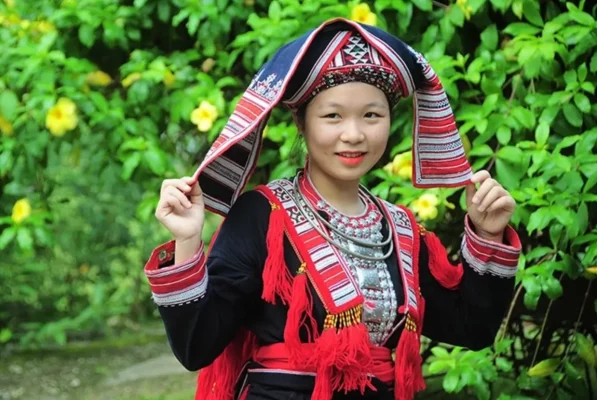
The name “Red Dao” comes from the bright red color seen on headscarves, tassels, embroidery threads, and many clothing details. Red Dao women often wear indigo or dark indigo garments, combined with red, white, yellow, and silver decorative embroidery.
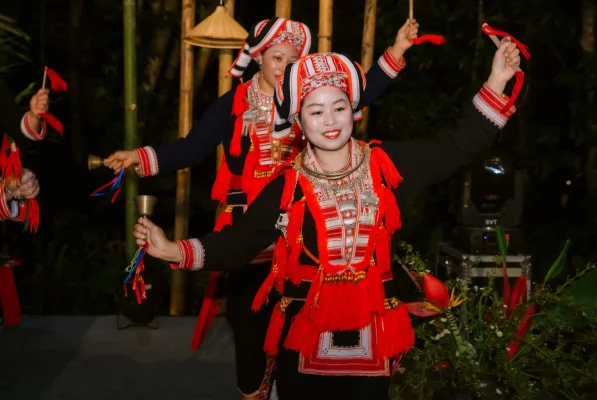
The Red Dao people Vietnam are known for hand embroidery, herbal bathing, and especially Ban Vuong worship. Their daily life is closely connected with terraced farming, Shan Tuyet tea, and medicinal plants grown in highland areas.
In community life, the Red Dao have a clear lineage system. Some Dao traditions and legends mention Ban Vuong and twelve children, later viewed as the origins of lineages such as: Ban, Dang, Trieu, Ly, Phung, Tan, Chao, Duong, Hoang, Luu, La, and Tran.
Where do the Red Dao people live in Vietnam?
The Red Dao live in many northern mountain provinces, including Lao Cai, Ha Giang, Tuyen Quang, Yen Bai, Lai Chau, Cao Bang, Bac Kan, and Thai Nguyen. Each region has different natural conditions, but their lives are often connected with mountains, forests, streams, upland fields, and village communities.
In Sa Pa, Lao Cai, the Red Dao are especially known around Ta Phin, herbal bath services, and community-based tourism. This is one of the best-known places for travelers learning about Red Dao herbal baths and village life.
In Hoang Su Phi, Tuyen Quang, Red Dao communities live among terraced fields, forests, streams, and highland trekking routes. This area suits travelers who want to understand culture through slower experiences, rather than short sightseeing visits.
Why are they called the Red Dao?
The name Red Dao is linked to the red color found in traditional clothing, especially women’s headscarves. Red appears on scarves, tassels, embroidery threads, belts, and many other decorative details.
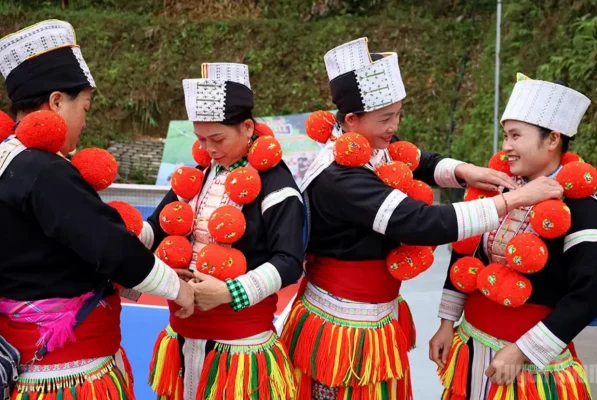
Red Dao clothing usually has an indigo or black base, creating contrast with red, white, yellow, and silver patterns. Hand-embroidered details often appear on collars, sleeves, front panels, belts, and trouser legs.
For the Red Dao people, clothing is not only used for beauty. It also reflects skill, family identity, age, social role, and cultural memory passed through generations.
Traditional clothing of the Red Dao people
Red headscarves and hand-embroidered clothing
The red headscarf is the clearest visual marker of Red Dao women. Depending on the region, the wrapping style, size, and decorations may vary, but red remains the central feature.
Red Dao shirts are often indigo or black, worn with trousers, belts, and hand-embroidered panels. Embroidery motifs usually include geometric forms, borders, symmetrical patterns, and bold colors. Some patterns are also stylized from nature, plants, mountains, forests, or daily highland life.
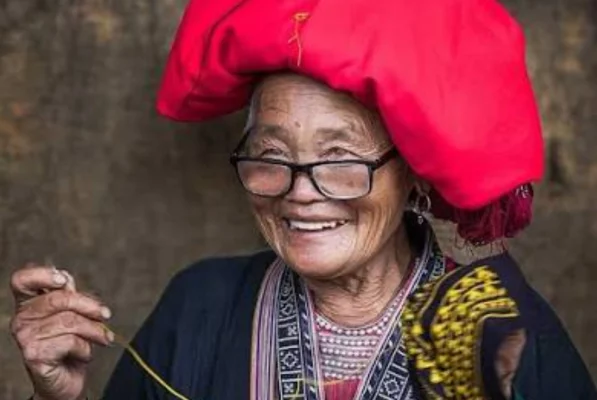
During important occasions such as weddings, festivals, or family rituals, silver jewelry may make the outfit more ceremonial. Silver is not only decorative, but also shows care and formality in ritual and community life.
Women’s role in preserving traditional clothing
Red Dao women play an important role in hand embroidery, teaching clothing traditions, and preserving cultural memory. Many girls learn embroidery and weaving from mothers, grandmothers, or other women in the family from a young age.
Each traditional outfit requires time, patience, and skill. Therefore, clothing is not only a handmade product, but also a trace of labor, affection, and community identity.
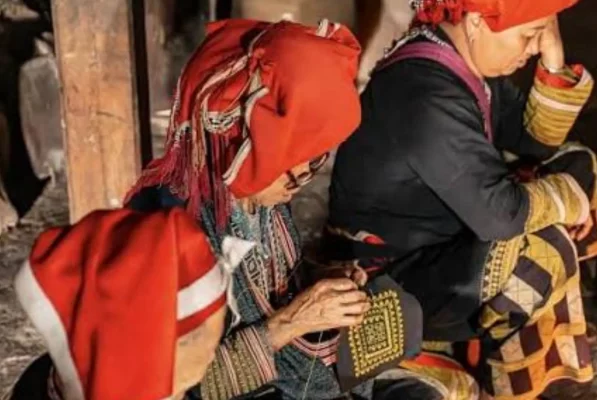
The Red Dao should not be described as a matriarchal community without reliable sources. A more accurate approach is to say that Red Dao women play an important role in preserving embroidery, herbal knowledge, and family traditions.
Daily life and highland livelihoods of the Red Dao people
Red Dao daily life is closely connected with high mountains, forests, streams, and terraced fields. Many families grow rice, corn, Shan Tuyet tea, raise livestock, and make handicrafts to support their livelihoods.
In areas with community tourism, some families provide homestays, trekking guidance, local meals, or herbal bath services. This helps Red Dao culture reach more travelers while creating additional income for local communities.
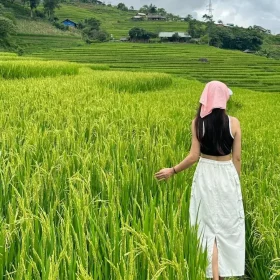
In Hoang Su Phi, terraced fields, valleys, forests, mountain roads, and villages create a distinctive living landscape. This helps visitors understand that Red Dao culture is not separate from nature, but shaped by its highland environment.
Red Dao herbal baths: herbal knowledge passed through generations
Red Dao herbal bathing is one of the most famous cultural practices of this community. The bath mixture often uses many leaves, barks, roots, or stems selected from the forest.
Traditionally, herbal baths were used after hard labor, physical fatigue, or childbirth. Heat, herbal aromas, and medicinal water create a relaxing feeling, helping the body rest after days working on mountain fields.
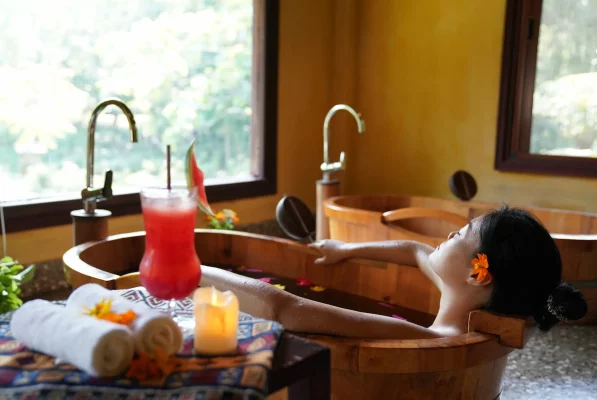
Today, Red Dao herbal baths have become a wellness experience that attracts many travelers. Yet this is not only a tourism service, but also Indigenous knowledge connected with forests, families, and health practices passed through generations.
Red Dao herbal baths at Panhou Retreat
At Panhou Retreat, guests can experience a Red Dao herbal bath in the quiet setting of Hoang Su Phi. The bath combines more than ten herbs harvested within the property, a 48°C natural mineral bath, and herbal oil massage.
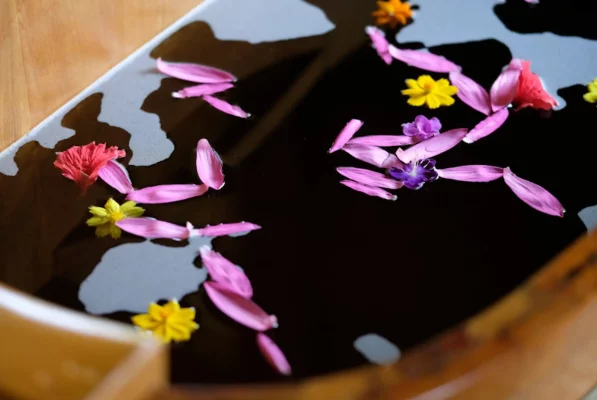
This experience suits travelers who want to understand Red Dao culture through the body, herbal aromas, and a slower rhythm. It also offers a gentle cultural approach without turning local life into a performance.
Dao Do people customs: beliefs, ancestors, and rituals
The spiritual life of the Red Dao people is connected with ancestor worship, family rituals, and the invisible world. In many Dao communities, Ban Vuong is often mentioned as an important ancestral figure.
Red Dao rituals carry spiritual meanings, but they also connect families and communities. Rituals may relate to health, seasons, weddings, peace, gratitude, or important life stages.
Ban Vuong worship
In the spiritual life of the Red Dao people, Ban Vuong is regarded as an important ancestral figure of the ethnic group. Many families and lineages worship Ban Vuong to remember their origins, express gratitude to ancestors, and ask for protection for descendants.
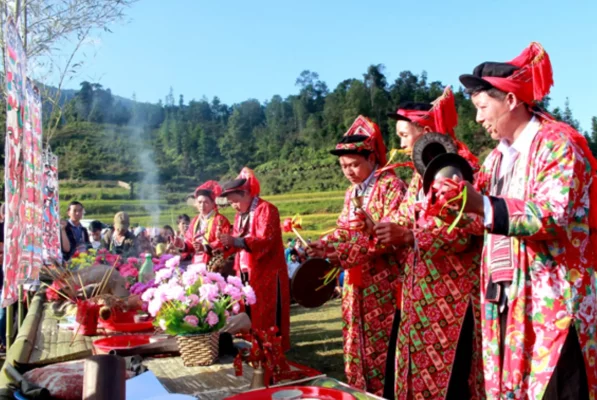
Ban Vuong worship is considered one of the most important spiritual practices among Dao communities. This ritual holds a central place alongside the coming-of-age ceremony, Tet Nhay, ancestor worship, and important lineage occasions. During worship, the ritual master leads the process, recites prayers in ancient Dao language, and presents offerings such as boiled pork, boiled rooster, twelve pairs of banh day, rice wrapped in white cloth, two jars of wine, and handmade paper.
In meaning, Ban Vuong worship is not only about asking for luck or peace. It also helps the Red Dao remember their origins, preserve lineage order, and pass spiritual belief to later generations.
The coming-of-age ceremony
The coming-of-age ceremony is an important Red Dao ritual, often understood as recognizing a man’s spiritual and social maturity. After this ceremony, a man is seen as holding a fuller position in the community’s spiritual life. From then on, he may be trusted with greater responsibilities within his lineage and family.
Fire dance and Tet Nhay customs
Fire dance is a ritual or performance form connected with fire, often found in some northern highland communities. Participants may dance around the fire, step on hot embers, or perform movements showing courage, spiritual belief, and wishes for good fortune. In meaning, fire dance is often understood as a ritual for peace, removing misfortune, thanking spirits or ancestors, and praying for community health.
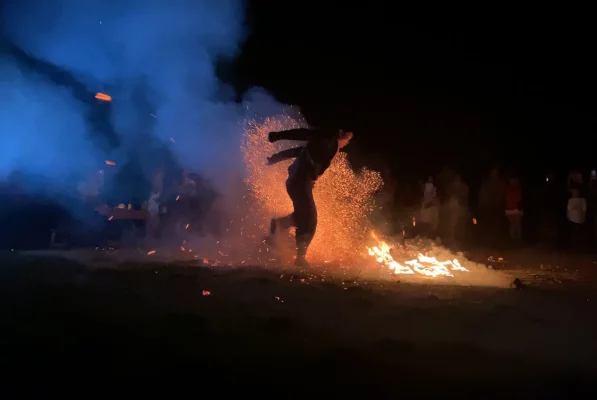
Tet Nhay is a spiritual ritual of Dao communities, where a family or lineage honors ancestors, thanks Ban Vuong, and prays for a peaceful new year. This ritual is not simply a festive activity, but also a moment connecting generations within the family. During Tet Nhay, the ritual master leads the ceremonial process. Participants may perform ritual dances, sing, recite prayers, present offerings, and reenact movements inviting ancestors to witness the ceremony. Some movements express respect, gratitude, wishes for luck, and hopes for favorable harvests.
Red Dao culture in Hoang Su Phi
Hoang Su Phi is one of the northern mountain areas where Red Dao culture remains clearly visible in daily life. One distinctive feature of the Red Dao people in Hoang Su Phi is their knowledge of forest medicinal plants. For generations, Red Dao communities have used leaves, bark, stems, and roots to support health and recovery. Therefore, the Red Dao herbal bath is not only a relaxing activity for travelers, but also part of Indigenous knowledge passed down within families and communities.
For travelers visiting Panhou Retreat, Hoang Su Phi is not only a place for mountain scenery. It is also a place to learn about Red Dao culture through herbal bathing, Thong Nguyen Market, village trekking, and guided local experiences approached respectfully. Travelers searching for red dao culture ha giang often find similar highland interests, but Hoang Su Phi offers its own cultural depth.
How is Red Dao culture different from Tay, Nung, and Hmong cultures?
The Red Dao, Tay, Nung, and Hmong all live in mountainous regions, but each community has its own language, beliefs, and customs. Below is a comparison.
| Feature | Red Dao people | Tay people | Nung people | Hmong people |
|---|---|---|---|---|
| Cultural identity | Red headscarves, indigo hand embroidery, red and white patterns, silver ornaments, and herbal baths | Then singing, Gourd lute, stilt houses, wet rice fields, luon singing, and valley culture | Then, đàn tính, indigo clothing, northeastern borderland culture, and local markets | Hemp fabric, colorful clothing, Paj Ntaub embroidery, batik wax drawing, handmade hemp, and highland markets |
| Living environment | High mountain areas near forests, streams, terraced fields, and medicinal plants | Often living in valleys and lower mountain slopes, where wet rice farming is favorable | Mostly in Cao Bang, Lang Son, border areas, and northeastern regions | Often living in high mountains with steep terrain, cold climates, remote settlements |
| Main beliefs | Ban Vuong worship, the coming-of-age ceremony, and ancestor worship | Then belief, ancestor worship, nature spirits, protective spirits, and folk Taoist influences | Ancestor worship, nature spirits, Then, folk beliefs, Buddhist or Confucian influences | Lineage beliefs, ancestor worship, shamanism |
| Notable customs | Coming-of-age ceremony, weddings, herbal baths after childbirth or hard labor, and peace rituals | Then rituals, Long Tong harvest festival, Then singing, đàn tính, and stilt house life | Then rituals, family ceremonies, local markets, weddings, good-luck rituals, and lineage life | Hmong New Year, soul-calling rituals, weddings, funerals, khèn playing, and market gatherings |
| Indigenous knowledge | Forest medicinal plants, herbal bath recipes, hand embroidery, and knowledge of living near forests | Wet rice farming, Then folk songs, đàn tính, cuisine, and stilt house traditions | Mountain farming, handicrafts, weaving, basketry, market culture, and Then rituals | Hemp growing, hemp weaving, indigo dyeing, batik wax drawing, embroidery, highland farming |
| Easy markers for travelers | Red headscarves, Red Dao herbal baths, embroidered clothing, village trekking, and medicinal plants | Then singing, stilt houses, wet rice fields, and harvest festivals | Indigo clothing, Then, highland markets, northeastern culture, and local cuisine | Colorful skirts, Hmong khèn, hemp fabric, local markets, and highland villages |
Experiencing Red Dao culture at Panhou Retreat
Panhou Retreat is a place where travelers can approach highland culture through slow experiences, nature, and suitable guidance.
At Panhou, guests can trek through villages, learn about local life, enjoy Red Dao herbal baths, and join activities connected with forests, streams, tea, cuisine, and terraced fields. These experiences help culture be felt through real daily rhythms, rather than only through photographs.
Packages such as Herbal Healing Retreat, Digital Detox Escape, yoga, meditation, and village trekking are all connected with nature, wellness, and Hoang Su Phi culture. For travelers who want to understand the Red Dao people beyond travel images, Panhou offers a slower and more meaningful approach.
FAQ
1. Who are the Red Dao people?
The Red Dao are a subgroup of the Dao ethnic community in Vietnam, mainly living in the northern mountains. They are known for red headscarves, hand-embroidered clothing, herbal baths, and ancestor worship.
2. Where do the Red Dao people live in Vietnam?
The Red Dao live across many northern mountain provinces, including Lao Cai, Ha Giang, Tuyen Quang, Yen Bai, Lai Chau, Cao Bang, Bac Kan, and Thai Nguyen.
3. What are the Red Dao people famous for?
The Red Dao are famous for red headscarves, hand-embroidered clothing, silver ornaments, herbal baths, coming-of-age ceremonies, and forest medicinal knowledge.
4. What is a Red Dao herbal bath?
A Red Dao herbal bath is a bathing practice using herbal water, often made from many forest plants. This experience is connected with relaxation, physical recovery, and traditional health knowledge.
5. Can travelers experience Red Dao culture in Hoang Su Phi?
Yes. Travelers can learn about Red Dao culture in Hoang Su Phi through trekking, herbal baths, local markets, cuisine, and guided experiences at Panhou Retreat.
Ngoc Van

3D2N NATIONAL DAY OFFER | JOURNEY INTO GREEN SEASON
From 125 USD/Guest/Combo
3D2N GOLDEN SEASON IN HOANG SU PHI
From 114 USD/Guest/Combo