Ha Giang In Temperature By Season & The Best Time To Visit
| ExperiencesThe temperature in Ha Giang changes noticeably with each season, creating different travel experiences throughout the year. Summer is warm, rainy, and lush, while winter is cold, relatively dry, and often misty. Understanding the weather during each period helps travelers choose the right season, itinerary, and clothing. Those searching for weather Ha Giang Vietnam should also consider altitude and local terrain.
How does the temperature in Ha Giang change throughout the year?
The temperature in Ha Giang varies clearly by season and elevation. Winter is cold, summer is warm and humid, while spring and autumn are generally mild and suitable for outdoor activities. Below are reference average temperatures for the Hoang Su Phi area.
| Month | Average temperature | Weather conditions | Recommended experiences |
|---|---|---|---|
| January | Approximately 14.4°C | Fairly cold, misty, and relatively dry | Relaxing stays and hot mineral bathing |
| February | Approximately 15.9°C | Cold mornings with gradually warmer afternoons | Spring travel and Tet holiday retreats |
| March | Approximately 19.3°C | Mild, with occasional light rain | Photography during the white plum and pear blossom season |
| April | Approximately 22.9°C | Warmer, with increasing rainfall | Outdoor activities |
| May | Approximately 25.3°C | Warm, humid, and occasionally rainy | Viewing the water-pouring season across the terraces |
| June | Approximately 26.2°C | Sudden showers with relatively cool conditions | Flooded terraces and the rice-planting season |
| July | Approximately 26.2°C | Warm, humid, and within the rainy season | Trekking through water-filled terraced landscapes |
| August | Approximately 25.8°C | Frequent rain and high humidity | Trekking among green rice terraces |
| September | Approximately 24.5°C | Cooler, with decreasing rainfall | Watching green terraces gradually turn golden |
| October | Approximately 21.9°C | Mild, with generally clearer skies | Trekking and photographing ripe rice fields |
| November | Approximately 18.5°C | Cool and relatively dry | Viewing mustard and buckwheat flowers |
| December | Approximately 15.3°C | Cold and frequently misty | Soaking in 48°C mineral water, taking a Red Dao herbal bath, enjoying tea, and joining local cooking experiences |
Why do temperatures vary between different areas of Ha Giang?
Elevation is the main reason for differences in Ha Giang weather. As travelers move from valleys toward mountain passes and high plateaus, the air becomes colder, winds become stronger, and mist appears more frequently.
Ha Giang City lies at a lower elevation and therefore often experiences higher temperatures. Meanwhile, Dong Van, Meo Vac, Lung Cu, and many sections of the highland routes have cold mornings, stronger winds, and frequent mist.
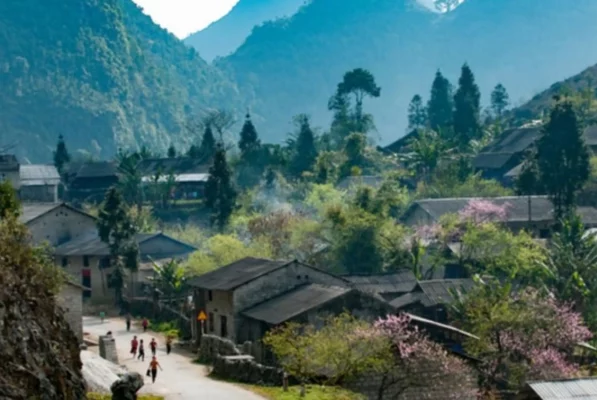
Hoang Su Phi includes valleys, hillsides, forests, and villages at different elevations. An afternoon in Thong Nguyen may feel sunny and warm, while trekking sections through the forest remain cool and damp.
Weather applications often use data from one specific meteorological station. Travelers should therefore check additional information with their accommodation or a local guide before departure.
Ha Giang weather by season
Winter from December to February
Winter brings the lowest temperature in Ha Giang, particularly in highland villages and mountain routes. Average temperatures in Hoang Su Phi during January and February are usually around 14–16°C.
Occasional sunshine keeps daytime temperatures relatively comfortable. However, early mornings, evenings, and cloudy days can feel considerably colder. Mist often appears in valleys and along mountain passes, reducing visibility. Travelers driving independently should take additional care.
After the harvest, the terraces turn deep brown and stand out among old forests and peaceful villages. Toward the end of winter, mustard and buckwheat flowers begin to bloom, adding gentle color to the highland scenery. This is also a suitable time for cultural exploration, quieter travel, mineral bathing, and Red Dao herbal treatments.
Spring from March to April
Spring brings mild weather, with average temperatures in Hoang Su Phi ranging from approximately 19–23°C. This period is favorable for trekking, walking through villages, and discovering local life.
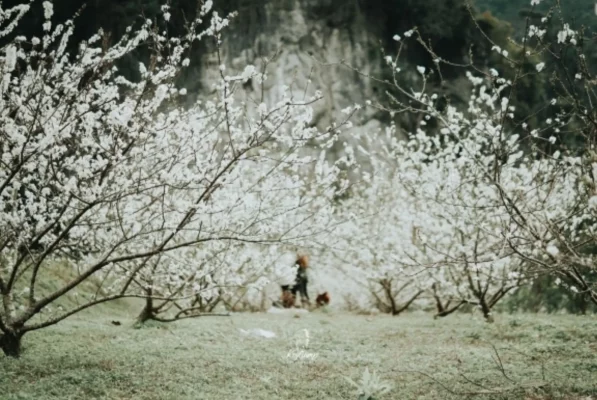
The season is highlighted by peach, plum, and pear blossoms scattered across the mountains. Although the terraces have not yet developed vivid green or golden colors, the scenery remains attractive with forests, tea hills, streams, and peaceful villages.
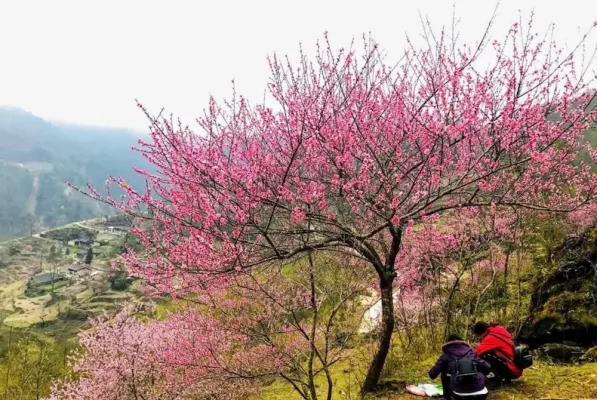
Weather can change during the day, so travelers should bring a windproof jacket, lightweight rainwear, and shoes with reliable traction.
Water-pouring season from May to June
The water-pouring season in Hoang Su Phi begins when average temperatures reach approximately 25–26°C and rainfall starts increasing. Water from mountain streams and springs is guided into the terraces, creating mirror-like surfaces that reflect clouds, skies, and surrounding slopes.
The highlight of this season is the way the terraced landscape changes continuously with the light. Travelers can also observe local farmers repairing field edges, preparing the soil, and getting ready for rice planting.
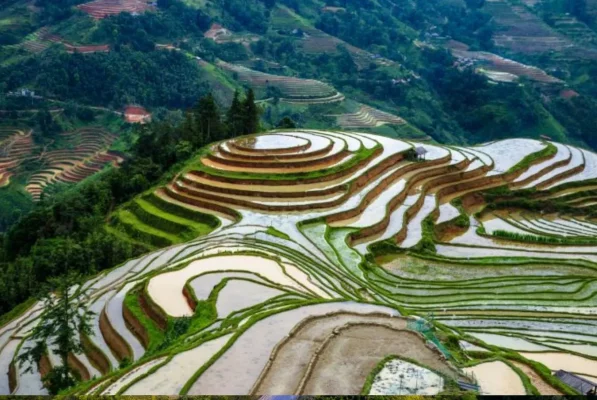
However, high humidity, muddy paths, and sudden rain can make trekking more difficult. Travelers should bring shoes with good traction, rainwear, waterproof bags, and confirm the water-filling schedule in each village before traveling.
Green rice season from July to August
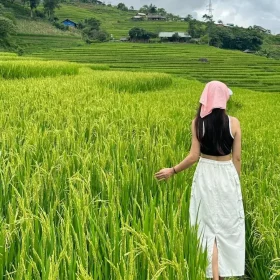
The green rice season in Hoang Su Phi has average temperatures of approximately 25–26°C, with occasional showers. After planting, the terraces gradually change from light green to deep green, blending with old forests, streams, and waterfalls.
The highlight of this season is its vibrant landscape and lower visitor numbers compared with the golden rice season. However, heavy rain can make mountain passes slippery and roads more difficult. Travelers should prepare rainwear, an umbrella, and a hat, and travel with a local guide.
Golden rice season from September to November
The golden rice season is the most popular period in Hoang Su Phi, with temperatures decreasing from approximately 24.5°C to 18.5°C. From mid-September to early October, the terraces turn golden, creating ideal conditions for trekking, photography, and village exploration.
The season is known for mild weather, soft light, and wider visibility than summer. However, rice ripening and harvest schedules differ between villages, so travelers should check conditions five to seven days before arrival.
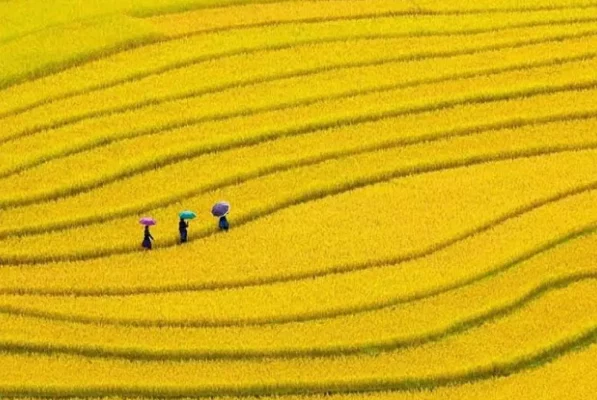
Peak-season demand can also fill accommodation quickly. Travelers should book early and carry lightweight rainwear when trekking.
When is the best time to visit Ha Giang?
The right time depends on the scenery and experiences you prefer. Temperature is only one of several factors to consider.
March and April offer mild weather, making walking and village exploration more comfortable.
May and June are suitable for viewing the water-pouring season, observing farming activities, and photographing terraces reflecting the sky.
July and August bring vibrant green rice landscapes, but humidity and heavy rain are more common. Travelers should prepare for wet conditions and possible itinerary changes.
September and early October are ideal for viewing golden rice terraces, trekking, and photographing the harvest season.
November to February suits travelers seeking privacy, mineral bathing, and wellness experiences.
Planning a stay at Panhou Retreat
Panhou Retreat is located in Lang Giang Hamlet, Thong Nguyen Commune, within the Hoang Su Phi area. The retreat is a convenient starting point for journeys through terraced fields, forests, streams, tea hills, and Red Dao villages.
Travelers can combine trekking with Red Dao herbal baths, mineral soaking, local cuisine, and traditional tea experiences.
A three-day, two-night itinerary offers a balanced pace. Guests can arrive and rest on the first day, trek on the second day, and spend the final morning relaxing.
During warmer months, trekking should begin early to avoid higher midday temperatures. During the rainy season, routes should be selected according to current trail, stream, and forecast conditions.
During the golden rice season, travelers should reserve rooms early because accommodation demand increases quickly. In winter, additional warm clothing is necessary for mornings and evenings.
After a day of walking, a Red Dao herbal bath or mineral soak helps the body relax. This creates a balance between physical activity and recovery during a mountain journey.
What should you prepare for Ha Giang weather?
Bring several lightweight layers instead of relying on one heavy outfit. This makes it easier to adjust when temperatures change. A waterproof jacket is useful throughout much of the year, particularly from May to September.
Walking shoes should provide good traction because paths between terraces and village roads may become slippery after rain. A waterproof bag or backpack cover helps protect phones, cameras, documents, and essential belongings. Sunscreen and a hat remain necessary even on cooler days.
From November to February, travelers should bring warm clothing, thermal layers, and a light scarf when visiting higher mountain areas. Check the forecast before departure. Monthly climate information is only a reference and cannot replace a short-term weather forecast.
Frequently asked questions
1. What is the temperature in Ha Giang?
The temperature in Ha Giang changes according to season and elevation. Ha Giang City generally ranges from approximately 13–33°C throughout the year. Hoang Su Phi has an annual average of around 21°C, with the coldest month near 14°C and the warmest period around 26°C.
2. What is the coldest month in Ha Giang?
January is usually one of the coldest months. The average temperature in Hoang Su Phi is approximately 14.4°C, although higher mountain areas can be considerably colder in the early morning and at night.
3. What is the hottest month in Ha Giang?
June, July, and August are generally the hottest period. The average temperature in Hoang Su Phi is approximately 26°C, while lower valleys may feel warmer during the afternoon.
4. When is the rainy season in Ha Giang?
The rainy season generally lasts from May to September. Rainfall is usually highest during June, July, and August.
5. Is September a good time to visit Ha Giang?
Yes. September offers relatively comfortable temperatures, rice terraces changing from green to gold, and favorable trekking conditions. However, travelers should check harvest schedules in each village.
6. Should you visit Ha Giang in winter?
Winter suits travelers who enjoy peaceful landscapes, mountain mist, cultural experiences, and relaxing stays. However, the terraced fields are generally no longer green or golden.
7. What temperature is suitable for trekking in Ha Giang?
Many travelers find temperatures of approximately 18–25°C comfortable for trekking. March, April, September, October, and November often provide pleasant conditions.
8. Does Ha Giang weather change quickly?
Yes. Sunshine, clouds, mist, and rain can all appear within the same day because of the mountainous terrain and differences in elevation.
Ngoc Van

3D2N NATIONAL DAY OFFER | JOURNEY INTO GREEN SEASON
From 125 USD/Guest/Combo
3D2N GOLDEN SEASON IN HOANG SU PHI
From 114 USD/Guest/Combo