Vietnam Family Vacation: A Complete Guide To Traveling With Young Children
| ExperiencesA Vietnam family vacation combines culture, nature, interactive activities, relaxation, and experiences suitable for different generations. Families can explore historic cities, peaceful countryside, mountain villages, beaches, and famous heritage destinations. Vietnam also offers different travel styles, from independent trips and private tours to family-friendly resort packages.
Is Vietnam suitable for a family vacation?
Vietnam is suitable for family travel because it offers activities for different ages and flexible travel costs. In Hanoi, admission to the Vietnam Museum of Ethnology costs approximately VND 40,000 per adult and VND 10,000 per student. Children can also join pottery, cooking, lantern-making, or basket-boat activities, usually costing VND 300,000–1,200,000 per person.
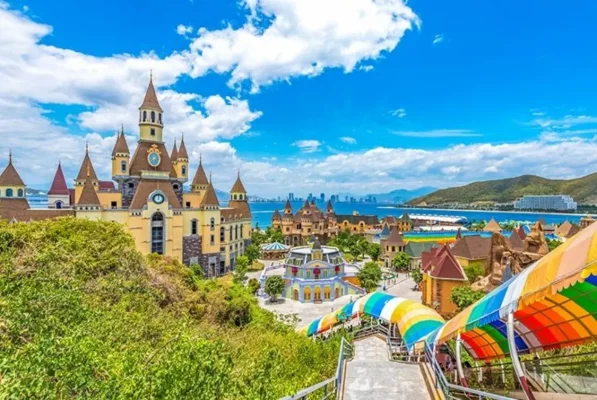
Theme parks such as VinWonders Nam Hoi An charge approximately VND 650,000 per adult and VND 450,000 per child or visitor aged over 60. Island tours in Nha Trang, Da Nang, or Phu Quoc usually cost VND 500,000–1,500,000 per person.
Older travelers can choose hot-spring bathing, mud baths, or massage treatments costing VND 200,000–1,500,000 per person. Teenagers may prefer trekking, cycling, or kayaking. A full-day trekking tour usually costs VND 600,000–1,500,000 per person.
Meals at local restaurants generally cost VND 40,000–100,000 per person, while mid-range restaurants charge approximately VND 150,000–400,000. A budget sightseeing day may cost VND 300,000–700,000 per person. A theme-park visit or organized tour usually costs VND 1,000,000–2,500,000 per person.
Best destinations for a Vietnam family vacation
The right destination for a family vacation in Vietnam depends on the children’s ages, weather conditions, and travel preferences. Families with young children usually prefer cities, resorts, or destinations requiring limited transportation. Teenagers may enjoy trekking, kayaking, cycling, and nature-based adventures.
Hanoi
Hanoi is famous for its Old Quarter, Hoan Kiem Lake, colonial architecture, historical monuments, and diverse street food. The city introduces children to Vietnamese history, culture, and everyday urban life.
Families can walk around Hoan Kiem Lake in the morning before visiting Ngoc Son Temple, the Temple of Literature, and the Imperial Citadel of Thang Long. During weekends, the pedestrian area around the lake often hosts traditional games, musical performances, and outdoor activities for children.
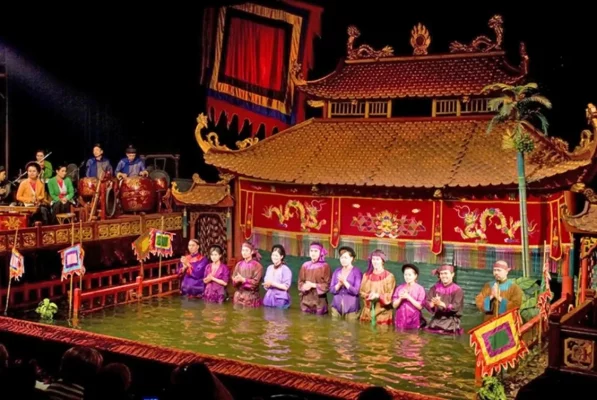
The Thang Long Water Puppet Theatre offers an accessible cultural experience for younger children. Its manageable duration, lively music, and stories inspired by rural Vietnamese life keep children engaged. Families can also try pho, bun cha, steamed rice rolls, Trang Tien ice cream, or egg coffee in the Old Quarter.
The Vietnam Museum of Ethnology is suitable for school-aged children. They can explore stilt houses, traditional clothing, agricultural tools, and the living spaces of different ethnic communities.
Families should spend two or three nights in Hanoi and schedule outdoor activities during the morning or late afternoon. This helps avoid strong midday heat and the busiest traffic periods.
Ha Long Bay
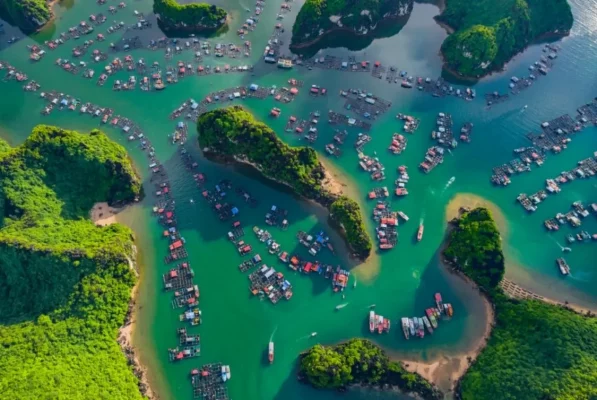
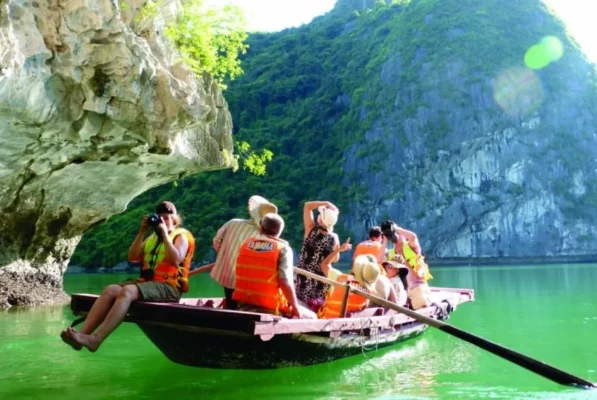
Ha Long Bay is renowned for nearly 2,000 limestone islands, emerald water, natural caves, and its UNESCO World Heritage status. An overnight cruise is one of the destination’s signature family experiences.
A two-day, one-night journey is usually more comfortable than a day trip. Families have additional time to relax, watch the sunset, and participate in activities without continuous transportation.
Depending on the itinerary, cruises may visit Sung Sot Cave, Ti Top Island, Luon Cave, or destinations within Lan Ha Bay. Family activities commonly include kayaking, swimming in permitted areas, cave visits, sightseeing from the sundeck, spring-roll-making classes, and evening squid fishing.
Young children can enjoy onboard activities with their parents. Older children may prefer kayaking or climbing the steps leading to viewpoints, islands, and caves.
Before booking, parents should check family-room configurations, extra beds, balcony railings, children’s life jackets, and meal options. Some activities have minimum age or height requirements.
Children should only kayak while wearing correctly fitted life jackets and accompanied by an adult. Travelers prone to seasickness should select cabins near the middle of the boat, avoid heavy meals before departure, and prepare suitable medication following professional advice.
Ninh Binh
Ninh Binh is known for limestone mountains, rivers, caves, ancient temples, and rice fields surrounded by peaceful countryside. It suits multigenerational families because most activities involve gentle movement.
At Trang An, families travel by small rowing boat through caves, valleys, and spiritual sites. Tam Coc offers views of the Ngo Dong River, limestone formations, and seasonal rice fields.
The boats move slowly, making the experience suitable for children and older adults. However, most journeys last between two and three hours.
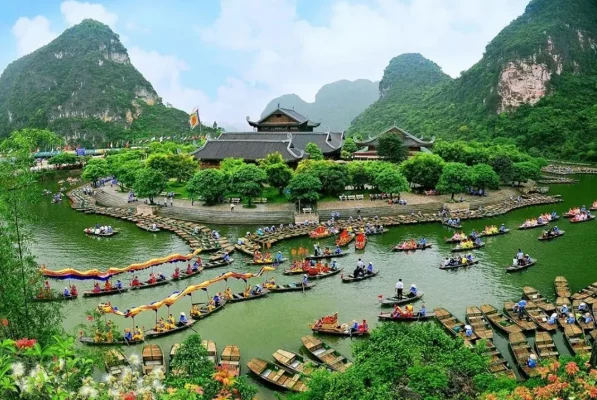
Families can also visit the ancient capital of Hoa Lu, cycle through rural villages, or climb Hang Mua. The route to the Hang Mua viewpoint includes many steep stone steps and may not suit very young children or travelers with knee problems.
Families should carry hats, drinking water, sunscreen, and light snacks during boat trips. Staying one or two nights allows visitors to explore early, avoid crowds, and eliminate a rushed round trip from Hanoi.
Hoang Su Phi
Hoang Su Phi is famous for rice terraces spreading across mountain slopes, peaceful villages, Shan Tuyet tea, and the cultures of Red Dao, Tay, and Nung communities. The destination suits families seeking nature, slow travel, and places away from crowded tourist centers.
School-aged children can walk beside rice terraces, observe farming activities, and learn about traditional homes and local livelihoods. Depending on weather and road conditions, families may visit Ban Phung, Ban Luoc, Nam Hong, or Thong Nguyen.
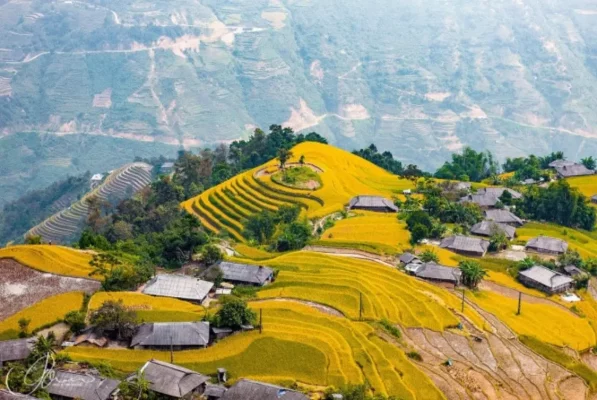
Popular experiences include tasting Shan Tuyet tea, learning how tea leaves are harvested and processed, taking a Red Dao herbal bath, and discovering local cuisine. Older children and teenagers can join a short trek accompanied by a local guide.
Mountain roads can become slippery after rain. Families should wear footwear with reliable grip and avoid entering unfamiliar trekking routes without guidance.
A stay of two or three nights provides time for trekking, cultural experiences, relaxation, and itinerary adjustments based on changing mountain weather.
Hoi An
Hoi An is famous for its preserved old town, wooden houses, lanterns, traditional craft villages, rural landscapes, and An Bang Beach. It offers many interactive experiences suitable for children.
Within the Old Town, families can visit the Japanese Covered Bridge, historic assembly halls, merchant houses, and Hoi An Market. In the evening, children often enjoy seeing illuminated lanterns, taking a short boat ride on the Hoai River, or floating lanterns under parental supervision.
Children aged approximately six and above can join lantern-making workshops, learn to prepare cao lau or Vietnamese pancakes, cycle through rice fields, and visit Tra Que Vegetable Village.
At Cam Thanh Coconut Village, families can travel by basket boat through the waterways. Families with young children should avoid operators offering intense spinning performances.
An Bang Beach provides opportunities for swimming, sand play, and relaxation after exploring the Old Town. Families can stay near the historic center when prioritizing culture, or beside the beach for a quieter atmosphere.
Three or four nights provide enough time to experience the Old Town, countryside, workshops, and beaches without changing hotels.
Da Nang and Ba Na Hills
Da Nang is famous for My Khe Beach, Son Tra Peninsula, the Marble Mountains, Dragon Bridge, and its coastal resorts. The airport is close to the city center, transportation is convenient, and family services are widely available.
Young children can swim in resort pools, play on the beach, join children’s clubs, or walk along the coastline. Families can also visit Linh Ung Pagoda, explore the Marble Mountains, and watch Dragon Bridge’s fire-and-water performance.
Ba Na Hills is best known for the Golden Bridge, cable-car system, French Village, flower gardens, and Fantasy Park. Children can ride the cable car, watch performances, explore indoor games, and discover themed areas.
Parents should check height requirements for rides, weather forecasts, mountain temperatures, and expected walking distances. A light jacket is useful because the weather at Ba Na Hills can become cool and change quickly.
Da Nang is also a convenient base for day trips to Hoi An, Hue, and other destinations across Central Vietnam.
Nha Trang
Nha Trang is famous for long sandy beaches, clear water, 19 offshore islands, and health and wellness services. It suits families wanting to combine a beach holiday, water activities, and cultural sightseeing.
Families can swim, visit the Po Nagar Cham Towers, or enjoy a mineral mud-bath experience. Children may snorkel, kayak, or participate in age-appropriate marine activities under suitable supervision.
Families seeking a quieter destination can choose Hon Ong, also known as Whale Island. This secluded island offers peaceful natural surroundings, small beaches, coastal forest, and fewer urban distractions.
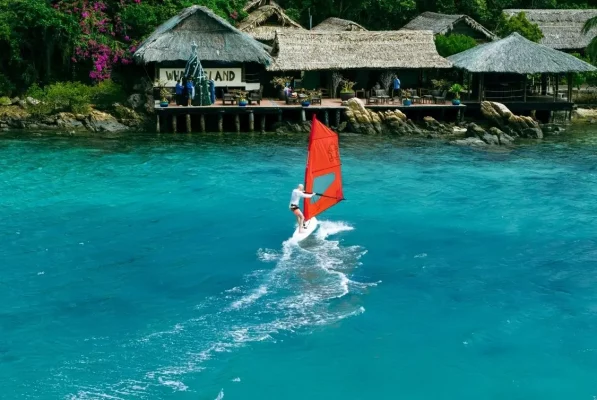
The waters around Hon Ong are known for snorkeling and marine biodiversity. Families can kayak, snorkel, swim, walk around the island, or simply relax beside the beach.
The calm environment suits families wishing to reduce screen time and spend more meaningful time together. Parents should confirm sea conditions, boat schedules, life-jacket availability, and activity requirements before traveling.
Three or four nights in Nha Trang, combined with one or two nights on Hon Ong, creates a balanced itinerary of active exploration and quiet relaxation.
Hue
Hue is known for its imperial heritage complex, royal architecture, Nguyen Dynasty tombs, Thien Mu Pagoda, and refined regional cuisine. The destination particularly suits school-aged children and families interested in history.
At the Imperial City, children can learn about royal life, palace architecture, and the history of the Nguyen Dynasty. Instead of visiting too many buildings, families should select key sites and include photography, architectural-detail games, or royal-costume experiences.
Families may visit the tomb of Tu Duc, Khai Dinh, or Minh Mang. Visiting every major tomb during one hot day can become tiring, particularly for children and older travelers.
Thien Mu Pagoda and a short dragon-boat journey on the Perfume River offer a gentler alternative. Children can also join traditional conical-hat or Thanh Tien paper-flower workshops.
Family-friendly specialties include banh beo, banh nam, banh loc, and Hue-style sweet soups.
Ho Chi Minh City
Ho Chi Minh City is famous for its energetic atmosphere, historical architecture, shopping centers, diverse cuisine, and indoor entertainment. It suits families seeking a combination of sightseeing and urban comfort.
Families can visit Independence Palace, Central Post Office, the exterior of Notre-Dame Cathedral, and Nguyen Hue Walking Street. Older children can learn about history at age-appropriate museums.
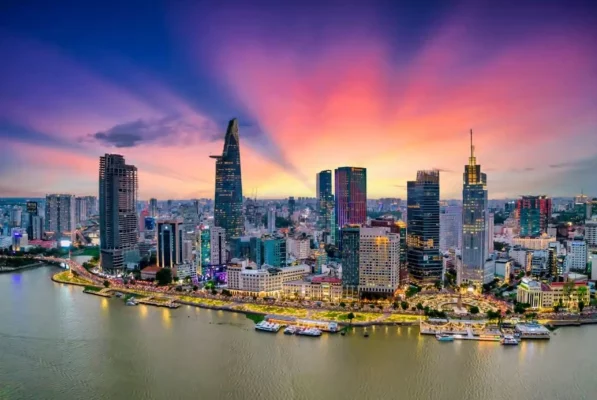
Young children may prefer the Saigon Zoo and Botanical Gardens, indoor playgrounds, or interactive science spaces. A double-decker city tour bus allows families to see important landmarks without walking continuously.
In the evening, families can explore Ho Thi Ky Market and try local dishes such as broken rice, noodle soups, or roasted-duck noodles.
Outdoor activities should be scheduled for the morning or late afternoon instead of the hottest midday period. Shopping malls, cinemas, and indoor play centers provide practical alternatives during rainy weather.
Mekong Delta
The Mekong Delta is renowned for its waterways, floating markets, fruit orchards, craft villages, and communities living beside the river. The region allows children to experience an environment very different from major cities and mountain destinations.
In Ben Tre or Vinh Long, families can take boat trips, visit coconut gardens, observe coconut-candy production, and taste seasonal tropical fruit.
In Can Tho, visitors can travel by boat to Cai Rang Floating Market early in the morning. The journey can continue to an orchard or a traditional rice-noodle workshop.
Chau Doc is suitable for exploring Tra Su Cajuput Forest. Families can travel through the flooded forest by boat and observe birds in their natural surroundings.
Children must wear correctly fitted life jackets when using boats or small rowing vessels. An overnight stay is usually more comfortable than a long day trip from Ho Chi Minh City.
Families with young children should choose itineraries with fewer boat transfers, convenient rest areas, and reliable toilet facilities.
Phu Quoc
Phu Quoc is famous for beautiful ocean sunsets, modern resorts, entertainment parks, fishing villages, and island tours. It is a suitable destination for families seeking relaxation after visiting cities, cultural sites, or heritage destinations.
Many resorts offer family rooms, private or shallow swimming pools, children’s clubs, and airport transportation. VinWonders Phu Quoc provides a water park, rides, themed attractions, and entertainment performances.
Vinpearl Safari allows families to observe animals, travel through a semi-wildlife area by dedicated vehicle, and participate in nature-education activities.
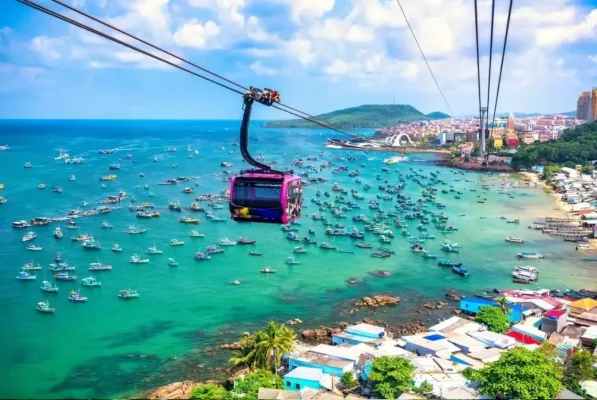
Children may kayak, snorkel, or join island tours when activities match their ages and swimming abilities. Families can also explore fishing villages, pepper farms, and traditional fish-sauce producers.
Watching the sunset at Kiss Bridge is another distinctive experience. Before booking marine activities, parents should check forecasts for rain, wind, waves, and minimum-age requirements.
A stay of three to five nights provides enough time for resort relaxation, family entertainment, and one or two island excursions.
A 14-day Vietnam family vacation itinerary
Fourteen days allow families to visit several regions while maintaining sufficient rest time. Begin with three nights in Hanoi for cultural sightseeing, local food, and one day without long transportation.
Continue with two nights in Ninh Binh for boat trips, countryside landscapes, ancient temples, and outdoor activities. Spend one night aboard a Ha Long Bay cruise before returning to Hanoi or flying to Central Vietnam.
Arrange four nights between Da Nang and Hoi An, combining beaches, resorts, craft villages, cultural attractions, and family workshops.
Finish with three nights in Phu Quoc, or choose Ho Chi Minh City and the Mekong Delta. Phu Quoc is ideal for a relaxing beach conclusion, while southern Vietnam suits families interested in history, urban culture, and river life.
A successful family vacation to Vietnam should include rest days and avoid excessive hotel changes. Families with young children may prefer fewer destinations and longer stays at each location.
Best time for a family vacation in Vietnam
The best time depends on the chosen region because weather patterns vary considerably across Vietnam. Families should research individual destinations instead of relying on one national weather description.
Best time to visit Northern Vietnam
March and April generally bring temperatures of approximately 18–27°C, increasingly warm conditions, and occasional drizzle. This period is suitable for visiting Hanoi, Ninh Binh, Hoang Su Phi, and Sapa.
From May to August, temperatures commonly reach 27–35°C, with high humidity and summer showers. July and August feature green rice terraces, although mountain roads can become slippery following rain.
From September to November, temperatures generally range from 18–29°C, with milder weather and attractive rice-season scenery. September is particularly suitable for viewing golden terraces in Hoang Su Phi, Sapa, and Mu Cang Chai.
From December to February, temperatures across the lowlands often range from 12–22°C. Mountain destinations may experience temperatures below 10°C, heavy mist, and occasional severe cold spells.
Best time to visit Central Vietnam
From February to April, temperatures generally range from 22–30°C, with relatively dry conditions and comfortable sunshine. This period is suitable for exploring Hue, Hoi An, Da Nang, and regional heritage attractions.
From May to August, temperatures commonly reach 27–35°C, with strong sunshine and generally favorable sea conditions. Families can swim, visit islands, or relax at coastal resorts.
From September to November, temperatures average approximately 23–30°C as the region enters its wetter season. Some periods may bring tropical storms, rough seas, heavy rainfall, or flooding in low-lying areas.
Families traveling during the rainy season should choose accommodations with indoor facilities and flexible cancellation or date-change policies.
Best time to visit Southern Vietnam
Southern Vietnam remains warm throughout the year, with temperatures usually ranging from 25–33°C. The dry season lasts from December to April and generally brings more sunshine and lower rainfall.
This is a favorable time for Ho Chi Minh City, the Mekong Delta, Phu Quoc, and Con Dao. The rainy season usually lasts from May to November, with showers frequently occurring during the afternoon.
Tropical rain can be heavy but often ends quickly, meaning entire sightseeing days are rarely lost. From September to November, the Mekong Delta enters its floating-water season.
Families can take boat trips, explore flooded forests, visit orchards, and try seasonal regional dishes.
Cost of a Vietnam family vacation
The cost of a family vacation Vietnam itinerary depends on the destinations, travel season, accommodation, transportation, and number of paid activities.
A family of four may spend approximately VND 2,500,000–12,000,000 per day, excluding international flights. Families can reduce expenses by choosing two main regions instead of attempting to visit all three.
This strategy lowers domestic airfare, checked-baggage fees, airport transfers, and the amount of time spent in transit.
Choose suitable accommodation to reduce costs
A family room at a local hotel may cost approximately VND 800,000–1,800,000 per night. This is often less expensive than booking two separate rooms.
Families should prioritize rates that include breakfast, drinking water, and an additional bed. An apartment with a kitchen can reduce restaurant costs, particularly when traveling with young children.
Staying at least two or three nights in each destination also supports better value. Frequent hotel changes increase transportation, laundry, packing time, and possible early check-in or late check-out fees.
Combine paid and free activities
Families do not need to purchase attraction tickets every day. A theme-park day can be balanced with free beaches, pedestrian streets, markets, public parks, and hotel swimming pools.
A theme-park visit may cost VND 1,500,000–3,000,000 for a family. A beach day or self-guided city walk may involve almost no admission expenses.
In Hanoi, families can explore Hoan Kiem Lake, the Old Quarter, and weekend pedestrian streets. In Da Nang, My Khe Beach, Dragon Bridge, and riverside parks are easily accessible.
Hoang Su Phi, Hoi An, and the Mekong Delta also provide reasonably priced activities, including cycling, market visits, village walks, and countryside exploration.
Reduce food and transportation expenses
A local meal for four people generally costs VND 300,000–600,000. A meal at a mid-range restaurant may cost approximately VND 800,000–1,500,000.
Families can eat near their accommodation instead of traveling long distances for every meal. Drinking water, fruit, and snacks can be purchased from supermarkets or convenience stores.
Within cities, taxis and ride-hailing services are practical for short distances. Private vehicles are more suitable for long journeys, mountain routes, or families carrying substantial luggage.
Overnight trains can sometimes replace one hotel night. However, parents should consider whether children can sleep comfortably during the journey.
Travel at the right time for better prices
Hotel and flight prices commonly increase during summer holidays, Vietnamese public holidays, Tet, and weekends. Traveling during weekdays or immediately before peak season can provide better value.
Families should consider rooms with free cancellation instead of choosing the lowest non-refundable rate. This reduces financial loss when children become unwell or weather disrupts the itinerary.
Packages combining accommodation, breakfast, airport transfers, and activities may cost less than booking each service separately. Families should carefully check what is included and whether children’s supplements apply.
Estimated daily budget for a family of four
- Budget: Approximately VND 2,500,000–4,000,000 daily, including local accommodation, casual meals, and mostly free activities.
- Mid-range: Approximately VND 5,000,000–8,000,000 daily, including three- or four-star hotels and selected organized tours.
- Luxury: Approximately VND 9,000,000–12,000,000 daily, including resorts, private transportation, and guided experiences.
The most effective savings strategy is to reduce the number of destinations, stay longer, and select only several signature activities.
Families should not reduce expenses by compromising insurance, life jackets, transportation quality, or other essential safety services.
Panhou Retreat – A family vacation surrounded by Hoang Su Phi’s natural beauty
Families who enjoy slow travel can stay at Panhou Retreat, surrounded by the landscapes of Hoang Su Phi. The retreat is located among mountains, forests, rice terraces, streams, and culturally diverse local communities.
Parents can combine relaxation with walking, village exploration, tea experiences, and wellness activities. The destination suits families wishing to spend uninterrupted time together, avoid crowds, and reduce their dependence on electronic devices.
Activities should be adjusted according to age, fitness, season, and mountain weather. A multi-night stay gives families greater flexibility and more time to understand the slower rhythm of highland life.
Family experiences at Panhou Retreat
The landscapes surrounding Panhou support learning, gentle exercise, cultural discovery, relaxation, and meaningful family connection.
Trekking through the rice terraces
Families can choose gentle trekking routes passing rice terraces, villages, forests, and small streams. Children can observe agricultural activities and learn how local communities cultivate crops across mountainous terrain.
The trek should match the abilities of the youngest participant and include sufficient rest stops. Parents should prepare suitable footwear, rainwear, drinking water, sunscreen, and additional snacks.
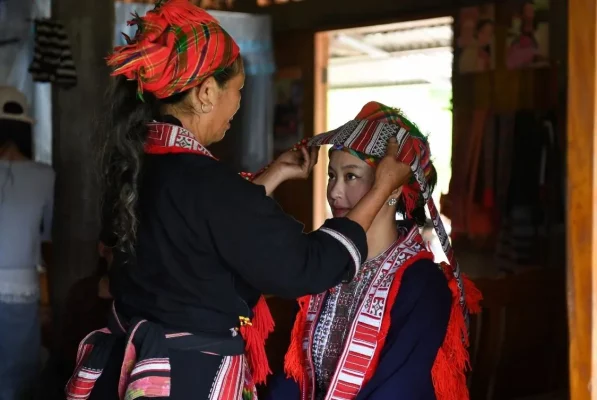
Discovering Red Dao culture
Families can learn about Red Dao culture through herbal traditions, clothing, architecture, and local stories. These experiences help children understand how community knowledge is preserved across generations.
Parents should explain respectful photography, personal space, appropriate clothing, and local customs before entering a village.
Shan Tuyet tea and local cuisine
A Shan Tuyet tea experience introduces families to ancient tea trees, harvesting methods, traditional processing, and tea appreciation. Children may observe tea picking and learn about farming practices used by local communities.
Regional meals highlight seasonal vegetables, highland ingredients, and the relationship between food and nature. Parents should communicate allergies, low-salt requirements, dietary restrictions, and preferred children’s dishes before arrival.
Herbal bathing and wellness for parents
A Red Dao herbal bath provides relaxation after walking through villages, forests, and rice terraces. Parents may also choose massage, foot soaking, tea, reading, or gentle meditation.
Children should only use wellness therapies when the treatment is appropriate for their age and health. Families should follow guidance from qualified staff.
Explore Vietnam family vacation packages at Panhou Retreat
Families can explore family packages and experiences at Panhou Retreat based on their preferred pace and interests.
Available programs may combine accommodation, nature, cultural activities, wellness services, meals, and free time. Before booking, families should review children’s policies, activity schedules, inclusions, and weather-related arrangements.
A nature-based family retreat
This package combines light activities, cultural discovery, and peaceful accommodation surrounded by nature. Families should confirm package benefits, scheduled activities, children’s policies, meals, and room arrangements.
Family-friendly trekking experience
Local guides help families choose routes according to age, fitness, weather, and trail conditions. Different generations can select suitable activity levels before gathering again for meals and shared relaxation.
Herbal Healing Retreat for parents
Parents can combine accommodation with herbal bathing, massage, tea, and restorative time in nature. Families should confirm suitability when traveling with young children, older adults, or anyone receiving medical treatment.
A family Digital Detox in the mountains
This experience helps families pause work, notifications, social media, games, and excessive device use. Time can instead be dedicated to conversations, walking, reading, observing nature, and resting together.
These Vietnam family vacation packages are especially suitable for families seeking slower travel, natural surroundings, and meaningful shared experiences.
Health and safety advice for a family vacation to Vietnam
Families should purchase comprehensive insurance covering illness, accidents, cancellation, and medical evacuation. Parents should save the details of hospitals or clinics near each destination before departure.
Bring prescribed medication, a basic first-aid kit, insect repellent, sunscreen, and oral rehydration products. Correctly fitted life jackets should be used during boat trips, even when the water appears calm.
Avoid trekking during warnings for heavy rain, flash floods, thunderstorms, or landslides. Children should remain close to adults while crossing roads, especially in Hanoi and Ho Chi Minh City.
Parents must supervise children around swimming pools, beaches, rivers, balconies, and unfamiliar play areas. Digital copies of passports, insurance documents, prescriptions, and emergency contacts should be stored securely online.
What should families pack for Vietnam?
Packing requirements depend on the destination, season, children’s ages, planned activities, health needs, and access to laundry services.
Essential travel documents
Bring passports, visas when required, insurance documents, accommodation confirmations, prescriptions, and emergency contact numbers.
A copy of each child’s birth certificate may be useful if authorities or service providers need proof of the family relationship. Store secure digital copies and keep several printed copies in separate bags.
Clothing
Pack lightweight clothing for warm destinations and layered clothing for Hanoi or mountain regions. Bring rain jackets, walking shoes, sandals, swimwear, hats, sunscreen, and modest clothing for cultural sites.
Families do not need to carry excessive clothing because laundry services are widely available throughout Vietnam.
Supplies for babies and young children
Parents should carry enough diapers, wipes, milk, snacks, and essential medication for the first several days. Compact strollers are useful at airports and resorts, while child carriers are more practical in villages and mountain areas.
Familiar toys, books, headphones, and comfort items can help children remain settled during long flights and transfers.
Equipment for outdoor and beach activities
Bring sunscreen, hats, insect repellent, waterproof bags, water shoes, and spare clothing. Families trekking in mountain regions should pack supportive footwear, light backpacks, rainwear, and basic blister treatment.
FAQ
1. Is Vietnam suitable for families?
Yes. Vietnam offers diverse culture, nature, cuisine, and activities suitable for many types of families. Parents should select destinations carefully and build the itinerary around the children’s ages, health, and interests.
2. Which region of Vietnam is best for families?
Northern Vietnam is suitable for culture and mountain scenery, while Central Vietnam is known for beaches, heritage sites, and resorts.
Southern Vietnam combines urban attractions, river landscapes, tropical islands, entertainment parks, and family-friendly accommodation.
3. Where should families stay in Vietnam?
Families should choose accommodation with spacious rooms, swimming pools, restaurants, and clear children’s policies. The best area depends on nearby attractions, airport access, noise levels, and transportation requirements.
4. Is Vietnam suitable for young children?
Vietnam is suitable for young children when parents reduce long transfers, select comfortable rooms, and prioritize gentle activities.
Da Nang, Hoi An, Phu Quoc, Nha Trang, and Ninh Binh are usually straightforward destinations for families with young children.
5. How many days are needed for a Vietnam family vacation?
Seven days are suitable for one region, ten days for two regions, and fourteen days for a broader journey. Families with young children should travel slowly and stay longer in each location.
6. What is the best ten-day family itinerary?
A balanced itinerary may include Hanoi, Ninh Binh, Ha Long Bay, Da Nang, and Hoi An. This route combines history, countryside, limestone landscapes, beaches, craft villages, and relaxation.
7. How much does a Vietnam family vacation cost?
The total cost depends on international flights, season, accommodation, meals, transportation, and family size. Parents should request current quotations and compare the total cost for the entire household.
8. Should families book Vietnam family vacation packages?
Packages can simplify transportation, family rooms, guides, attraction tickets, meals, and local support. Families should review children’s supplements, flexibility, cancellation conditions, activity requirements, and the detailed itinerary.
9. Is Phu Quoc worth visiting with children?
Yes. Phu Quoc suits families wanting beaches, swimming pools, resorts, entertainment parks, and relaxing final days. Families should check the rainy season and current sea conditions before reserving offshore activities.
10. Is Hoang Su Phi suitable for families?
Hoang Su Phi suits families interested in nature, villages, rice terraces, and slow travel. Trekking routes must be selected according to age, physical ability, weather, and current trail conditions.
11. What should children wear when traveling in Vietnam?
Children need lightweight clothing, walking shoes, hats, rainwear, swimwear, and warm layers for mountain destinations. Modest clothing is required when visiting temples, pagodas, spiritual sites, and traditional communities.
12. Is Vietnamese food suitable for children?
Vietnamese cuisine includes many child-friendly dishes, such as pho, chicken rice, banh mi, and fried rice. Parents can request less chili, sauces served separately, smaller portions, and simply prepared dishes.

3D2N NATIONAL DAY OFFER | JOURNEY INTO GREEN SEASON
From 125 USD/Guest/Combo
3D2N GOLDEN SEASON IN HOANG SU PHI
From 114 USD/Guest/Combo