Vietnam In Fall: Where Is The Best Places To Visit
| ExperiencesVietnam in fall offers a variety of seasonal landscapes, from Hanoi’s cooler weather and the golden terraced rice fields of Northwestern Vietnam to the distinctive floating season in the South. This is also a memorable time to experience cultural activities, traditional festivals and seasonal travel experiences.
When does the fall season in Vietnam begin?
The fall season in Vietnam generally lasts from September to November. However, the timing of the seasonal transition and the noticeable changes in weather vary between regions.
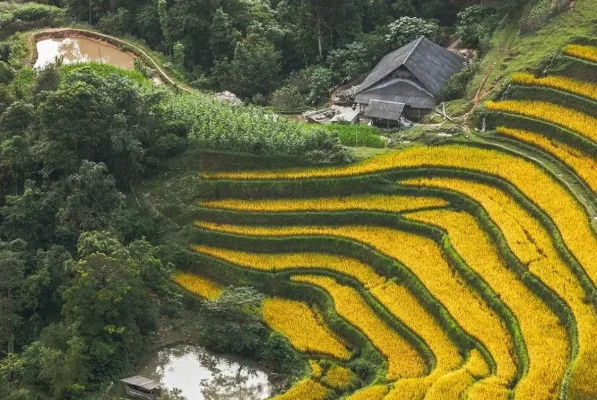
Northern Vietnam is where autumn can be felt most clearly. Temperatures gradually decrease, humidity becomes more comfortable, the intense summer sunshine fades and early mornings begin to feel slightly chilly. In mountainous provinces, terraced rice fields change from green to golden yellow, creating one of the most characteristic landscapes of autumn in Vietnam.
Central Vietnam does not have such a distinctive autumn season. The period from September to November generally coincides with the rainy season, when storms or tropical depressions may occur. Southern Vietnam remains warm, although rainfall gradually decreases as November approaches.
September
September marks a noticeable seasonal transition in Northern Vietnam. Temperatures begin to decrease, prolonged periods of intense heat become less common and the atmosphere gradually becomes more comfortable.
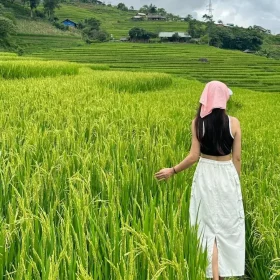
This is also when terraced rice fields begin entering the golden harvest season in Hoang Su Phi, Sapa, Mu Cang Chai and several other mountainous destinations. Golden rice stretches across the hillsides between villages, mountains and forests, creating particularly attractive scenery for nature lovers and photographers.
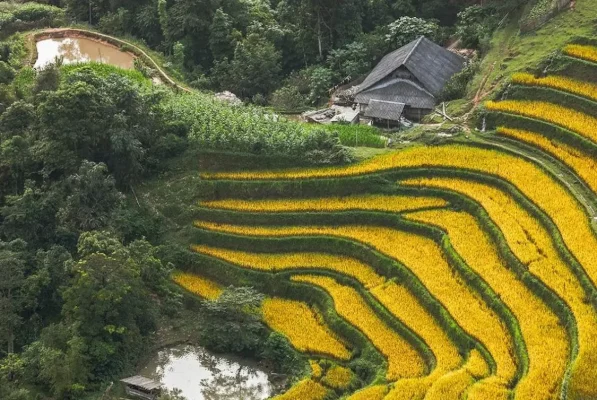
Early September also coincides with Vietnam’s National Day holiday, so domestic travel demand can increase significantly. Travelers should book transportation and accommodation early when planning a journey during this period.
Read more about Vietnam Independence Day to learn about its historical significance, commemorative activities and useful tips for planning your holiday.
October
October is often considered one of the most beautiful months for exploring Northern Vietnam. The weather becomes cooler, skies are clearer, sunshine is gentler and rainfall decreases in many destinations.
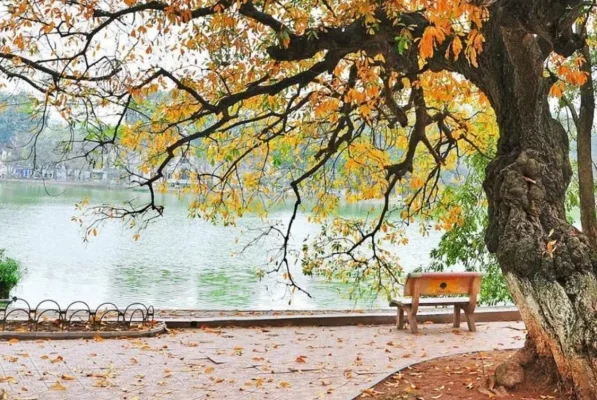
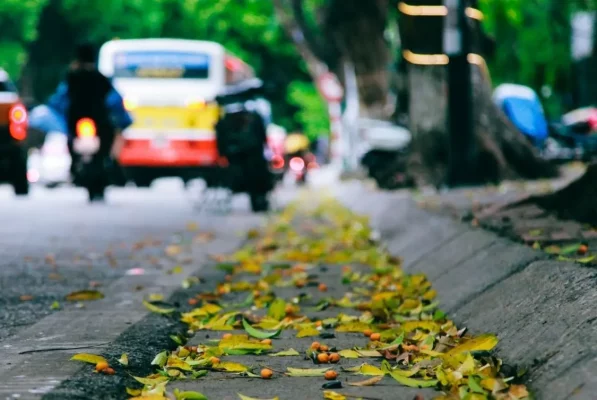
Hanoi enters its characteristic autumn period, with light breezes, golden sunshine and the scent of milk flowers in the streets. In Ha Giang, buckwheat flowers begin blooming across the rocky plateau. Trekking routes and village journeys also become more comfortable than they are during summer.
However, Central Vietnam may experience heavy rainfall and storms in October. Travelers visiting Hue, Da Nang or Hoi An should monitor the weather forecast and choose services with flexible rescheduling policies.
November
November brings lower temperatures to Northern Vietnam, particularly during the early morning and evening. Mountainous destinations such as Sapa, Ha Giang and Hoang Su Phi can become quite cold, making this period suitable for travelers who enjoy chilly weather and quiet surroundings.
In Southern Vietnam, the rainy season gradually comes to an end. Ho Chi Minh City, the Mekong Delta and Phu Quoc begin to experience more dry days, creating better conditions for sightseeing and resort holidays.
Is fall a good time to visit Vietnam?
Yes. Fall is one of the most rewarding periods for traveling in Vietnam, especially in the northern region.
The weather becomes less hot, the landscapes change color and numerous seasonal experiences become available. Travelers can admire golden terraced rice fields, enjoy autumn specialties, participate in the Mid-Autumn Festival or explore mountain roads in more pleasant conditions.
Some of the main advantages of visiting Vietnam in fall include:
- Cooler and more comfortable weather in Northern Vietnam than in summer.
- Terraced rice fields entering their most beautiful golden season.
- Fewer crowds at many destinations after the summer travel season.
- Favorable conditions for trekking, photography, cultural exploration and wellness retreats.
- A variety of seasonal festivals and traditional foods.
However, weather conditions are not the same throughout the country. Central Vietnam may receive considerable rainfall, while mountainous routes can remain slippery after rain. Travelers should therefore check the local forecast for each destination rather than relying on a single weather overview for the whole country.
Vietnam in fall weather by region
To understand Vietnam in fall weather accurately, travelers should consider Northern, Central and Southern Vietnam separately.
| Region | Typical Temperature | Weather Characteristics | Recommended Experiences | Important Notes |
|---|---|---|---|---|
| Northern Vietnam | Approximately 18–28°C | Gradually cooler, less rain, clearer skies and gentle sunshine | Golden rice terraces, buckwheat flowers and autumn in Hanoi | Mountainous areas can be cold in the early morning and at night |
| Central Vietnam | Approximately 23–30°C | Warm, rainy and potentially affected by storms | Seafood experiences and coastal resort stays | Monitor weather forecasts and keep travel plans flexible |
| Southern Vietnam | Approximately 24–32°C | Warm with occasional rain that gradually decreases toward the end of fall | Floating markets, fruit orchards and island holidays | Plan outdoor activities for the morning when possible |
Weather in Northern Vietnam during fall
Northern Vietnam experiences the country’s most distinctive autumn weather. From September onward, temperatures begin to decrease and the atmosphere becomes increasingly pleasant. October generally brings more clear days, gentle sunshine and lower humidity.
Hanoi is suitable for city tours, historical attractions and culinary experiences. Mountainous destinations such as Hoang Su Phi, Sapa, Ha Giang and Mu Cang Chai attract travelers with terraced rice fields, seasonal flowers and the cultural traditions of local communities.
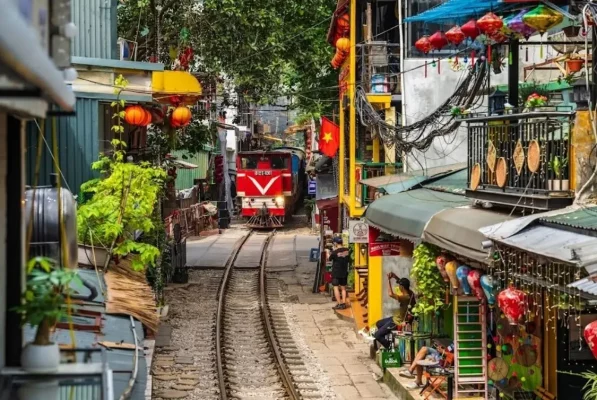
Temperatures in mountainous areas are generally lower than in the lowlands. Travelers should pack a light jacket, especially when going out in the early morning or evening.
Weather in Central Vietnam during fall
Central Vietnam enters its rainy season from September to November. Some destinations may experience heavy rainfall, localized flooding, storms or tropical depressions.
However, this does not mean that the entire journey will be disrupted. Da Nang, Hoi An and Hue still offer many cultural, culinary and wellness experiences. Travelers can combine outdoor attractions with museums, heritage buildings, spas, restaurants and cooking classes.
Those choosing to visit Central Vietnam should maintain a flexible itinerary and follow updates from transportation providers, resorts and local guides.
Weather in Southern Vietnam during fall
Southern Vietnam does not have a clearly defined autumn like Northern Vietnam. Temperatures remain high and the climate stays warm throughout the year. During September and October, rain usually occurs in the afternoon or evening but rarely continues for the entire day.
Rainfall gradually decreases in November. This period becomes more suitable for exploring Ho Chi Minh City, the Mekong Delta and the southern islands.
The Mekong Delta’s floating season also provides distinctive experiences, such as traveling by boat through flooded forests, visiting floating markets and trying seasonal local dishes.
Vietnam in fall temperature
The Vietnam in fall temperature changes according to the month, region and elevation.
Vietnam temperature in September
- Northern Vietnam: approximately 23–31°C. Northern mountainous areas are generally cooler, especially in the early morning.
- Central Vietnam: approximately 24–32°C.
- Southern Vietnam: approximately 24–32°C.
Vietnam temperature in October
- Northern Vietnam: approximately 20–28°C.
- Central Vietnam: approximately 23–30°C.
- Southern Vietnam: approximately 24–31°C.
Vietnam temperature in November
- Northern Vietnam: approximately 17–25°C.
- Central Vietnam: approximately 22–28°C.
- Southern Vietnam: approximately 24–31°C.
Best places to visit in Vietnam in fall
The best destinations to visit in Vietnam in fall depend on your travel dates, weather conditions and preferred style of journey. Travelers can choose between mountain landscapes, cities, beaches, islands and local cultural experiences.
Hanoi
Hanoi is one of the best places to experience the beauty of autumn in Vietnam. From October to early November, the city often has gentle sunshine, clear skies and cool breezes.
- Best time to visit: October to early November.
- Typical temperature: Approximately 20–28°C.
- Walk around Hoan Kiem Lake and the Old Quarter.
- Cycle around West Lake or enjoy the sunset.
- Visit the Temple of Literature and the Imperial Citadel of Thang Long.
- Try green rice, persimmons, egg coffee and Trang Tien ice cream.
Hoang Su Phi
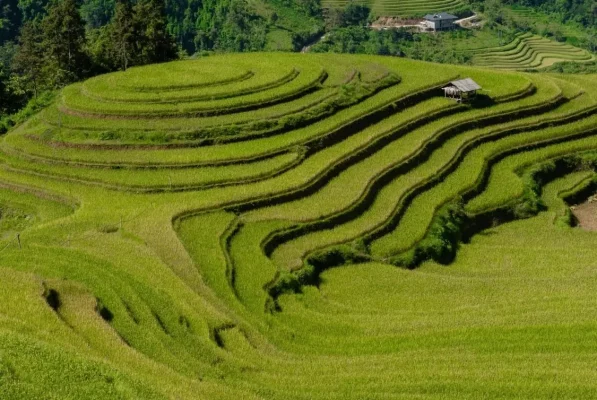
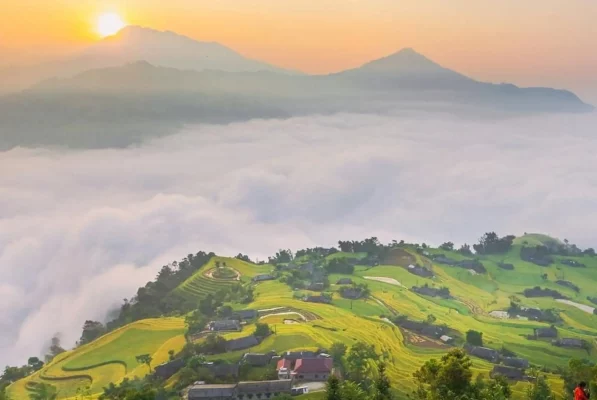
Hoang Su Phi is an outstanding destination for travelers who love terraced rice fields, trekking and slow travel. During September and early October, the rice fields turn golden and stretch across the mountain slopes.
- Best time to visit: September to early October.
- Typical temperature: Approximately 18–27°C.
- Admire terraced rice fields in Ban Phung, Ban Luoc, Nam Hong and Thong Nguyen.
- Trek through villages and traditional farming areas.
- Learn about the daily life and culture of the Red Dao people.
- Enjoy Shan Tuyet tea and a traditional herbal bath.
Sapa
Sapa is a familiar destination for travelers who want to admire golden rice fields and discover the culture of northern highland communities. The terraced fields in Lao Chai, Ta Van and Muong Hoa Valley are particularly beautiful in September.
- Best time to visit: September to mid-October.
- Typical temperature: Approximately 15–24°C.
- Trek through Lao Chai and Ta Van.
- Admire the terraced rice fields in Muong Hoa Valley.
- Visit O Quy Ho Pass, Silver Waterfall and Ham Rong Mountain.
- Explore local markets and highland cuisine.
Sapa offers a diverse tourism service system and is easier to access. Hoang Su Phi, meanwhile, is more suitable for travelers seeking peaceful surroundings, authentic landscapes and a slower travel experience.
Ha Giang
Ha Giang becomes particularly attractive from October to November, when buckwheat flowers begin covering valleys and mountain slopes in shades of pink and purple.
- Best time to visit: October to November.
- Typical temperature: Approximately 15–26°C.
- Explore the Dong Van Karst Plateau.
- Travel across Ma Pi Leng Pass and admire the Nho Que River.
- Visit Lung Cu Flag Tower, Quan Ba and Meo Vac.
- See buckwheat flowers in designated seasonal fields.
Travelers should check road conditions and avoid long-distance driving during heavy fog or severe weather warnings.
Mu Cang Chai
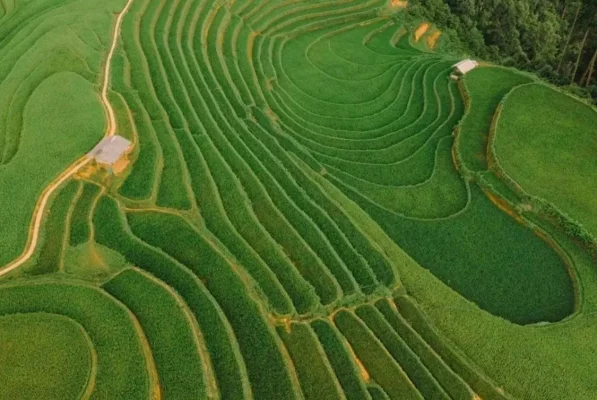
Mu Cang Chai is famous for terraced rice fields that curve around the mountain slopes. It is one of the most popular destinations for photographers during the golden rice season.
- Best time to visit: September to early October.
- Typical temperature: Approximately 18–27°C.
- Admire Mam Xoi Hill and Mong Ngua Hill.
- Travel across Khau Pha Pass.
- Photograph the terraced rice fields in the early-morning light.
- Try paragliding when weather conditions and local programs allow.
Moc Chau
Moc Chau is suitable for a short journey from Hanoi. During fall, the plateau has cool weather, green tea plantations and fields of seasonal flowers.
- Best time to visit: October to November.
- Typical temperature: Approximately 17–26°C.
- Visit tea plantations and Ban Ang Pine Forest.
- Explore Dai Yem Waterfall.
- Admire white mustard flowers or buckwheat flowers, depending on the season.
Da Nang
Da Nang can still be included in an autumn itinerary, especially for travelers who want to combine beaches, local cuisine and family-friendly attractions. However, September to November is also a period when Central Vietnam may experience rainfall.
- Best time to visit: Choose days with a stable weather forecast.
- Typical temperature: Approximately 23–30°C.
- Walk along or relax at My Khe Beach when weather conditions are favorable.
- Visit the Marble Mountains and Linh Ung Pagoda.
- Explore Ba Na Hills and family entertainment complexes.
- See Dragon Bridge and experience the city’s cuisine.
- Combine your journey with Hoi An or Hue.
Travelers should monitor the weather forecast, avoid booking fixed outdoor activities for several consecutive days and prioritize services with flexible rescheduling policies.
Hoi An
Hoi An attracts travelers with its ancient architecture, lantern-lit streets and distinctive local cuisine. Although fall coincides with the rainy season in Central Vietnam, the Ancient Town still offers many suitable activities.
- Best time to visit: Days with stable weather from September to November.
- Typical temperature: Approximately 23–30°C.
- Walk through the Ancient Town and visit historic assembly halls.
- Explore the Japanese Covered Bridge and traditional heritage houses.
- Release flower lanterns on the Hoai River.
- Try cao lau, mi Quang and Hoi An banh mi.
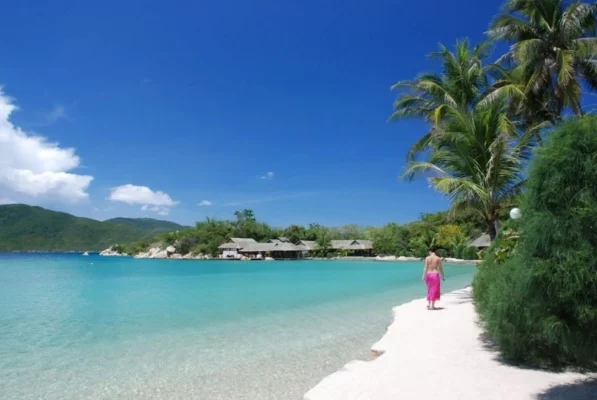
Nha Trang
Nha Trang is a suitable option for travelers who want to include a seaside experience in their autumn itinerary. September often still has favorable periods, while rainfall may gradually increase in October and November.
- Best time to visit: September or calm-sea days in October and November.
- Typical temperature: Approximately 24–30°C.
- Swim and relax at beachfront resorts.
- Visit Hon Mun, Hon Tre and nearby islands when sea conditions are favorable.
- Enjoy mineral mud baths and wellness treatments.
- Visit Po Nagar Cham Towers and cultural attractions in the city.
- Choose island tours with flexible rescheduling policies.
Da Lat
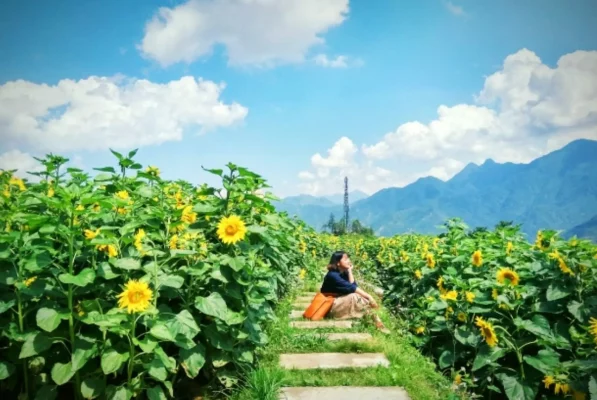
Da Lat has a cool climate throughout the year and becomes particularly attractive toward the end of fall, when wild sunflowers begin blooming along many scenic roads.
- Best time to visit: Late October to November.
- Typical temperature: Approximately 15–24°C.
- Admire wild sunflowers and mimosa flowers.
- Walk around Xuan Huong Lake and Tuyen Lam Lake.
- Explore Lang Biang Mountain, waterfalls and local cafés.
- Visit Truc Lam Zen Monastery and Bao Dai Palace.
Mekong Delta
Fall coincides with the floating season in several Mekong Delta provinces. This is an ideal time to explore flooded landscapes and the region’s river-based culture.
- Best time to visit: September to November.
- Typical temperature: Approximately 24–31°C.
- Take a boat through Tra Su Cajuput Forest.
- Visit floating markets and fruit orchards.
- Explore wetland ecosystems.
- Try linh fish, sesbania flowers and seasonal local dishes.
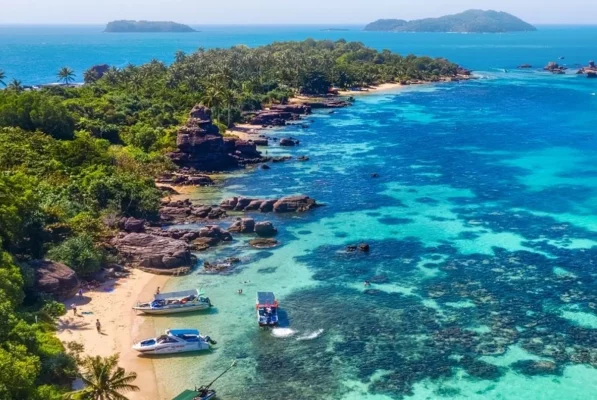
Phu Quoc
Phu Quoc may experience rainfall and rough seas during September and October. However, weather conditions generally become more stable in November as the island transitions into the dry season.
- Best time to visit: Late October to November.
- Typical temperature: Approximately 25–31°C.
- Stay at a resort with a variety of facilities.
- Explore fishing villages, pepper farms and fish sauce factories.
- Visit Grand World or VinWonders.
- Book island-hopping and snorkeling tours when sea conditions are stable.
- Watch the sunset from the island’s western coastline.
Travelers visiting Phu Quoc in early fall should prioritize resorts with indoor activities and flexible booking policies.
What is special about autumn in Sapa, Vietnam?
Sapa is one of the most searched destinations when travelers research the fall season in Vietnam. The period from September to early October is when the terraced rice fields enter their golden season, creating one of the most distinctive landscapes in Northwestern Vietnam.
When does Autumn begin in Sapa?
Autumn in Sapa generally becomes noticeable in September. The rice may ripen between mid-September and early October, although harvesting times change according to elevation, location and the weather conditions of each year.
Travelers whose main goal is to see golden rice fields should check local harvest updates before beginning their trip.
Weather in Sapa during fall
Sapa’s autumn temperatures generally range from 15–24°C. Daytime conditions are relatively pleasant, while early mornings and evenings can feel cold.
Low clouds and fog are common, creating beautiful mountain scenery but occasionally limiting visibility on mountain roads.
Recommended experiences during autumn in Sapa, Vietnam
- Trek along the Lao Chai–Ta Van route.
- Admire terraced rice fields in Muong Hoa Valley.
- Reach Fansipan in one of two ways: by cable car or by trekking to the summit.
- Explore O Quy Ho Pass and look for cloud-filled mountain views.
- Learn about the daily life of local communities.
- Enjoy grilled food and salmon hotpot in the cool weather.
Things to do in Vietnam in fall
Fall is a suitable time for travelers to combine scenic exploration, local cultural discovery and nature-based relaxation. Depending on the region, a journey may focus on golden terraced rice fields, trekking routes, traditional festivals, highland flower seasons or the distinctive river experiences of the Mekong Delta.
Admire golden terraced rice fields
Seeing terraced rice fields during the golden harvest season is one of the most memorable experiences in Northern Vietnam during fall. Hoang Su Phi, Sapa and Mu Cang Chai are three of the most popular destinations, with rice fields stretching across mountain slopes between villages, valleys and forests.
In Hoang Su Phi, travelers can explore areas such as Ban Phung, Ban Luoc, Nam Hong and Thong Nguyen. Sapa is known for Muong Hoa Valley, Lao Chai and Ta Van, while Mu Cang Chai is famous for Mam Xoi Hill, Mong Ngua Hill and Khau Pha Pass.
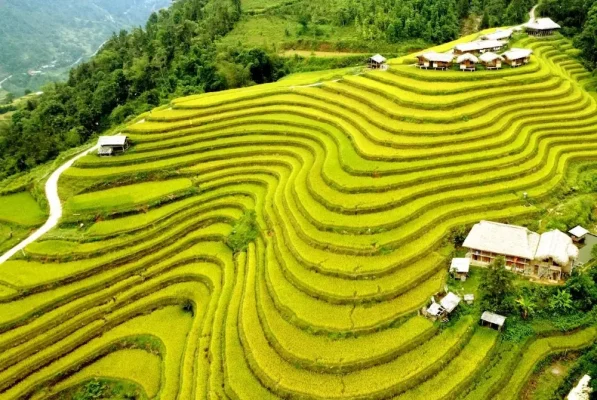
The rice does not ripen at exactly the same time in every destination. Harvesting dates may change depending on elevation, rice varieties, weather conditions and local farming schedules. Travelers should therefore check seasonal information with their accommodation provider before confirming their travel dates.
Trek through mountains and local villages
Cooler weather makes trekking more comfortable than it is during summer. Travelers can choose a short walk lasting several hours, a full-day route or a multi-day trekking journey depending on their fitness, experience and available time.
Trekking routes in Hoang Su Phi, Sapa, Ha Giang and Mu Cang Chai often pass terraced rice fields, tea plantations, bamboo forests, small streams and local villages. These journeys provide opportunities to learn about farming methods, traditional architecture, clothing and the daily culture of highland communities.
Travelers should prepare shoes with good grip, a light jacket and sufficient drinking water. For long routes or challenging terrain, it is advisable to travel with a local guide who can provide support with navigation and current road conditions.
Experience Hanoi’s autumn atmosphere
Autumn in Hanoi is associated with milder temperatures, gentle sunshine, cool breezes and a slower rhythm after the hot summer. It is an ideal period for exploring the city on foot, cycling or spending time in one of its long-established cafés.
Travelers can begin the day with a walk around Hoan Kiem Lake, explore the Old Quarter and visit landmarks such as the Temple of Literature or the Imperial Citadel of Thang Long. In the afternoon, they can cycle around West Lake, watch the sunset or relax in a quiet café.
Food is also an important part of the Hanoi autumn experience. Green rice, green-rice patties, persimmons, mooncakes, egg coffee and warm local dishes are characteristic seasonal choices. These simple activities do not require a complicated itinerary but allow travelers to appreciate the city’s atmosphere, flavors and daily rhythm during the seasonal transition.
Celebrate the mid-autumn festival
The Mid-Autumn Festival takes place on the 15th day of the eighth lunar month and is one of Vietnam’s most prominent autumn cultural celebrations. It is associated with family reunions, children’s activities, lanterns, lion dances and mooncakes.
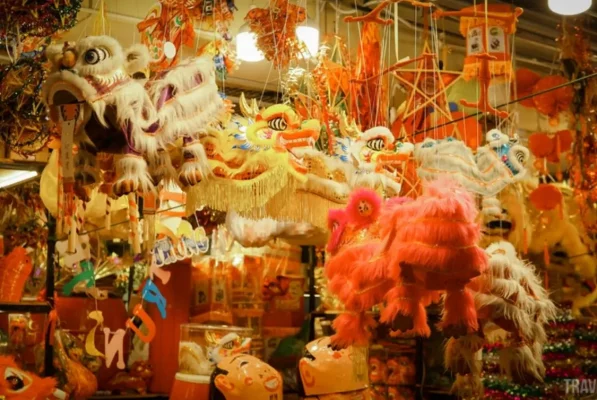
In Hanoi, Hang Ma Street is usually decorated with colorful lanterns, traditional toys and Mid-Autumn Festival accessories. Tuyen Quang is known for its large lantern models, lively parades and festive atmosphere. Hoi An attracts travelers with its Ancient Town, lanterns and activities along the Hoai River, while Hue often organizes cultural programs, artistic performances and community activities.
See buckwheat flowers in Ha Giang
Buckwheat flowers generally begin blooming in October and may continue into November, depending on the weather conditions of each year. Fields of white, pale pink and purple flowers can often be seen along routes through Dong Van, Meo Vac, Quan Ba and areas near Lung Cu.
Some flower gardens may charge a small entrance fee. Travelers should follow designated paths, avoid stepping on flower beds and never pick the flowers without permission. Those traveling by motorbike or car should also be cautious when encountering fog.
Explore the Mekong Delta’s Floating Season
The floating season gives the Mekong Delta a distinctive landscape. Water flowing downstream floods rice fields, cajuput forests and low-lying areas, while creating favorable conditions for fish, aquatic vegetables and other seasonal ingredients.
Travelers can take a boat through Tra Su Cajuput Forest, explore wetland ecotourism areas, visit floating markets or experience river-based life in An Giang, Dong Thap, Can Tho and neighboring provinces. These journeys often provide opportunities to observe birds, wetland ecosystems and the daily activities of local residents.
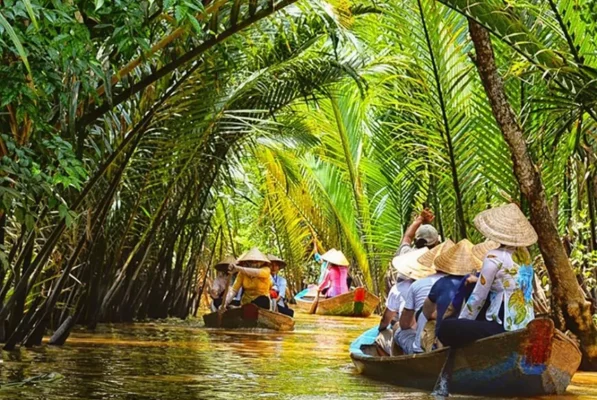
Food is an essential part of the floating-season experience. Travelers can try linh fish hotpot with sesbania flowers, sour linh fish soup, braised fish, wild vegetables and other traditional Mekong Delta dishes. When joining a boat tour, wear comfortable clothing, carry a raincoat and waterproof bag, and follow all safety instructions.
Enjoy wellness and restorative experiences
Milder weather and peaceful natural surroundings make fall suitable for journeys focused on physical and mental restoration. Instead of traveling continuously between attractions, visitors can spend several nights at a mountain, highland or coastal retreat.
In areas inhabited by Red Dao communities, traditional herbal bathing is an experience that interests many travelers. The bathwater is prepared using leaves, tree bark and herbs based on local knowledge, providing a relaxing experience after a day of trekking. Herbal massage, foot baths, yoga, meditation, tea tasting and gentle walks in nature can also be included in the journey.
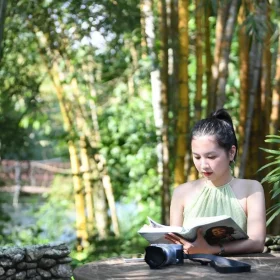
Travelers can spend time reading, reduce their use of digital devices, participate in cooking classes, learn about local tea or simply rest in a quiet environment. These experiences are particularly suitable for people who want to reduce stress, restore their energy and regain balance after a demanding period of work.
Festivals and public holidays in Vietnam during fall
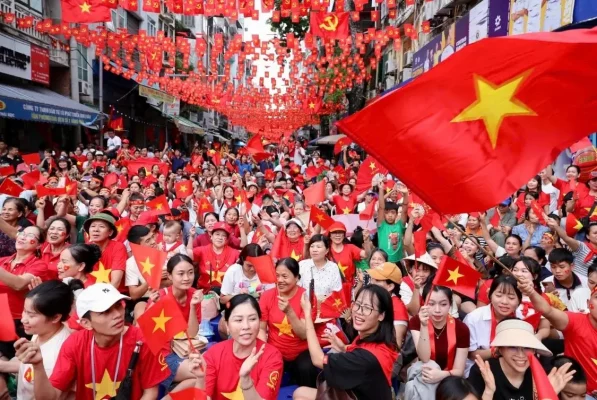
Vietnam National Day on September 2
National Day is one of Vietnam’s most important public holidays. Commemorative activities, decorations and cultural programs are organized in Hanoi and many other destinations.
Transportation and accommodation demand usually increases during this period. Travelers should book tickets and rooms early when their journey coincides with the holiday.
Learn more in our guide to Vietnam Independence Day.
Mid-Autumn Festival
The Mid-Autumn Festival takes place on the full moon of the eighth lunar month. It is a time when families gather, enjoy mooncakes and participate in moon-viewing activities.
In many destinations, travelers can watch lion dances, lantern processions and programs organized for children.
Ha Giang buckwheat flower festival
This festival is generally organized in Ha Giang during the buckwheat flower season. Activities may include artistic performances, food introductions and local cultural programs.
The exact dates change each year, so travelers should check official announcements before planning their journey.
Golden rice and terraced field festivals
Hoang Su Phi and Mu Cang Chai may organize cultural programs, local performances and activities connected with the golden rice harvest.
What to eat when visiting Vietnam in Fall
Northern Vietnam’s autumn specialties
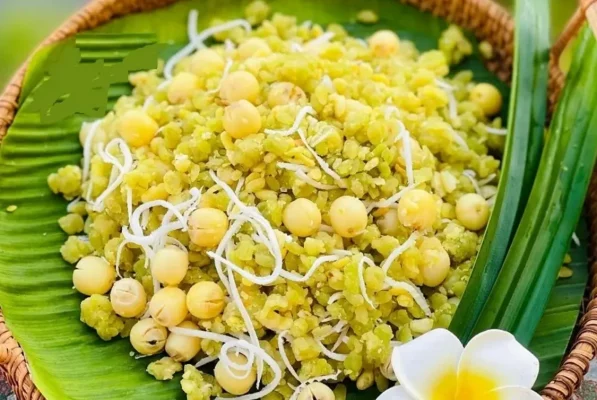
Autumn in Northern Vietnam is closely associated with the delicate fragrance of young green rice, locally known as com. Travelers can enjoy fresh green rice or try cha com, a savory dish made by combining green rice with minced meat before frying it until golden. In Hanoi, these foods are commonly sold in the Old Quarter, traditional markets and many local restaurants. A portion of fresh green rice generally costs around 20,000–50,000 VND, while a serving of cha com usually ranges from 50,000–120,000 VND.
Crisp and soaked persimmons are also characteristic autumn fruits. Travelers can find them at markets, fruit shops and roadside stalls in Hanoi, Sapa and Ha Giang. Reference prices generally range from 40,000–100,000 VND per kilogram.
Mooncakes become widely available before the Mid-Autumn Festival. In Hanoi, travelers can visit traditional bakeries such as Bao Phuong on Thuy Khue Street. Traditional baked and sticky-rice mooncakes generally cost around 50,000–150,000 VND per cake, while premium versions or cakes with special fillings can be more expensive.
Egg coffee is another signature Hanoi experience. Travelers can try it at Café Giang, located at 39 Nguyen Huu Huan Street, one of the city’s long-established coffee shops. A cup generally costs around 50,000–60,000 VND.
In Northern Vietnam’s mountainous areas, salmon hotpot, sturgeon hotpot and mixed hotpot are particularly suitable for cool autumn weather. In Sapa, grilled skewers generally cost around 15,000–40,000 VND each, while a hotpot for two to four people usually ranges from 350,000–700,000 VND.
Central Vietnamese food for rainy days
Central Vietnam’s noodle soups and warm dishes are particularly enjoyable during rainy autumn days. Mi Quang is made with yellow noodles, fresh herbs, peanuts, meat or seafood and a small amount of richly seasoned broth. Travelers can try it at Mi Quang Ba Mua, a familiar restaurant chain in Da Nang and several other cities. A bowl generally costs around 40,000–75,000 VND, depending on the toppings.
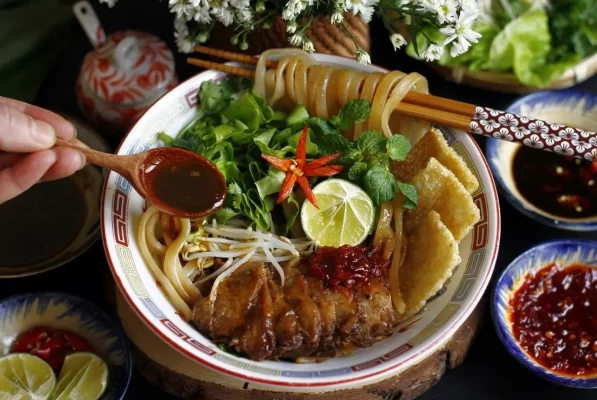
In Hoi An, cao lau is a dish that should not be missed. It combines thick noodles, barbecued pork, fresh herbs, crispy toppings and a concentrated savory sauce. Travelers can visit Cao Lau Ba Le or smaller restaurants in Hoi An Ancient Town. A bowl generally costs around 35,000–60,000 VND, while restaurant set menus may start from approximately 180,000 VND per person.
Hue is famous for bun bo Hue, a spicy noodle soup with the fragrance of lemongrass and the rich flavor of fermented shrimp paste. Familiar establishments include Bun Bo Me Keo and numerous long-established restaurants around the city center. A bowl usually costs around 35,000–70,000 VND.
Com hen is another characteristic Hue dish, combining rice, small clams, herbs, peanuts, crispy pork skin and spicy seasonings. Travelers can try it at Com Hen Hoa Dong on Han Mac Tu Street. A portion of clam rice or clam noodles generally costs around 15,000–30,000 VND.
Other suitable choices for rainy weather include steamed cakes, noodle soups, porridge, clay-pot rice and warm local dishes. A meal at an affordable local restaurant generally costs around 30,000–100,000 VND per person.
Southern Vietnam’s Floating-Season specialties
Southern Vietnam’s floating season provides freshwater fish, wild vegetables and many distinctive Mekong Delta ingredients. One of the most representative foods is young ca linh, a small seasonal fish that is often cooked in sour soup, braised with sugarcane or served in a hotpot with yellow sesbania flowers.
Travelers can enjoy linh fish hotpot with sesbania flowers at seasonal restaurants in Can Tho, Chau Doc, An Giang and Dong Thap. A hotpot for two to four people generally costs around 250,000–500,000 VND, depending on the amount of fish, vegetables and the serving size.
Lau mam, or fermented fish hotpot, is another characteristic Mekong Delta dish. Its intensely aromatic broth is served with fish, pork, shrimp, squid and a variety of vegetables. Travelers can consider Lau Mam Da Ly on Tran Hoang Na Street or Quan Tu Thang on Mau Than Street. The average cost generally ranges from 100,000–300,000 VND per person.
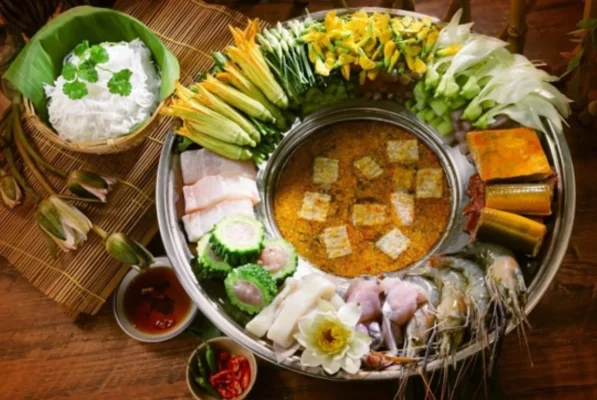
The Mekong Delta is also known for fruits such as mangoes, rambutans, longans, dragon fruit, mangosteens and durians. Travelers can buy them at local markets or enjoy them directly at fruit orchards in Can Tho, Ben Tre and Vinh Long. Common fruits generally cost around 30,000–100,000 VND per kilogram, while premium durian varieties may be considerably more expensive.
Other traditional Mekong Delta dishes worth trying include grilled snakehead fish, caramelized fish in a clay pot, Vietnamese pancakes, sour soup and coconut-based desserts. A meal at an affordable restaurant generally costs around 40,000–150,000 VND per person.
What to pack for Vietnam in Fall
Clothing
- Lightweight and breathable clothing for Southern Vietnam.
- A light jacket when visiting Hanoi.
- Warmer clothing when traveling to Sapa, Ha Giang or Hoang Su Phi.
- Respectful clothing for temples, pagodas and spiritual sites.
Footwear
- Comfortable walking shoes for city journeys.
- Trekking shoes with good grip for mountainous areas.
- Quick-drying sandals for coastal destinations.
- Avoid smooth-soled footwear on trails after rain.
Essential travel items
- A compact umbrella or lightweight raincoat.
- Sunscreen and a hat.
- Insect repellent.
- A waterproof bag for phones and cameras.
- A portable charger.
- A reusable water bottle.
Travel tips for visiting Vietnam in fall
- Check the weather forecast for every individual destination.
- Do not use the weather in one location to evaluate the entire country.
- Book accommodation early during the golden rice season and National Day holiday.
- Choose tours and services with flexible rescheduling policies.
- Allow additional time between different stages of your journey.
- Do not trek during warnings of heavy rainfall, flash floods or landslides.
- Pack clothing in layers when traveling from lowland areas to the mountains.
- Check festival dates because many events follow the lunar calendar.
- Respect local customs when visiting villages and spiritual sites.
Panhou Retreat – a peaceful fall getaway in Hoang Su Phi
For travelers who love nature, terraced rice fields and local culture, Panhou Retreat offers a peaceful place to stay among the mountains and forests of Hoang Su Phi.
September is particularly beautiful because of the golden rice fields. In October and November, the surroundings become quieter and cooler, making this period suitable for slow and restorative journeys.
Travelers can combine their stay with trekking through local villages. Shan Tuyet tea tasting, traditional Red Dao herbal baths and essential-oil massages are also experiences worth considering.
Rather than visiting for only one day, staying for several nights allows travelers to adjust their itinerary according to the weather and experience mountain life at a more relaxed pace.
Explore fall packages and experiences at Panhou Retreat
Travelers can explore packages and experiences at Panhou Retreat designed for trekking, relaxation, wellness, families and digital-detox journeys.
Golden Rice Season Retreat in Hoang Su Phi
This package is suitable for September journeys and combines accommodation with terraced rice viewing, trekking and local cultural experiences.
Trekking and Local Village Discovery
The journey takes travelers through terraced rice fields, mountain roads and local villages. Local guides help guests choose routes suited to their fitness and the current weather conditions.
Herbal Healing Retreat
This retreat combines nature with treatments inspired by traditional Red Dao knowledge. It is suitable for travelers seeking relaxation and renewed energy.
Digital Detox in the Mountains
This experience helps travelers step away from work and notifications, creating more time for walking, reading, resting and reconnecting with the present moment.
Nature Retreat for Families
This package includes gentle activities that help families explore terraced rice fields and local culture in a natural environment.
Frequently Asked Questions
1. Is fall a good time to visit Vietnam?
Yes. Fall is particularly suitable for exploring Northern Vietnam because of its cool weather, golden terraced rice fields and cultural activities.
2. When does the fall season in Vietnam begin?
The fall season generally lasts from September to November, although autumn is most noticeable in Northern Vietnam.
3. What is Vietnam in fall weather like?
Northern Vietnam becomes cooler and receives less rain, while Central Vietnam may experience heavier rainfall. Southern Vietnam remains warm, with rainfall gradually decreasing toward the end of fall.
4. What is the average Vietnam in fall temperature?
Temperatures generally range from approximately 18–28°C in Northern Vietnam and 24–32°C in Southern Vietnam, depending on the month and elevation.
5. What are the best places to visit in Vietnam in fall?
Hanoi, Hoang Su Phi, Sapa, Ha Giang and Mu Cang Chai offer beautiful flower seasons and terraced rice landscapes. Da Nang, Hoi An, Nha Trang, Da Lat, Phu Quoc and the Mekong Delta are suitable for travelers interested in coastal holidays and resort experiences.
6. What are the best things to do in Vietnam in fall?
Travelers can admire terraced rice fields, go trekking, celebrate the Mid-Autumn Festival, see buckwheat flowers, explore the Mekong Delta’s floating season and enjoy seasonal specialties.
7. What is special about autumn in Sapa, Vietnam?
Sapa has cool weather, golden terraced rice fields and beautiful seasons of roses and hydrangeas.
8. Does it rain in Vietnam during fall?
Yes, but rainfall varies between regions. Central Vietnam generally receives more rain than Northern and Southern Vietnam during this period.
9. Are there typhoons in Vietnam during fall?
There can be. Central Vietnam and coastal regions may be affected by storms or tropical depressions, particularly in September and October.
10. Is September or October better for visiting Vietnam?
September is ideal for viewing golden rice fields. October generally has more pleasant weather in Northern Vietnam and marks the beginning of buckwheat flower season.

3D2N NATIONAL DAY OFFER | JOURNEY INTO GREEN SEASON
From 125 USD/Guest/Combo
3D2N GOLDEN SEASON IN HOANG SU PHI
From 114 USD/Guest/Combo