Vietnam Rice Terraces: 6 Best Places To See The Rice Season
| ExperiencesVietnam rice terraces were created from the need for survival and long-term settlement among ethnic communities in the northern highlands. With little flat land available for wet-rice cultivation, local farmers carefully shaped steep hillsides into connected terraces. This system retains water, limits erosion, and makes efficient use of mountainous terrain. The most beautiful rice terraces are found in Mu Cang Chai, Sa Pa, Y Ty, and Hoang Su Phi. Among them, the Ha Giang rice terraces stand out for their remote landscapes and authentic trekking experiences. Each season brings a different palette, from shimmering water and fresh green rice to golden hillsides during harvest.
Where Should You See Rice Terraces in Vietnam?
Vietnam’s finest rice terraces are concentrated mainly in the northern mountains. The destinations below are worth considering for scenery, accessibility, and local experiences.
| Destination | Landscape Highlights | Best Time to Visit | Weather Conditions | Recommended Accommodation |
|---|---|---|---|---|
| Mu Cang Chai | Mam Xoi Hill, Mong Ngua Hill, and high mountain terraces | May–June, September–October | Cool weather; autumn temperatures can drop to around 18°C | Mu Cang Chai Ecolodge |
| Sa Pa | Muong Hoa Valley, Lao Chai, and Ta Van | July–October | Frequent mist and cooler temperatures than the lowlands | Topas Ecolodge or a Ta Van homestay |
| Y Ty | High-altitude terraces, cloud seas, and earthen houses | May and late September | Cold mornings with frequent clouds and mist | Y Ty Lodge or Cloud Paradise Resort |
| Hoang Su Phi | Ban Phung, Ban Luoc, and Thong Nguyen | June and July–October | Humid summers; golden-season temperatures around 18–28°C | Panhou Retreat |
| Pu Luong | Terraced valleys, Thai villages, and traditional water wheels | Late May–June, September–October | Approximately 22–30°C, with summer rainfall | Pu Luong Retreat |
| Tam Coc | Riverside rice fields and limestone mountains | Late May–early June | Hot and humid, approximately 25–34°C | Tam Coc Garden or a local homestay |
Mu Cang Chai
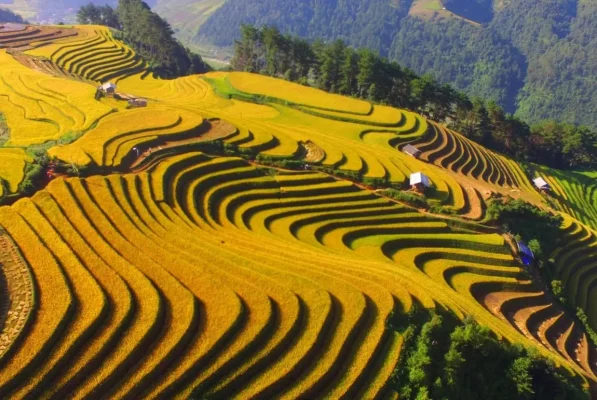
Mu Cang Chai is one of Vietnam’s most famous rice-terrace destinations. Its fields spread across the mountains and have been cultivated by generations of Hmong families.
According to Vietnam Tourism, the district has approximately 2,200 hectares of terraced fields, including 500 hectares recognized as a national scenic site. The best-known photography locations include Mam Xoi Hill, Mong Ngua Hill, La Pan Tan, and Che Cu Nha.
Best Time to Visit Mu Cang Chai
The water-pouring season usually occurs from May to June. As water flows into the fields, the mountainsides become giant mirrors reflecting clouds and sunlight.
According to Vietnam Tourism, rice grows from June until mid-September, covering the valleys in rich shades of green. The harvest season usually peaks from late September to early October, when the terraces turn golden.
During September, daytime temperatures generally reach 27–28°C and may fall to approximately 18–20°C at night. Rain can still occur, particularly during the first half of the month.
Mu Cang Chai Travel Tips
Travelers should stay for at least two nights to explore La Pan Tan, Che Cu Nha, and the Tu Le Valley.
La Pan Tan is famous for circular terraces surrounding a hilltop like a giant tray of sticky rice. Visitors can combine sightseeing with village walks and learn about traditional Hmong farming practices. Mam Xoi Hill becomes crowded during the golden season, so arrive before 7:00 a.m. to avoid large groups.
Che Cu Nha features broad, gently layered terraces extending continuously across the hillsides and around local houses. Compared with Mam Xoi Hill in La Pan Tan, this area is generally quieter.
Tu Le Valley lies beneath Khau Pha Pass, surrounded by high mountains and extensive rice fields. Besides enjoying the scenery, visitors can try Tu Le sticky rice and young green rice, known for their soft texture and delicate sweetness.
Some viewpoints are reached by narrow, steep, and slippery roads. Travelers without mountain-driving experience should hire a local motorbike driver instead of riding independently.
Where to Stay in Mu Cang Chai
Mu Cang Chai Ecolodge sits among mountains and rice fields, with rates starting from approximately VND 320,000 per night.
Homestays in La Pan Tan are close to popular viewpoints, with rates from VND 150,000 to VND 700,000 per night.
Tu Le offers more comfortable stays, with room rates generally starting from VND 1.3 million per night.
Sa Pa
Sa Pa is one of Vietnam’s most familiar rice-terrace destinations for international travelers. Modern transport links and diverse accommodation make the area easy to visit.
The most beautiful terraces are concentrated in Muong Hoa Valley, Lao Chai, Ta Van, Su Pan, and Ta Phin. Trekking routes pass through villages inhabited by Hmong, Red Dao, Giay, and Tay communities.
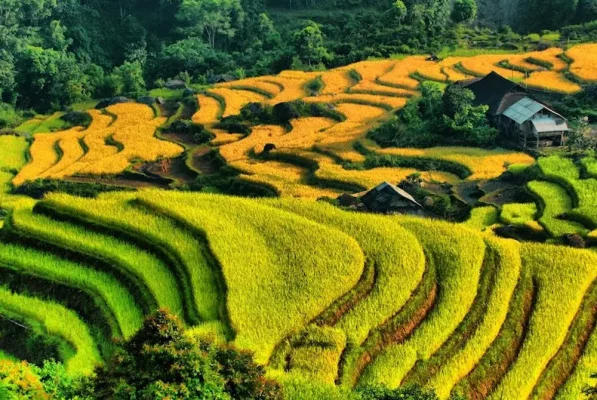
Best Time to Visit Sa Pa
April and May usually bring relatively clear skies, making them suitable for outdoor activities. From July to August, the valleys are covered by green rice.
Muong Hoa Valley, Lao Chai–Ta Van, and Y Linh Ho are considered among Sa Pa’s finest rice-terrace areas. The fields curve gently across the hillsides, appearing like a natural work of art. The two most striking periods are the water-pouring season from April to May and the harvest season from September to October.
According to Vietnam Tourism, September and October offer the most impressive golden terraces. Temperatures usually range from 20–28°C, although higher villages can feel colder early in the morning. Rain and mist remain possible and may affect visibility.
From November to March, temperatures become colder, and most fields no longer contain rice, creating a quieter landscape.
Sa Pa Travel Tips
Do not view the terraces only from central Sa Pa. Travel down to Muong Hoa Valley or stay in Lao Chai and Ta Van for closer access to the natural landscape.
The Lao Chai–Ta Van route is suitable for first-time trekkers. Routes through Su Pan or Ta Phin are longer and require better physical fitness.
Sa Pa becomes crowded on weekends and during the golden season. Begin trekking early in the morning for a quieter experience.
Where to Stay in Sa Pa
Homestays in Ta Van are close to the terraces and convenient for trekking. Rates usually range from VND 150,000 to VND 800,000 per night.
Topas Ecolodge occupies a high hillside and offers bungalows, an infinity pool, and outdoor activities. Rates generally start from approximately VND 4 million per night.
Hotels in central Sa Pa are convenient for shopping and dining. Rates commonly start from VND 600,000 per night but increase during weekends and peak seasons.
Y Ty
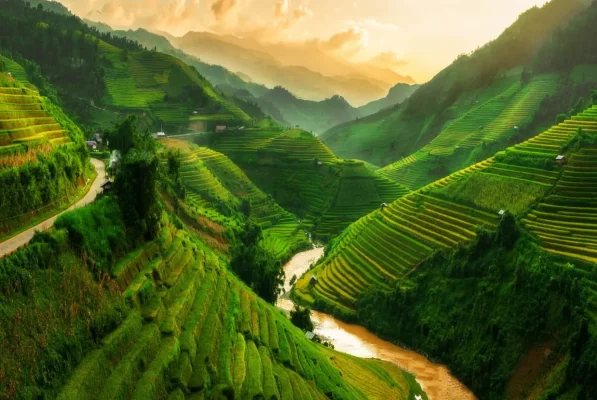
Y Ty lies in the high mountains of Lao Cai at an elevation exceeding 2,000 meters. It is famous for The Pa Valley, which was recognized as a national scenic site in 2015. Terraced fields curve through drifting clouds, while the earthen houses of the Ha Nhi people appear between the slopes.
Y Ty’s rice terraces cover more than 1,000 hectares, mainly across high mountain areas. The farming cycle begins in April with the first seasonal rains. In May, water is directed into the terraces for planting. By August, the rice begins changing from green to gold before the September harvest. The Pa Valley is one of the best-known places to view the fields.
Best Time to Visit Y Ty
- Water-pouring season, May–June: Water fills the terraces, turning the mountainsides into enormous mirrors beneath the clouds.
- Green-rice season, July–early August: The valley becomes covered in fresh green fields extending across the landscape.
- Golden-rice season, September–mid-October: Golden rice covers the hillsides, attracting photographers and travelers before the harvest.
Late September is generally the best period for golden rice. However, Y Ty’s fields may be harvested earlier than those in Sa Pa or Mu Cang Chai because of the elevation and local climate.
Y Ty is usually cool and frequently misty. During autumn, daytime conditions are pleasant, while early mornings and nights may fall below 15°C. Travelers should bring warm clothing.
Y Ty Travel Tips
The road to Y Ty includes winding, narrow, and slippery sections during the rainy season. Travelers without mountain-driving experience should hire a car or local driver.
Y Ty Market takes place on Saturday mornings and offers opportunities to meet Ha Nhi people and other ethnic communities.
Where to Stay in Y Ty
Y Ty Lodge reflects traditional Ha Nhi architecture, with rates starting from approximately VND 700,000 per night. Local homestays usually cost VND 300,000–700,000 and suit travelers seeking community experiences.
Cloud Paradise Resort stands in Mo Pu Chai at an elevation of 2,123 meters and reflects the cultural identity of the highlands. Packages start from approximately VND 1.3 million per person.
Ha Giang Rice Terraces: Hoang Su Phi
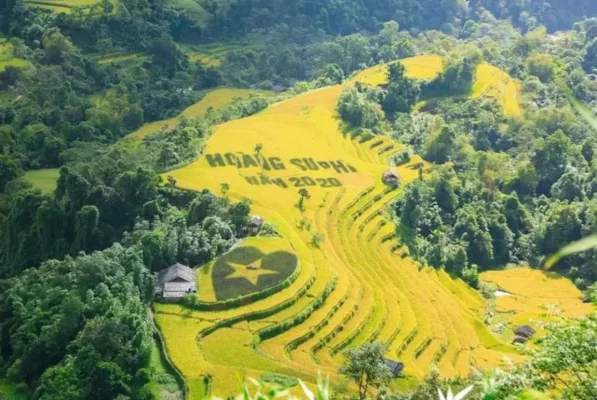
Located approximately 300 kilometers from Hanoi, Hoang Su Phi is defined by terraces curving along steep mountainsides from valleys to high slopes. Over generations, local communities transformed rugged terrain into graceful layers that blend naturally with forests and villages. Every curved field, narrow ridge, and mountain stream contributes to a landscape that feels both magnificent and intimate.
The Ha Giang rice terraces are especially impressive across Ban Phung, Ban Luoc, Ho Thau, Nam Ty, and Thong Nguyen. Compared with Sa Pa, Hoang Su Phi remains less commercialized. Travelers usually explore the fields by trekking through forests, streams, and villages inhabited by Red Dao, Tay, and other ethnic communities.
Best Time to Visit Hoang Su Phi
June is the main water-pouring season. Water flows from mountain slopes into the terraces, creating mirror-like reflections across the layered fields.
July and August bring the green-rice season. The landscape becomes lush, although humidity is high, rain is frequent, and trekking paths can be slippery.
From mid-September to early October, the terraces gradually turn golden. Temperatures commonly range from 18–28°C, creating better conditions for trekking and photography. Harvesting usually takes place throughout September and October.
Hoang Su Phi Travel Tips
Ban Phung and Ban Luoc are both known for terraced fields, although each offers a different landscape. Ban Phung has high, steep terrain with fields wrapping tightly around the mountains, making it suitable for dramatic photography.
Ban Luoc features broader terraces arranged in soft, open layers across the hillsides. Thong Nguyen is more convenient for travelers combining trekking with a comfortable retreat.
Trekking routes are often winding and have few signs. A local guide or porter makes the journey safer and easier to navigate.
Do not enter cultivated fields, fly a drone, or photograph residents closely without asking for permission.
Where to Stay in Hoang Su Phi
Panhou Retreat is located in Lang Giang, Thong Nguyen, among forests, streams, and Red Dao villages. It provides convenient access to Thong Nguyen, Nam Hong, and Nam Ty. A two-day, one-night package currently starts from approximately VND 1.9 million per person.
Hoang Su Phi Lodge in Nam Hong offers bungalows overlooking the terraces. Rates range from approximately VND 1.3 million to VND 2.3 million per night.
Hoang Su Phi Bungalow in Nam Hong offers double and family rooms, with rates starting from VND 500,000 per night.
Chi Tai Homestay in Ban Phung is convenient for photographers, with double rooms costing approximately VND 200,000 per night.
Mam Xoi Homestay in Nam Khoa suits budget travelers, with rates from approximately VND 120,000 to VND 200,000 per night.
Pu Luong
The rice terraces of Pu Luong, in Ba Thuoc District, Thanh Hoa Province, stand among mountain forests and traditional villages. Unlike many northern mountain regions that cultivate one crop annually, Pu Luong grows two rice crops each year. Visitors can therefore see shimmering flooded terraces and golden fields at different times.
The characteristic landscape includes rice terraces, limestone mountains, water wheels, and Thai and Muong villages. Notable places include Ban Don, Hieu Village, Kho Muong, and Bang Valley.
Best Time to Visit Pu Luong
Pu Luong’s rice terraces are most beautiful during the golden-rice and water-pouring seasons.
The water-pouring season generally occurs in February and from late June to early July. After the previous harvest, farmers plough the terraces and direct water into them to soften the soil for the next planting season.
The rice then turns golden from late May through June and again from September to October. Under sunlight, Pu Luong’s terraces form a colorful mosaic of silver water, brown soil, and fresh green vegetation.
Temperatures around higher accommodations commonly range from 22–25°C. However, summer conditions may remain hot and humid, with occasional heavy rain.
Pu Luong Travel Tips
Pu Luong lies approximately 160 kilometers from Hanoi and requires around four hours by road. Two days and one night are enough for Ban Don and a short trek. Three days and two nights are more suitable for combining Kho Muong or Hieu Waterfall.
Begin trekking before 8:00 a.m. to avoid stronger sunshine. During the rainy season, ask your accommodation about road conditions before visiting waterfalls or remote villages. Pu Luong suits beginners, although several valley routes still include steep and slippery sections.
Where to Stay in Pu Luong
Pu Luong Retreat sits on a hillside overlooking the valley and rice terraces. It offers bungalows, villas, swimming pools, trekking, and cycling activities. Rates start from approximately VND 3.1 million per night.
Lua Pu Luong also occupies a hillside and features a swimming pool facing the terraces. Rates range from approximately VND 300,000 to VND 2.3 million per night.
Tam Coc
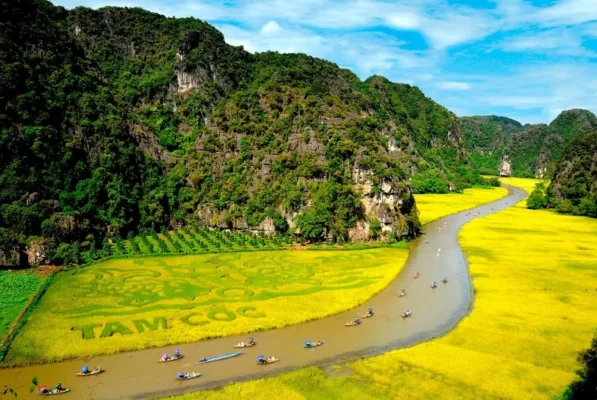
Tam Coc’s rice fields in Ninh Binh are most beautiful during the harvest season from mid-May to early June. The fields curve around the Ngo Dong River beneath dramatic limestone mountains.
Tam Coc is ideal for a boat journey through the fields. Although it lacks the dramatic height of mountain terraces, its soft golden rice bands create a peaceful lowland landscape.
Best Time to See Tam Coc’s Rice Fields
From late May to early June, the rice turns golden across the valley. The fields stand out between green mountains and the clear water of the Ngo Dong River.
Tam Coc’s flat rice fields follow both riverbanks. The combination of rice, water, and limestone mountains creates a gentle landscape characteristic of northern Vietnam’s lowlands.
Best Time to Visit Tam Coc
Late May to early June is the most striking period, when the riverside fields turn golden before harvesting. Visitors can admire them from a boat or from the summit of Hang Mua.
The weather is hot and humid, with daytime temperatures reaching approximately 30–34°C. Take a boat trip early in the morning or late in the afternoon to avoid intense sunshine.
Tam Coc Travel Tips
Take a boat trip on the Ngo Dong River: Travelers pass through golden fields, smell ripening rice, and view limestone mountains at close range. The boat journey lasts approximately two hours.
Climb Hang Mua: From the summit, visitors can see the entire Tam Coc Valley and the river winding through golden fields. Hang Mua has approximately 500 stone steps. An early-morning climb provides cooler weather and clearer views.
Where to Stay in Tam Coc
Tam Coc Friendly Homestay suits budget travelers, with rates around VND 800,000 per night. Tam Coc Rice Fields Resort lies between mountains and fields, with rates around VND 1 million per night.
Tam Coc Garden Resort suits upscale travelers seeking mountain, field, and valley views. Rates start from approximately VND 4.96 million per night.
When Is the Best Time to See Rice Terraces in Vietnam?
Vietnam does not have one nationwide rice season. Planting and harvesting schedules vary according to elevation, water supply, rice varieties, and the number of annual crops.
| Season | Typical Period | Suitable Destinations | Main Features |
|---|---|---|---|
| Water-pouring season | May–June | Mu Cang Chai, Y Ty, Hoang Su Phi | Flooded terraces reflecting the sky |
| Green-rice season | June–August | Sa Pa, Hoang Su Phi, Mu Cang Chai | Green mountainsides with more frequent rain |
| Golden-rice season | Mid-September–early October | Most northern mountain regions | Rice turns golden before harvesting |
| Early golden crop | Late May–early June | Tam Coc | Golden riverside fields rather than mountain terraces |
| Second golden crop | September–October | Pu Luong | Golden terraces and milder weather |
Water-Pouring Season from May to June
This is when farmers direct water into the terraces before planting. The surfaces reflect the sky, clouds, and sunlight, producing scenery completely different from the rice-growing season.
The water-pouring period is excellent for photography but often includes showers, muddy roads, and mist. Travelers should keep their itineraries flexible.
Green-Rice Season from June to August
As the rice grows, the terraces change from fresh green to deeper shades. This season is generally quieter than the golden harvest period.
July and August fall within northern Vietnam’s rainy season. Trekking paths may become slippery, although forests, streams, and fields are especially lush.
Golden-Rice Season from Mid-September to Early October
This is the best period to see Vietnam’s famous golden terraced fields. Rice covers the mountainsides between villages and forests before harvesting begins.
For travelers searching for golden rice terraces Vietnam, Mu Cang Chai, Sa Pa, Y Ty, and Hoang Su Phi offer the most dramatic autumn landscapes.
Harvest schedules differ between localities. One village may already have harvested while nearby fields remain green or golden.
Contact your accommodation five to seven days before traveling to request updated photographs and local harvest information.
Planning a Vietnam Rice-Terrace Journey
Suggested Itineraries
- Three-day itinerary: Hanoi–Pu Luong–Hanoi, suitable for a weekend escape.
- Four-day itinerary: Hanoi–Mu Cang Chai–Tu Le–Hanoi, ideal during the golden season.
- Four-day itinerary: Hanoi–Thong Nguyen–Nam Hong–Ban Luoc–Hanoi, focused on trekking through the Ha Giang rice terraces.
- Five-day itinerary: Hanoi–Sa Pa–Y Ty–Lao Cai, combining two high-altitude rice-terrace regions.
What to Pack
Trekking shoes with strong grip are essential. Paths between the fields are often narrow, slippery, and without railings.
A light raincoat, warm layer, hat, sunscreen, and waterproof bag are useful. Mountain weather can change quickly throughout the day.
Carry some cash because many villages have limited access to ATMs and stable electronic payment services.
Do not fly drones near residential areas, borders, or restricted zones without checking regulations and obtaining permission.
FAQ
1. Where are the best rice terraces in Ha Giang?
The best Ha Giang rice terraces are found in Hoang Su Phi, especially around Ban Phung, Ban Luoc, Ho Thau, Nam Ty, and Thong Nguyen. Ban Phung offers steep and dramatic slopes, while Ban Luoc features broader terraces and more open views.
2. Where are the best rice terraces in Vietnam?
Vietnam’s best rice terraces are found in Mu Cang Chai, Sa Pa, Y Ty, Hoang Su Phi, and Pu Luong. Each destination has different farming seasons, terrain, accessibility, and tourism services.
3. What is the best place to see rice terraces in Vietnam?
No single destination suits every traveler. Mu Cang Chai excels in scenery, Sa Pa is easily accessible, and Hoang Su Phi is ideal for trekking and quieter experiences. Pu Luong is convenient for a short trip from Hanoi.
4. When should you see rice fields in Vietnam?
Late May to June is suitable for the water-pouring season. July and August bring green rice, while mid-September to early October is usually the golden season across northern mountain regions.
5. What are the most famous rice terraces in the world?
There is no official ranking of the world’s most famous rice terraces. However, the Rice Terraces of the Philippine Cordilleras are among the best known and are recognized by UNESCO as a World Heritage Site.
6. Where is most rice grown in Vietnam?
The Mekong Delta is Vietnam’s largest rice-producing region and contributes approximately half of the country’s total output. However, most rice there grows on flat lowlands rather than terraces.
7. Is Mu Cang Chai or Sa Pa more beautiful?
Mu Cang Chai suits travelers prioritizing expansive rice-terrace scenery and photography. Sa Pa offers easier transport, more hotels, and broader services for international visitors.
Ngoc Van