Where To Stay In Hoang Su Phi In The Best Seasons
| ExperiencesWhere to stay in Hoang Su Phi?
Thong Nguyen
Thong Nguyen is a suitable choice for travelers who want to combine nature exploration with a relaxing retreat. Instead of spending most of your time traveling between sightseeing spots, you can choose one main accommodation base and spend your days trekking, visiting local villages, and unwinding in the mountains.
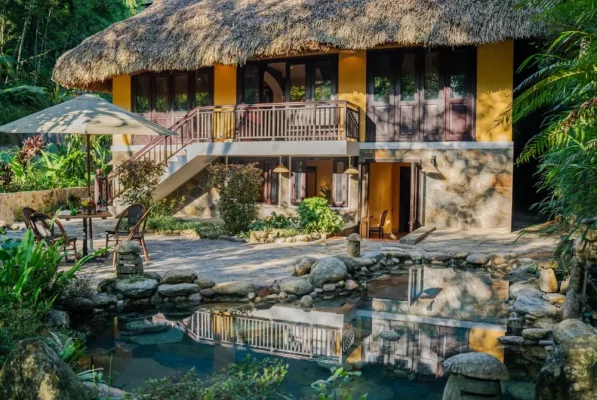
One of the standout options in this area is Panhou Retreat, located in Lang Giang Village, Thong Nguyen Commune. The retreat is suitable for travelers looking for an eco-friendly stay with private bungalows and experiences centered around nature, trekking, local culture, and wellness.
Recommended accommodation: Panhou Retreat – ideal for couples, families, slow travelers, and those who want to combine trekking with a relaxing retreat.
Nam Hong
Nam Hong is well suited to travelers who enjoy trekking and want to spend more time learning about the daily life and culture of the Red Dao community. Staying here also makes it easier to explore walking routes through terraced rice fields, tea hills, forests, and surrounding villages.
Travelers can consider Hoang Su Phi Lodge, located in Nam Hong, approximately 3 km from the center of Thong Nguyen Commune. Hoang Su Phi Lodge sits on one of the highest hills in the area, offering panoramic views over layers of terraced rice fields. Early mornings are particularly beautiful, when clouds drift through the valleys and around the surrounding mountains.
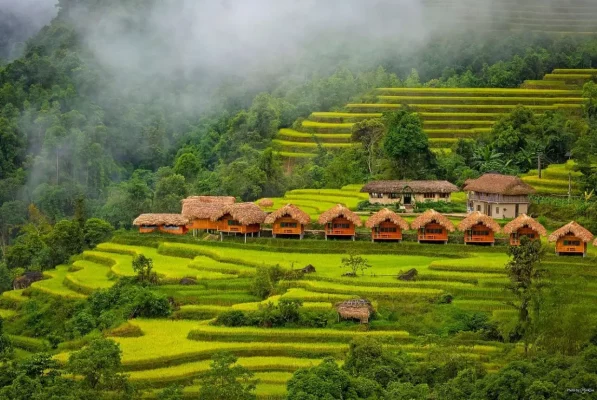
Another option is Hoang Su Phi Bungalow, located at a lower elevation within Nam Hong Village. Beautiful terraced fields lie directly in front of the property, making it easier for guests to walk around and photograph the landscape during the golden rice season.
Hoang Su Phi Lodge is particularly suitable for trekking enthusiasts and adventure tour groups, while Hoang Su Phi Bungalow may be more convenient for couples and families with young children because of its lower location, easier access, and large outdoor swimming pool.
One consideration is that rooms at both properties can be relatively compact. The journey from Hanoi is approximately 260 km, and only a limited number of staff members may be able to communicate fluently in English.
Ban Phung
Ban Phung is frequently mentioned by travelers searching for the iconic terraced rice field landscapes of Hoang Su Phi. The area becomes particularly attractive during the golden rice season, when the mountain slopes are covered in shades of yellow.
If your main goal is to photograph the golden rice season, staying in or near Ban Phung can make it more convenient to reach scenic viewpoints.
Chi Tai Homestay is one accommodation option to consider in Ban Phung. Located in the To Meo area, the homestay is suitable for travelers who want to stay close to the rice terraces, experience village life, and choose a more affordable alternative to a lodge or resort.
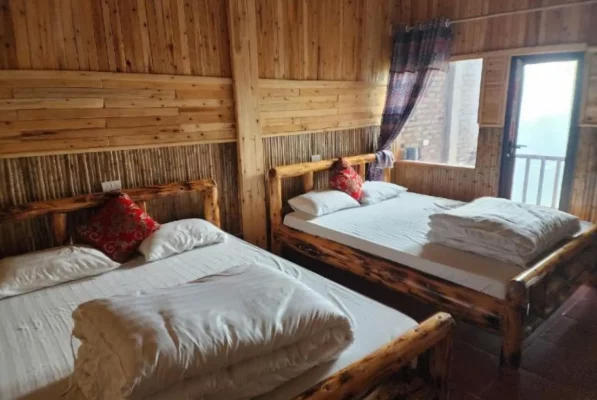
Trong Phu Homestay is another option often recommended in accommodation guides to Ban Phung, thanks to its convenient location for observing the terraced fields and enjoying elevated views of the surrounding landscape.
From late September to early October, accommodation near the rice terraces can sell out quickly. Travelers are advised to check availability and book one to several months in advance.
Ban Luoc and Ho Thau
Ban Luoc and Ho Thau are located approximately 100–110 km southwest of Ha Giang City. These areas are also popular among travelers who want to explore Hoang Su Phi’s terraced rice fields in a quieter setting.
The landscapes are particularly suitable for trekking, walking, and nature-focused journeys.
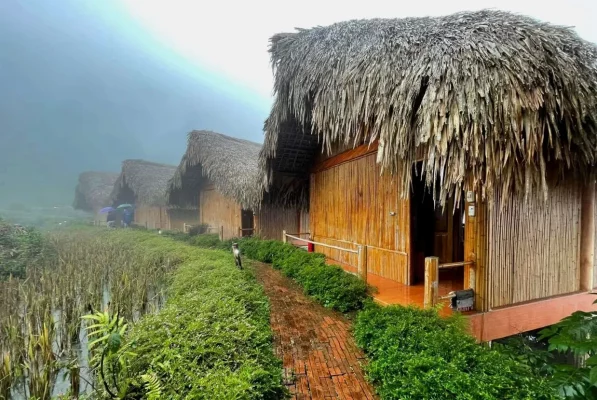
In Ho Thau, Ho Thau Eco-Village is an accommodation option worth considering. Surrounded by mountains and forests, the property is located near terraced rice fields and ancient Shan Tuyet tea-growing areas. It focuses on community-based tourism and offers relatively simple traditional stilt-house accommodation.
In Ban Luoc, most accommodation consists of homestays and small-scale properties within local villages. Travelers should prioritize places located close to their planned trekking routes or terraced rice field viewpoints and confirm room availability directly before their trip.
Popular Hoang Su Phi accommodation options
If you are wondering where to stay in Hoang Su Phi, you will generally find three popular types of accommodation: lodges, bungalows, and homestays. Some eco-retreats also combine several room types with wellness, dining, and outdoor experiences within the same property.
Each type of Hoang Su Phi accommodation suits a different travel style.
Hoang Su Phi Lodge
Hoang Su Phi Lodge is located in Nam Hong Village, Thong Nguyen Commune, in the Hoang Su Phi area. Some booking platforms may still display the property’s former administrative address in Ha Giang Province. Following administrative changes in 2025, the area is now part of Tuyen Quang Province.
The property offers private bungalows with balconies overlooking valleys, mountains, and terraced rice fields.
According to rates published by Hoang Su Phi Lodge, reference room prices range from approximately VND 1,379,000 to VND 2,305,000 per night, depending on the room category and number of guests. Published rates include breakfast and service charges.
In addition to accommodation, guests can take part in activities such as trekking, hiking, Red Dao herbal baths, massage, embroidery, bamboo weaving, cooking classes, and experiences related to harvesting and processing local tea.
The lodge also provides facilities including Wi-Fi, a swimming pool, spa facilities, and a restaurant. It is suitable for travelers who want to combine exploring Hoang Su Phi with comfortable relaxation in a natural setting.
Hoang Su Phi Bungalow
Hoang Su Phi Bungalow is located in Nam Hong Village, Thong Nguyen Commune, surrounded by the region’s famous terraced rice fields. It is suitable for couples, groups of friends, and families looking for a private stay close to nature.
The bungalows feature a mountain-inspired design, with balconies overlooking the surrounding mountains and rice terraces. Rooms include beds and bedding, private bathrooms, and wooden interiors that create a warm and cozy atmosphere.
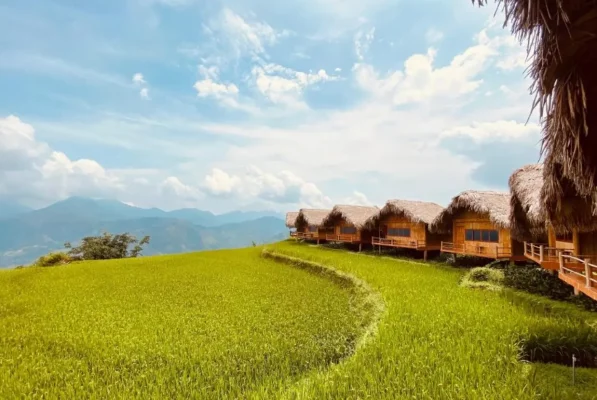
The property also has an outdoor swimming pool, restaurant, garden, and Wi-Fi. Guests can walk or cycle around the surrounding countryside to discover nearby landscapes and villages.
Reference rates start from approximately VND 700,000 to more than VND 1,000,000 per night. Prices may be higher during peak season or for different room categories, so travelers should check the actual rate for their travel dates before confirming a booking.
Chi Tai Homestay
Chi Tai Homestay is located in the To Meo area of Ban Phung, close to some of the region’s best-known terraced rice fields. The homestay operates several properties located near one another, with Chi Tai 3 offering an elevated position and attractive views.
From here, guests can enjoy panoramic views of the valley and layers of terraced fields stretching across the mountainsides. The accommodation follows the style of a traditional stilt house, offering a closer connection to local highland life.
Travelers can choose between dormitory accommodation, double rooms, and family rooms depending on their needs. Shared areas include balconies overlooking the rice terraces and spacious terraces for relaxation. These spaces are also suitable for dining, socializing, or group activities.
Chi Tai Homestay is among the more affordable accommodation options compared with lodges and bungalows.
Reference prices are approximately VND 80,000–100,000 per person per night for dormitory accommodation, around VND 200,000 per night for a double room, and approximately VND 400,000 per night for a family room. Actual rates may change during the golden rice season.
One of the main attractions of Chi Tai Homestay is the opportunity to stay close to Ban Phung, one of the most beautiful areas for experiencing the golden rice season. It is particularly suitable for younger travelers, photography enthusiasts, and visitors who want to keep accommodation costs low while spending more time exploring Ban Phung.
Panhou Retreat
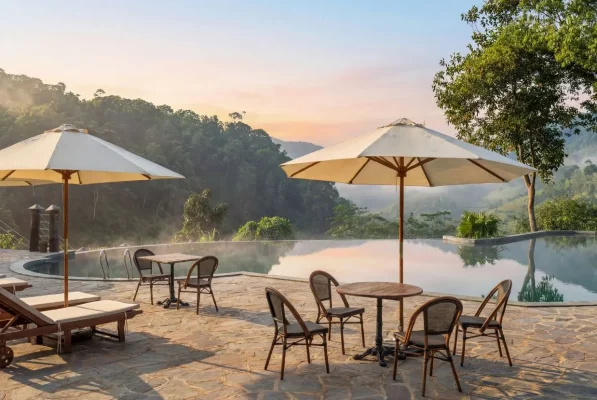
Surrounded by the natural landscapes of Hoang Su Phi, Panhou Retreat is a notable choice for travelers wondering where to stay in Hoang Su Phi while combining trekking with a private and peaceful retreat.
For travelers researching Hoang Su Phi resort booking options, Panhou Retreat offers an experience that goes beyond accommodation by combining nature, local culture, wellness, and trekking activities.
Private bungalows surrounded by nature
The bungalows at Panhou Retreat are hidden beneath the canopy of an old forest, making them suitable for travelers who value privacy and slow living. Located in the natural basin of Thong Nguyen, the retreat is filled with the sounds of birds and cicadas, creating the feeling of being surrounded by a living forest.
Herbs grow along the pathways, adding to the sense of exploring a lush natural environment. The bungalow interiors feature warm golden tones inspired by the color of ripe rice covering Hoang Su Phi’s terraced fields during harvest season.
Rooms are equipped with flashlights, mosquito nets, chamomile tea, and drinking water served in glass bottles. Furniture is made from reclaimed timber from old boats and combined with decorative patterns inspired by Red Dao brocade.
This style of Hoang Su Phi bungalow is suitable for couples, families, and travelers planning to stay for more than one night.
A base for trekking and exploring local villages
One of the signature experiences at Panhou Retreat is trekking through Hoang Su Phi’s spectacular terraced rice fields and mountain landscapes. Guests can choose a one-day trekking tour accompanied by a local porter and enjoy lunch at a local resident’s home.
A typical one-day trekking route covers approximately 8 to 10 km, depending on individual fitness levels.
For two-day or longer trekking tours, travelers may stay overnight in a local homestay. These journeys provide opportunities to learn more about local culture, everyday life, and traditional agricultural practices.

Relaxation after trekking
After a day of trekking, a traditional Red Dao herbal bath or essential oil massage can help the body relax and recover.
Travelers can spend the morning trekking before returning to Panhou Retreat for an afternoon of rest and wellness.
This itinerary creates a more balanced journey while allowing time for physical recovery and self-care.
Local cultural experiences
At Panhou Retreat, guests can take part in cooking activities and enjoy traditional dishes from Vietnam’s northern highlands.
Popular dishes include clay-covered grilled chicken, hand-pounded sticky rice cakes, five-colored sticky rice, and bamboo-tube rice.
During a visit to Nam Hong, travelers may also have the opportunity to pick Shan Tuyet tea leaves and learn about traditional hand-processing techniques.
Guests can also try on traditional Red Dao clothing, providing another way to discover the cultural identity of the local community.
When should you book Hoang Su Phi accommodation?
The best time to make a Hoang Su Phi resort booking or reserve other accommodation depends largely on the season you plan to visit. Below are some of the most popular travel periods and their typical weather conditions.
Golden rice season
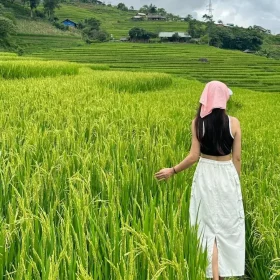
Late September to early October is one of the most popular periods to visit Hoang Su Phi. During this time, the terraced rice fields turn golden, transforming the mountainsides with vibrant harvest colors.
Average daytime temperatures in September are around 21–30°C, while October is generally cooler, at approximately 19–27°C. Rainfall also gradually decreases compared with the peak summer months.
Rooms with attractive views and private bungalows are usually limited in number, so early booking is recommended.
Water-pouring season and green rice season
From late May through August, accommodation availability may be more flexible compared with the golden rice season. However, this period also experiences higher rainfall.
Typical temperatures range from approximately 22–31°C, with July and August bringing higher humidity and heavier rainfall.
Travelers should check weather conditions before departure and bring an umbrella or raincoat.
Winter months
From November through the beginning of the year, Hoang Su Phi becomes quieter.
This period is suitable for relaxing retreats, cloud hunting, and enjoying seasonal pear and plum blossoms in the northern highlands.
Temperatures range from approximately 15–24°C in November, 12–21°C in December, and 12–19°C in January.
Visitors can enjoy a slower pace of travel and combine their stay with hot baths or traditional Red Dao herbal baths for relaxation.
FAQ
1. Where should I stay in Hoang Su Phi?
The best place to stay depends on the purpose of your trip. Travelers interested in trekking and relaxation can consider Thong Nguyen or accommodation near local villages. Those who want to photograph the golden rice season may prefer Ban Phung, Ban Luoc, or Ho Thau. For travelers seeking a closer connection with local culture, a homestay may be the most suitable choice.
2. Which area is best for Hoang Su Phi accommodation?
There is no single area that is ideal for every traveler.Thong Nguyen is suitable for trekking and relaxing retreats, while Ban Phung and Ban Luoc are particularly well known for their terraced rice field landscapes. The best approach is to choose your Hoang Su Phi accommodation based on the main activities you want to experience during your trip.
3. Should I choose a Hoang Su Phi lodge or a homestay?
A Hoang Su Phi lodge is suitable for travelers who prefer a private room, a more comfortable place to relax, and easy access to nature. A homestay is generally a better choice if you want to experience local life, keep your travel costs lower, and do not require extensive resort-style services.
4. Are there bungalows in Hoang Su Phi?
Yes. Travelers can find several Hoang Su Phi bungalow options suitable for couples and families. Some bungalows are located within eco-retreats or nature-oriented resorts where guests can combine their stay with trekking, cultural experiences, and wellness activities.
5. How many nights should I stay in Hoang Su Phi?
Two to three nights is a suitable length of stay for many travelers. Two nights can be enough for a trekking trip or a visit to local villages. Three nights or more is a better option if you want to combine trekking, cultural experiences, and relaxation.
6. Where should I stay for trekking in Hoang Su Phi?
Travelers should prioritize accommodation close to local villages or the trekking routes they plan to explore. Thong Nguyen and Nam Hong are both worth considering because they offer access to beautiful terraced rice fields and scenic trekking landscapes.
7. Where to stay in Hoang Su Phi during the golden rice season?
For the golden rice season, you can choose accommodation near Ban Phung, Ban Luoc, Ho Thau, or Thong Nguyen. Another option is to stay at one main lodge or eco-retreat and take day trips to explore different terraced rice field areas.
8. Should I book Hoang Su Phi accommodation in advance?
Yes, particularly if you plan to travel in late September or early October. This is the golden rice season and one of the most popular times to visit the region. Booking early gives you more choices in terms of location, room type, and views. For private bungalows, lodges, and eco-retreats, making your Hoang Su Phi resort booking well in advance is especially recommended during peak travel periods.
Ngoc Van