Bamboo Dance Performance in Vietnam: Where to Watch, What to Expect, and How to Book
| ExperiencesBamboo dance performances in Vietnam range from staged shows in hotel lobbies to genuine ceremonies held in remote villages, and the difference between them is significant. Panhou Retreat in Hoang Su Phi sits within the homeland of the Red Dao people, where this dance tradition was born, offering guests access to performances that carry real cultural meaning. Here is what to know, what to expect, and how to plan your experience.
Not All Bamboo Dance Performances Are the Same
If you search for bamboo dance performances in Vietnam, you will encounter two very different experiences.
The first is the staged version: scheduled performances on hotel stages, with coordinated costumes, polished choreography, and routines repeated several times a day. These shows can be found in Hanoi, Sa Pa, and many popular tourist destinations. They are professionally produced and visually impressive. However, the cultural context and the reason the dance exists are often missing.
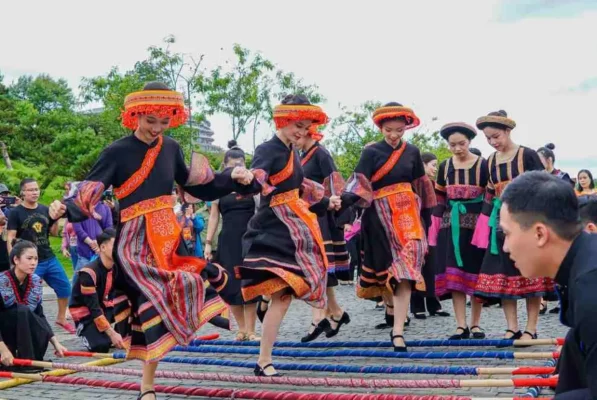
The second is the community version: held in village gathering spaces and connected to festivals, ceremonies, or seasonal celebrations. Participants are local community members rather than contracted performers. The bamboo poles come from nearby groves, and the rhythms are created by village musicians following traditional patterns rather than modern sound systems.
If you must choose between these two experiences, the most important question is simple: do you want to watch a dance, or do you want to understand one?
Description:
Where to Watch a Bamboo Dance Performance in Vietnam
Ha Giang and Hoang Su Phi: The Most Authentic Setting
Hoang Su Phi District in Ha Giang Province is one of the places where the Red Dao bamboo dance tradition remains most intact. Many Red Dao communities here continue to observe ceremonies such as the Ban Vuong Ancestor Ceremony, the Cap Sac rite of passage, and seasonal harvest celebrations, all occasions where bamboo dance continues to appear within its original cultural setting.
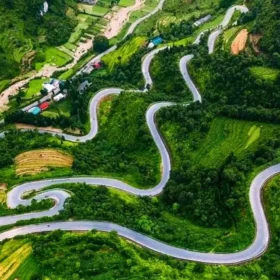
Reaching Hoang Su Phi requires advance travel planning. Distances include:
- Ha Giang City: approximately 130 km via mountain roads (around 2.5 to 3 hours by motorbike or car).
- Hanoi: approximately 350 km (around 5 to 6 hours by road).
The route passes through mountainous terrain with significant elevation changes. Travelling with an experienced local guide is highly recommended.
Panhou Retreat: An Ideal Place to Experience Bamboo Dance in Hoang Su Phi
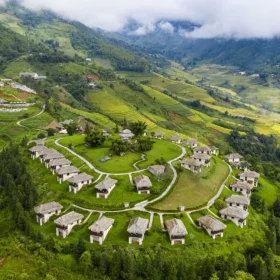
Panhou Retreat has operated in Hoang Su Phi for more than twenty years. The retreat maintains long standing relationships with surrounding Red Dao communities, whose ancestors helped preserve the bamboo dance tradition across generations.
The name Panhou derives from Ban Ho, the original name of Ban Vuong, the ancestral figure at the heart of Red Dao cultural identity.
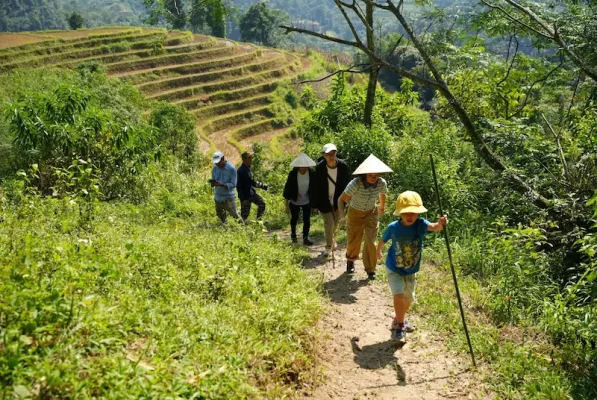
Cultural trekking programmes organised by Panhou connect guests directly with Red Dao villages. Local guides speak both Vietnamese and the Dao language, helping visitors better understand the cultural context behind what they experience.
If a festival or ceremony featuring bamboo dance takes place during your stay, guides can help arrange respectful participation and provide the cultural background needed to appreciate the event.
This is not a scheduled performance that takes place regardless of circumstance. It is a genuine cultural encounter, which makes the experience more meaningful while also requiring greater flexibility.
What Happens During a Bamboo Dance Performance?
The Structure of a Performance
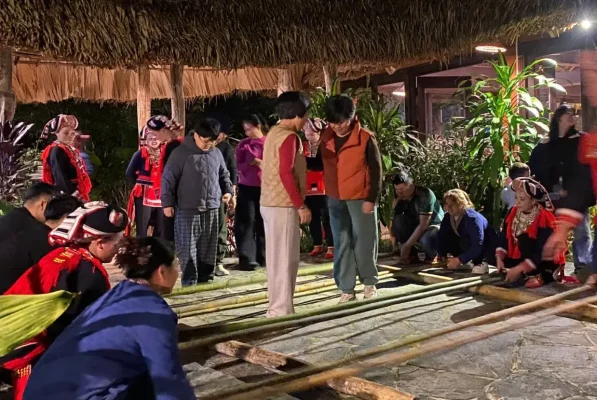
A bamboo dance programme within a Red Dao community typically lasts between 20 and 45 minutes, depending on the occasion.
| Stage | Duration | What Happens |
|---|---|---|
| Preparation | 5 to 10 minutes | Bamboo poles are arranged neatly on the ground while musicians take their positions. |
| Opening Rhythm | About 5 minutes | A slow introductory rhythm establishes the pattern. |
| Main Performance | 15 to 25 minutes | Dancers move between the bamboo poles as the tempo gradually increases. |
| Guest Participation | 5 to 10 minutes | Visitors are invited to learn and try the basic steps. |
| Closing | About 5 minutes | The performance concludes, sometimes accompanied by traditional songs. |
The most important thing to understand is that the rhythm becomes progressively faster. The opening sequences are easy to follow, but the pace can become surprisingly quick by the later stages. Red Dao dancers have practised these movements from an early age and move naturally with the rhythm. Most guests find the faster sections challenging and usually participate at a pace suitable for beginners.
How to Join the Bamboo Dance
If you are invited to participate:
- Remove high heeled shoes to avoid tripping between the poles.
- Follow the instructions of the guide or programme leader.
- Ask the pole holders not to increase the speed too quickly.
- Request permission before taking close up photographs of local residents.
- Dress modestly, with shoulders and knees covered when visiting Red Dao villages.
- Small contributions to the community are appreciated, and your guide can advise on appropriate ways to do so.
Planning Your Bamboo Dance Experience at Panhou Retreat
Best Time to Visit
Opportunities to experience bamboo dance performances in Vietnam are most frequent in Hoang Su Phi during:
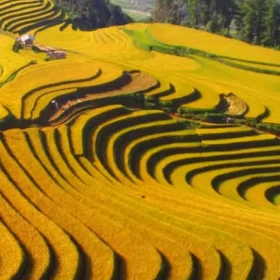
- Rice harvest season (August to October): Terraced rice fields turn golden, villages celebrate with community festivals, and bamboo dance often forms part of the festivities.
- Lunar New Year season (January to February): Traditional ceremonies take place throughout the region, sometimes including music and bamboo dance connected to Ban Vuong traditions.
- Cap Sac ceremony season: These ceremonies can occur throughout the year depending on family schedules, although they are more common during the dry season.
Shoulder months such as April, May, September, and October often provide the best balance of weather, cultural activities, and visitor numbers.
How to Book
Contact Panhou Retreat directly to learn about cultural programmes that may coincide with your travel dates.
When booking, consider:
- Sharing your preferred travel dates and length of stay.
- Asking specifically about Red Dao cultural programmes and village trekking experiences.
- Confirming whether any festivals or ceremonies are expected during your visit.
- Requesting a guide with strong cultural knowledge rather than only trekking expertise.
A minimum stay of two to three nights is recommended. Village trekking experiences often take a full day, and arriving well rested after the mountain journey will significantly improve your experience.
A bamboo dance performance Vietnam in its authentic setting is not something you stumble across. It requires intention, a trusted local connection, and a genuine curiosity about the Red Dao world. Panhou Retreat in Hoang Su Phi has spent two decades building exactly those connections, making it the most credible starting point for this experience in all of northern Vietnam.
FAQ
1. Where can I see a bamboo dance performance in Vietnam?
The most authentic bamboo dance performances happen in Red Dao communities in Ha Giang, particularly Hoang Su Phi. Panhou Retreat offers cultural programs connecting guests with these communities. Staged shows also exist in Hanoi and Sa Pa tourist centres.
2. How long does a bamboo dance performance last?
A community bamboo dance performance in Ha Giang typically runs 20 to 45 minutes, including time for guest participation. Staged hotel performances are usually shorter and more tightly choreographed, running around 15–20 minutes.
3. Is it possible to participate, not just watch?
Yes — most Red Dao village performances welcome respectful guest participation at a beginner pace. Panhou Retreat’s guides will facilitate this naturally and help you understand the cultural etiquette involved.
4. What is the best time of year for bamboo dance experience in Vietnam?
September to November coincides with harvest season and the highest concentration of traditional festivals in Hoang Su Phi. Lunar New Year (January–February) is the second most active period for Red Dao ceremonial life.
5. How do I get to Hoang Su Phi from Hanoi?
The most comfortable route is Hanoi to Ha Giang city by overnight bus or private vehicle (approximately 5–6 hours), then onward to Hoang Su Phi by 4WD (2.5–3 hours). Panhou Retreat can arrange transfers from Ha Giang city.
Ngọc Vân

3D2N NATIONAL DAY OFFER | JOURNEY INTO GREEN SEASON
From 125 USD/Guest/Combo
3D2N GREEN SUMMER FOR FAMILY
From 114 USD/Guest/Combo