Ethnic Groups in Ha Giang: Culture, Customs and Highland Life
| ExperiencesThe ethnic groups in Ha Giang make this northern highland region one of Vietnam’s richest cultural destinations. Beyond limestone mountains, terraced fields, winding passes, and local markets, Ha Giang is shaped by many communities with distinct languages, clothing, beliefs, and ways of life.
Travelers often ask, what ethnic groups are in Ha Giang? The best answer goes beyond a simple list. Ha Giang is home to Hmong, Tay, Dao, Nung, Lo Lo, La Chi, Pu Peo, Pa Then and other ethnic communities. Each group carries its own traditions through farming, family rituals, clothing, music, architecture, markets and spiritual practices.
Vietnam officially recognizes 54 ethnic groups, with the Kinh as the majority and 53 minority groups in Ha Giang, ethnic minority communities form a large share of the population, making culture inseparable from the landscape. The former Ha Giang province is widely described as having more than 40 ethnic groups, with Hmong, Tay, Dao, Kinh and Nung among.
For travelers, understanding the ethnic groups of Ha Giang adds depth to every journey. A market becomes more than a photo stop. A village walk becomes more than sightseeing. A bowl of local food, a piece of embroidered fabric, or a song heard in a wooden house can reveal generations of knowledge.
How many ethnic groups live in Ha Giang?
Ha Giang has long been known as one of Vietnam’s most culturally diverse mountain regions. Some travel sources often mention around 19 prominent ethnic communities, while broader demographic references record more than 40 ethnic groups.
The largest groups usually include the Hmong, Tay, Dao, Kinh and Nung communities. Smaller but culturally distinctive groups include the Lo Lo, La Chi, Pu Peo, Pa Then, Giay and others. The 2019 census recorded Ha Giang province with a population of 854,679 people, while demographic summaries list Hmong at about 34.25%, Tay at 22.55%, Dao at 14.88%, Kinh at 12.
In travel content, Ha Giang often refers to both the cultural region and the former province. After Vietnam’s 2025 administrative changes, Ha Giang province was incorporated into Tuyen Quang province, but the name remains widely used for tourism, culture, and the Ha.
Main ethnic groups in Ha Giang at a glance
| Ethnic group | Main areas in Ha Giang | Cultural highlights |
|---|---|---|
| Hmong | Dong Van, Meo Vac, Yen Minh, Quan Ba | Hemp textiles, khèn, mountain farming, highland markets |
| Tay | Valleys, riversides, lower mountain areas | Stilt houses, wet rice farming, Then singing, đàn tính |
| Dao | Hoang Su Phi and many mountain districts | Embroidery, herbal knowledge, ancestor worship, Cap Sac ceremony |
| Nung | Northeastern and borderland areas | Indigo clothing, farming, Then-related traditions, local markets |
| Lo Lo | Lung Cu, Dong Van area | Colorful geometric clothing, bronze drums, spiritual festivals |
| La Chi | Hoang Su Phi, Xin Man and nearby areas | Terraced farming, ancestor rituals, village-based customs |
| Pu Peo | Northern border communes | Small population, family rituals, traditional houses |
| Pa Then | Bac Quang, Quang Binh area | Fire dance ritual, red clothing, community ceremonies |
These Ha Giang ethnic groups are not simply part of the scenery. They are the living heart of the highlands, shaping markets, farming systems, rituals, clothing traditions and local hospitality.
The Hmong people in Ha Giang
The Hmong are one of the largest ethnic communities in Ha Giang. They live mainly in high mountain districts such as Dong Van, Meo Vac, Yen Minh and Quan Ba. These areas are known for rocky plateaus, steep passes, maize fields, stone fences and dite.
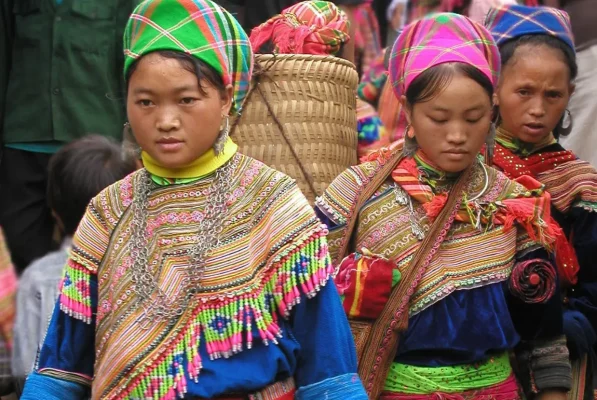
Where do the Hmong live?
Many Hmong families live in the Dong Van Karst Plateau and surrounding highland areas. Their houses often sit on mountain slopes, near maize fields, stone walls, and local roads connecting villages to weekly markets.
The Hmong have adapted to challenging terrain through resilient farming skills. In places where wet rice is difficult, they cultivate maize, beans, vegetables and other crops on rocky land. This ability to live with harsh mountain conditions is one reason Hmong culture is strongly associated with endurance.
Hmong clothing, khèn and customs
Hmong clothing is often recognized through hemp fabric, indigo dyeing, embroidery and batik wax drawing. Women’s clothing may feature pleated skirts, colorful patterns, embroidered panels and handmade textile details. These textiles are not only decorative, but also carry family memory, skill and identity.
The khèn is an important Hmong musical instrument, often played during festivals, courtship, funerals and community gatherings. Its sound is closely linked with Hmong emotional life, social connection and ritual expression.
When travelers ask, “What is a Hmong ethnicity?”, the answer should be clear. The Hmong are an ethnic minority community living across several northern mountain regions of Vietnam, with Ha Giang as one of their most visible cultural areas.
The Tay people in Ha Giang
The Tay people usually live in valleys, along streams, near rivers, and at the foot of mountains. Their communities are often connected with wet rice farming, fish ponds, bamboo groves, stilt houses.
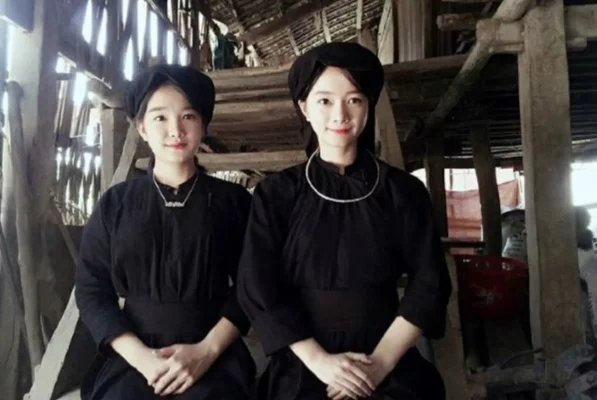
Where do the Tay live?
Unlike some groups living mostly on higher slopes, many Tay communities settle in lower and more fertile areas. These landscapes support wet rice cultivation, gardens, livestock, and a rhythm of life closely tied to water.
The Tay house on stilts is one of their most recognizable cultural markers. It offers protection from humidity, provides space for storage, and creates a communal living area for families. The house is both a practical structure and a cultural space.
Then singing, đàn tính and stilt houses
Then is a form of spiritual singing and ritual performance associated with Tay, Nung and Thai communities. It is often performed to pray for peace, health, good harvests, and spiritual balance. Then is not only folk music, but also a bridge between people, ancestors and the spiritual world.
The đàn tính is a stringed musical instrument commonly used with Then singing. Its gentle sound often accompanies ritual stories, prayers and community performances. For travelers, hearing Then and đàn tính offers a deeper way to understand Tay culture beyond architecture.
The Dao ethnic group in Ha Giang
The Dao ethnic group is one of the most culturally distinctive communities in Ha Giang. Dao communities may differ in clothing, headscarves, names, embroidery styles and local customs. In many travel contexts, Red Dao and Dao Ao Dai are among the groups visitors may recognize.
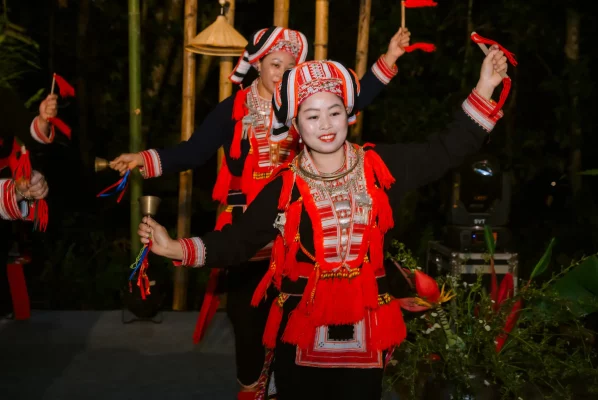
Who are the Dao people?
The Dao people belong to a larger ethnic family found across northern Vietnam and parts of southern China. In Ha Giang, they often live near forests, terraced fields, tea areas and mountain villages. Their culture is deeply connected with embroidery, herbal knowledge, ancestor worship and family rituals.
Dao clothing is often detailed and meaningful. Some groups use red headscarves, embroidered jackets, silver ornaments and carefully made textile patterns. These elements help distinguish Dao communities from neighboring Tay, Nung or Hmong groups.
Dao beliefs, Cap Sac ceremony and herbal knowledge
The Dao are well known for spiritual traditions, especially ancestor worship and the Cap Sac ceremony. Cap Sac is commonly understood as a coming-of-age ceremony for Dao men. It recognizes spiritual maturity and gives the person a fuller role within family and community life.
Dao communities are also known for medicinal plant knowledge. Many families preserve herbal bath recipes, forest plant knowledge and body care practices. In Hoang Su Phi, this knowledge connects naturally with trekking, local life, tea culture, herbal bathing and the slow travel experience around Panhou Retreat.
The Nung people in Ha Giang
The Nung people live across several northeastern mountain regions, including parts of Ha Giang. Their culture is often linked with indigo clothing, agriculture, family rituals, markets, weaving and local craft traditions.
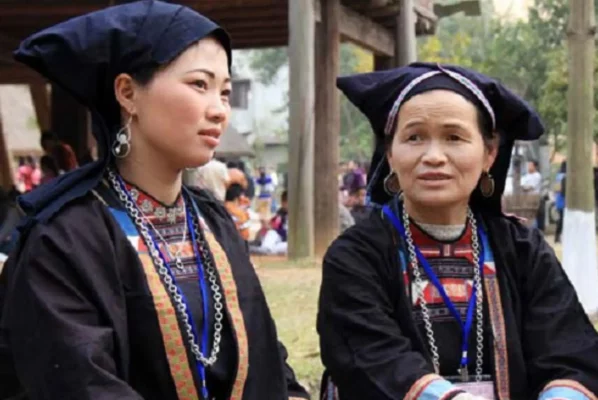
Where do the Nung live?
Nung communities are often found in valleys, borderland areas and northeastern highland districts. Their villages may connect with local trade routes, farming land, forest edges and weekly markets.
Their living environment creates a culture that feels both agricultural and market-oriented. Farming, handicrafts, family gatherings and market exchange are all important parts of Nung daily life.
Nung culture and daily life
Nung clothing is often simpler than the elaborate costumes of some neighboring groups, but indigo remains a strong marker. Traditional garments may be dark, modest and practical, reflecting agricultural work and regional identity.
Some Nung communities practice Then-related rituals, ancestor worship and ceremonies connected with family life. Markets also play an important role, allowing families to exchange goods, meet relatives, and maintain community ties.
The Lo Lo People: A small community with strong cultural identity
The Lo Lo are one of Ha Giang’s smaller ethnic communities, yet their cultural identity is especially vivid. They are often associated with the Lung Cu and Dong Van areas.
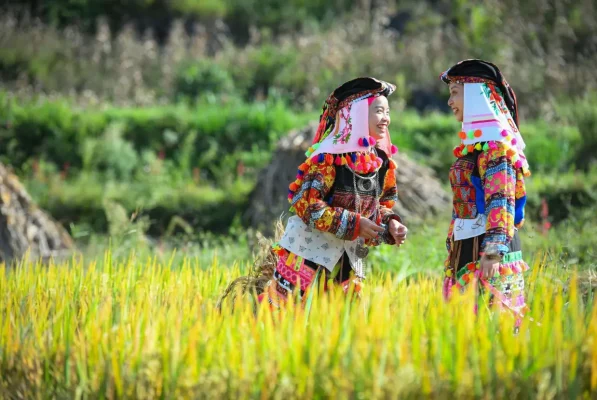
Where do the Lo Lo live?
Lo Lo communities are often mentioned in connection with Lung Cu, Dong Van and nearby highland villages. This northern border area gives their culture a strong sense of place and identity.
Although their population is small, the Lo Lo have preserved rich traditions through clothing, music, ritual objects and village memory. Their presence adds important diversity to the ethnic groups of Ha Giang.
Clothing, bronze drums and rituals
Lo Lo clothing is striking, often featuring bright colors, geometric patterns and carefully assembled fabric pieces. Their costumes can look like moving mosaics, showing patience, family labor and aesthetic skill.
Bronze drums also hold symbolic value in Lo Lo spiritual life. They may appear in important rituals, festivals or ceremonies connected with ancestors and community memory. For visitors, Lo Lo culture shows that small communities can carry large cultural depth.
The La Chi people in Ha Giang
The La Chi are an important minority community in the Hoang Su Phi and Xin Man areas. Their life is closely connected with terraced fields, village customs, ancestor rituals and agricultural knowledge.
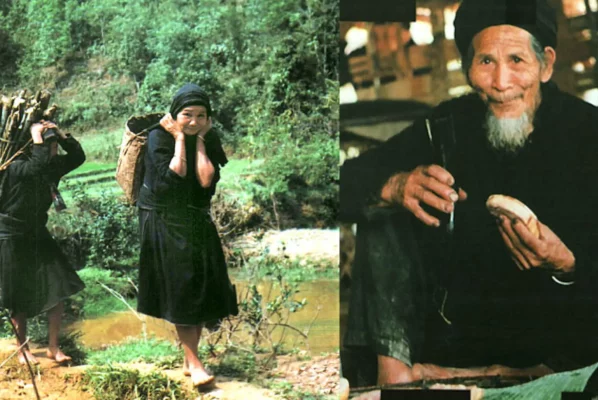
Where do the La Chi live?
Many La Chi communities live in western highland areas of Ha Giang’s cultural region. Hoang Su Phi is especially important because of its terraced fields and long agricultural history.
The landscape strongly shapes La Chi life. Villages, rice terraces, streams, forest edges and mountain roads form the setting for farming and community rituals.
Farming, rituals and community life
La Chi culture is closely tied to rice cultivation and agricultural cycles. Their rituals often relate to ancestors, harvests, village protection and family continuity. These traditions help maintain social order and community identity.
Including the La Chi helps make the article more complete. Many travel articles focus mainly on Hmong, Tay and Dao communities, while La Chi culture is essential for understanding Hoang Su Phi.
The Pu Peo people in Ha Giang
The Pu Peo are among Vietnam’s smallest ethnic groups, with a very limited population nationwide. Hà Giang has been an important home for Pu Peo communities, according to demographic summaries.
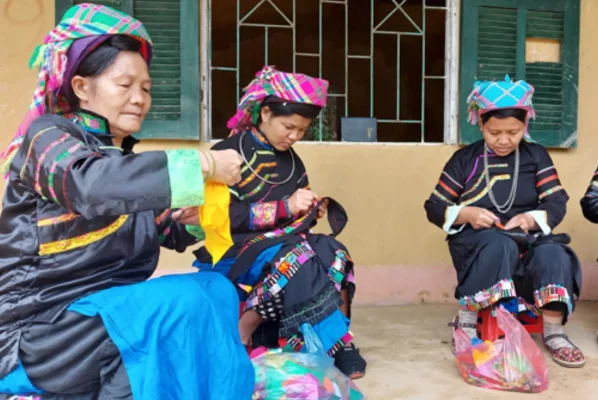
A small ethnic group near the Northern border
Pu Peo communities are often found near northern border areas. Their small population makes cultural preservation especially important, because rituals, houses, language and clothing can change quickly under modern pressure.
Their culture should be described with care. Because they are a small community, travel writing should avoid exaggeration and respect the private nature of family ceremonies.
Family rituals and traditional houses
Pu Peo culture includes ancestor worship, family ceremonies and village-based customs. Their homes, clothing and rituals reflect adaptation to northern borderland life.
For travelers, learning about Pu Peo culture requires patience and sensitivity. A short visit cannot fully explain a small community’s heritage, but respectful listening can create meaningful understanding.
The Pa Then ‘s ritual
The Pa Then people are especially known in cultural tourism for their fire dance ritual. In Ha Giang, they are often associated with Bac Quang.
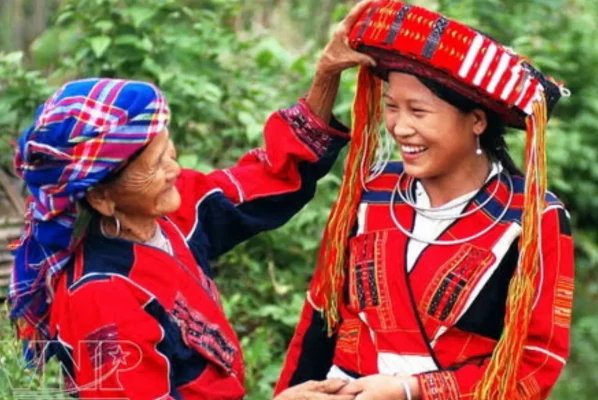
Where do the Pa Then live?
Pa Then communities live in several northern mountain areas, with Ha Giang playing an important role. Their clothing, rituals and community ceremonies make them one of the distinctive groups in the region.
Many travelers first hear about the Pa Then through images of fire dance. However, the community should not be reduced to a single ritual. Their culture also includes family life, farming, textile traditions and spiritual practices.
What is the Pa Then fire dance?
The Pa Then fire dance is a ritual connected with spiritual belief, courage, protection and community health. It often involves a ritual master, ceremonial preparation and participants entering a sacred atmosphere around fire.
Writers should be careful when discussing fire dance. It is strongly associated with the Pa Then, not with every ethnic group in Ha Giang. This distinction helps avoid cultural confusion and respects the communities involved.
Ethnic Markets in Ha Giang
Ethnic markets are among the best places to observe daily life in the Ha Giang highlands. They are not only places for buying and selling, but also spaces for meeting relatives, exchanging news and maintaining cultural ties.
Popular markets often include Meo Vac Sunday Market, Dong Van Market, Sa Phin Market, Khau Vai Love Market, Ma Le Market, Hoang Su Phi Market and Thong Nguyen Market. The user-provided research also highlights markets such as Meo Vac, Khau Vai, Sa Phin.
At a highland market, travelers may see Hmong textiles, Tay agricultural goods, Dao herbal products, Nung local foods, livestock, handmade tools and colorful clothing. Yet markets should be approached respectfully, because they are real community spaces rather than tourist stages.
What makes Ha Giang’s ethnic groups different?
| Group | Clothing | Beliefs and customs | Easy marker for travelers |
|---|---|---|---|
| Hmong | Hemp fabric, embroidery, batik | Lineage rituals, khèn, New Year | Colorful skirts, khèn, highland markets |
| Tay | Indigo clothing, simple embroidery | Then, ancestor worship, Lồng Tồng | Stilt houses, đàn tính, wet rice fields |
| Dao | Embroidery, red scarves, silver | Cap Sac, ancestor worship, herbal knowledge | Herbal baths, embroidered clothing |
| Nung | Indigo clothing | Ancestor worship, Then-related customs | Local markets, indigo dress, crafts |
| Lo Lo | Bright geometric clothing | Bronze drums, community rituals | Lung Cu, colorful patchwork clothing |
| La Chi | Traditional handmade clothing | Ancestor and agricultural rituals | Terraced fields, Hoang Su Phi |
| Pu Peo | Distinct local dress | Family and ancestor rituals | Small borderland communities |
| Pa Then | Red-toned clothing | Fire dance, ritual masters | Fire dance, red clothing |
This comparison shows why Ha Giang ethnic groups should not be described as one general “local people” category. Each community has a different history, language, clothing system, belief structure and relationship with the land.
How to experience ethnic culture in Ha Giang respectfully
Respectful travel begins with understanding that culture is not a performance. People wear traditional clothing, cook family meals, worship ancestors, farm fields, and attend markets as part of real life.
Travelers should always ask before taking photos of people, homes, altars, ceremonies or private family spaces. They should also dress modestly when entering villages, local houses, markets or spiritual spaces. These simple actions show respect and create me.
It is also important not to touch ritual objects, musical instruments, clothing or offerings without permission. Many objects carry spiritual, family or ceremonial meaning that may not be visible to visitors.
Buying handmade products directly from local makers can support cultural preservation. However, travelers should avoid treating bargaining as entertainment when the object represents many hours of manual work.
A local guide can help explain language, etiquette, market behavior and village customs. With guidance, visitors can understand more deeply and avoid accidental disrespect.
Experiencing highland culture from Panhou Retreat
Panhou Retreat offers a slower way to approach highland culture in the Hoang Su Phi area. Rather than rushing through viewpoints, travelers can spend time with forests, streams, terraced fields, village paths and local stories.
From Panhou, guests can explore Thong Nguyen Market, trek through villages, enjoy Red Dao herbal bathing and learn about local life. These experiences connect nature, wellness and culture in a more grounded way.
The area around Panhou is especially meaningful for learning about Dao, Tay and La Chi communities. Travelers can see how agriculture, herbal knowledge, embroidery, market exchange and spiritual life shape the highlands.
For visitors who want to understand the ethnic groups in Ha Giang beyond the road trip, Panhou offers a gentler rhythm. It encourages observation, listening and guided experiences instead of quick cultural consumption.
Conclusion: Ha Giang is more than a scenic loop
The ethnic groups in Ha Giang show that this region is more than dramatic passes and mountain scenery. Its deeper value lies in the communities who have shaped the highlands for generations.
The Hmong, Tay, Dao, Nung, Lo Lo, La Chi, Pu Peo and Pa Then all carry different traditions. Their languages, clothing, houses, rituals, markets and farming practices create a rich cultural landscape.
For travelers, learning about the ethnic groups of Ha Giang encourages more responsible and meaningful exploration. A respectful journey looks beyond photographs and listens to the people behind the landscape.
Panhou Retreat offers one thoughtful starting point for this kind of travel. Through nature, village walks, herbal traditions and local encounters, visitors can experience Hoang Su Phi with more patience, respectand cultural awareness.
FAQ
1. What ethnic groups are in Ha Giang?
Ha Giang is home to many ethnic communities, including Hmong, Tay, Dao, Kinh, Nung, Giay, La Chi, Lo Lo, Pu Peo and Pa Then. Broader demographic summaries mention more than 40 ethnic groups.
2. What are the largest ethnic groups in Ha Giang?
The largest groups are commonly listed as Hmong, Tay, Dao, Kinh and Nung. Some demographic summaries list Hmong at about 34.25%, Tay at 22.55%, Dao at 14.88%, Kinh at 12.
3. Are there 54 ethnic groups in Vietnam?
Yes. Vietnam officially recognizes 54 ethnic groups, including the Kinh majority and 53 minority groups. Each group has its own language, traditions.
4. What is the Hmong ethnicity?
The Hmong are an ethnic minority community living in several northern mountain regions of Vietnam. In Ha Giang, they are known for hemp textiles, embroidered clothing, khèn music, highland markets and farming on rocky terrain.
5. What is the Dao ethnic group known for?
The Dao ethnic group is known for embroidered clothing, silver ornaments, ancestor worship, Cap Sac ceremonies and herbal knowledge. Around Hoang Su Phi, Dao culture is also linked with herbal baths, forest plants and terraced fields.
6. What is the population of Ha Giang?
The 2019 census recorded Ha Giang’s population at 854,679. By 2023, the figure was estimated to have increased to about 899,900, before the province was merged into Tuyen Quang in 2025.
7. Which ethnic markets should travelers visit in Ha Giang?
Travelers often visit Meo Vac, Dong Van, Sa Phin, Khau Vai, Ma Le, Hoang Su Phi and Thong Nguyen markets. These markets are valuable for understanding local trade, clothing, food and community life.
Ngoc Van

3D2N NATIONAL DAY OFFER | JOURNEY INTO GREEN SEASON
From 125 USD/Guest/Combo
3D2N GOLDEN SEASON IN HOANG SU PHI
From 114 USD/Guest/Combo