Red Dao Traditional Clothing: Meaning, Embroidery and Cultural Identity
| ExperiencesThe red dao traditional clothing is a recognizable cultural symbol in Ha Giang, Vietnam. With red headscarves, indigo garments, hand embroidery, silver jewelry and colorful tassels, this clothing represents Red Dao culture.
For the Red Dao people, traditional clothing reflects identity, family tradition, craftsmanship and spiritual belief. Each detail shows a person’s roots and how culture is passed down through daily life.
Travelers often ask: What is the traditional clothing of the Red Dao people? The answer begins with the red headscarf. Yet the full outfit also includes indigo garments, embroidered trousers, silver jewelry, hand-sewn details and symbolic motifs.
This article explains how Red Dao clothing is made and what the red headscarf means. It also shows why hand embroidery plays an important role in Red Dao cultural identity.
What is the traditional clothing of the Red Dao people?
The Red Dao traditional clothing usually includes a red headscarf, indigo or black shirt, embroidered trousers and red tassels. The outfit also includes belts, silver ornaments and handmade embroidered panels.
Women’s clothing is often the most visually distinctive, especially at markets, weddings, festivals and community rituals. The outfit is usually built from strong color contrasts.
Dark indigo or black fabric makes red, white, yellow, blue and silver details stand out more clearly. These colors are not only decorative, but also express identity and family craftsmanship.
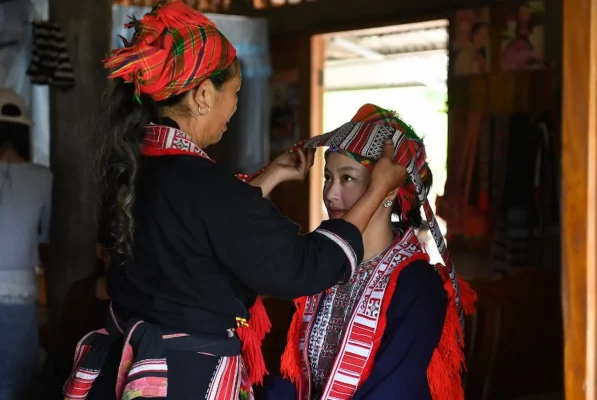
A traditional Red Dao outfit is not a performance costume made only for visitors. It is a handmade cultural object shaped by time, patience and inherited knowledge.
Every embroidered line, red tassel, silver button or fabric panel carries meaning in community life. Therefore, Red Dao clothing should be seen as a living form of cultural memory.
Key elements of Red Dao traditional clothing
The red headscarf
The red headscarf is the clearest marker of Red Dao women in the northwestern highlands. It is also the first detail many travelers notice when meeting Red Dao communities.
Depending on the region, the headscarf may be wrapped high, folded wide, tied long or decorated with red tassels. Some styles may include silver coins, beads, studs or other colorful details.
However, Red Dao headscarves should not be described as one identical style everywhere. Red remains the central element, but the way of wearing and decorating the scarf may differ.
Indigo shirt and open-front garment
Red Dao women often wear indigo, dark blue or black shirts, combined with decorative embroidered panels. The shirt may open at the front and be embroidered around the collar, sleeves, front panels and lower hem.
The indigo base is important because it makes embroidered motifs clearer and more visible. Red, white, yellow and silver details appear brighter against dark indigo or black fabric.
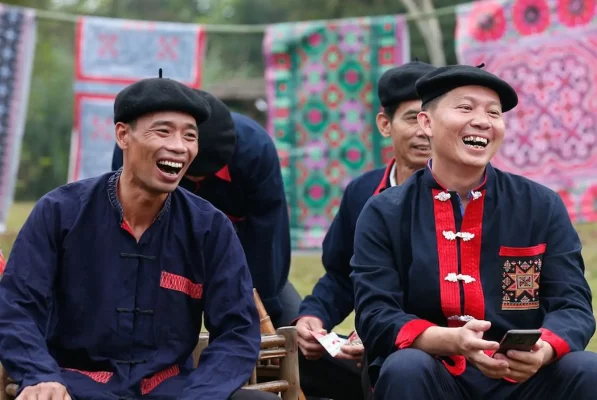
The indigo shirt also suits mountain life because it protects the body and allows easy movement. On important occasions, the shirt becomes more formal when combined with silver jewelry.
Embroidered trousers
Red Dao trousers, especially in women’s clothing, are often made from deep black indigo fabric. They usually have a wide-leg shape and a traditional fold-over waistband.
The highlight lies on the lower trouser legs, where women embroider detailed motifs by hand. These patterns are often stitched with red, white and yellow threads.
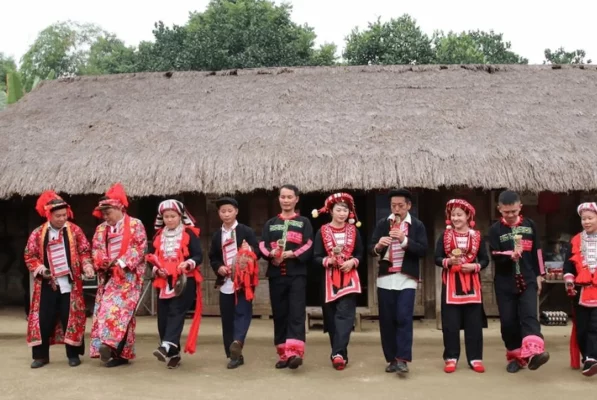
Common motifs include pine tree shapes, diamond patterns, geometric borders and symmetrical embroidered panels. These details create a striking visual effect when the wearer moves.
Some motifs may also be inspired by mountains, forests, farming life, family memory or animal traces. The embroidered trousers show how Red Dao people turn everyday clothing into cultural memory.
Even a small embroidered section can represent many hours of careful handmade work.
Silver jewelry and red tassels
Silver jewelry makes Red Dao clothing more formal, eye-catching and ceremonial. Earrings, necklaces, silver buttons, chains and accessories often appear on important occasions. Silver is not only decorative, but also expresses care and dignity. When combined with red tassels and hand embroidery, silver completes the traditional look.
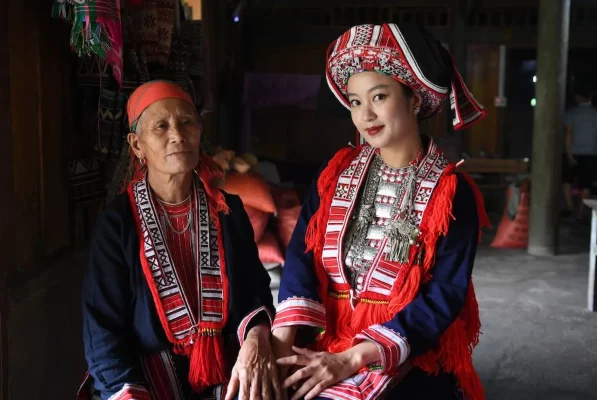
Red tassels create movement and visual energy for the entire outfit. They also emphasize the red identity closely associated with the Red Dao people.
Red Dao headscarf meaning: Why is red important?
The red dao headscarf meaning is connected with identity, beauty, protection and a sense of community belonging. For Red Dao women, the red headscarf is not only something worn on the head. It is a cultural sign that connects the wearer with family, village and community.
Red is the most important color in Red Dao visual identity. This color is often associated with luck, happiness, vitality and positive energy. Therefore, the red headscarf carries both aesthetic value and symbolic meaning. At markets, festivals or village gatherings, the red headscarf helps women stand out immediately. It also helps travelers recognize Red Dao communities among many ethnic groups. However, the meaning of red should not be reduced to one single explanation. Each family or village may understand color and decoration in its own way.
How is Red Dao clothing made?
Red Dao clothing is usually made through many stages, from preparing fabric to dyeing, sewing and embroidery. The process may vary by region, but handwork remains central.
Preparing the fabric
In the past, many Red Dao families prepared fabric, thread, dyes and decorative materials themselves. Today, some materials may be bought at local markets, but embroidery techniques still follow tradition.
The fabric needs to be durable enough for daily wear and suitable for hand embroidery. The base fabric is usually dark, helping colorful stitches appear more clearly.
Indigo dyeing techniques
Indigo dyeing is a handmade textile dyeing technique that uses pigment extracted from the indigo plant. Indigo leaves and stems are soaked in water to ferment and create the distinctive dye liquid.
The indigo liquid is then often stirred with slaked lime or kitchen ash water. This process creates a precipitation reaction, allowing the indigo pigment to settle into a thick paste. The indigo paste is then mixed with water to create the dyeing solution.
Raw fabric is dipped into the indigo dye, wrung out and dried in the open air. When exposed to oxygen, the fabric gradually changes from pale green to the characteristic blue indigo shade. To achieve a deep, even and lasting color, the dipping, wringing and drying process must be repeated many times.
In some communities, fabric that has reached a blue indigo shade may be dyed again with brown tubers. This method creates a glossy black indigo tone suitable for traditional clothing. In Red Dao clothing, the indigo or black fabric works as a dark background that highlights bright hand-embroidered motifs.
Hand sewing and embroidery
Hand sewing and embroidery are the stages that make the outfit most personal. Decorative embroidered panels may be made separately before being attached to shirts or trousers.
The maker must plan the motif layout, color rhythm, stitch direction and placement of each detail. Every section requires time, focus and experience accumulated over many years.
This slow process explains why traditional clothing is deeply respected. It is not only fabric and thread, but also a visible form of family memory.
Red Dao costume embroidery: Motifs, colors and craftsmanship
Red dao costume embroidery is one of the most important skills in Red Dao culture. Embroidery is not only a decorative technique, but also a way to preserve family memory.
Common colors in Red Dao embroidery
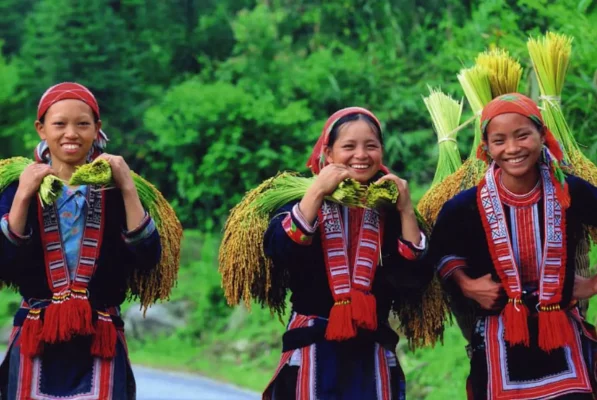
Red Dao embroidery often uses strong color contrasts on a dark fabric background. The base fabric is usually indigo, dark blue or black, combined with red, white, yellow and blue threads.
Red creates a strong feeling and makes the clothing easier to recognize. White brightens the motifs, yellow adds warmth, while silver creates formality.
When combined, these colors give Red Dao clothing strong visual depth. Color also reflects patience, aesthetic sense and the maker’s skill.
Common embroidery motifs
Red Dao embroidery often includes geometric motifs such as diamonds, triangles, squares and zigzag lines. These shapes create rhythm, structure and balance across the surface of the clothing.
Some motifs are inspired by nature, including plants, flowers, mountains, forests or animal traces. Other patterns may reflect farming tools, family memory, daily life or the spiritual world.
Outsiders may not always understand the full meaning of each motif. Yet for the Red Dao community, these patterns remain an important part of cultural memory.
Why is hand embroidery important in Red Dao culture?
Hand embroidery is an important way for Red Dao women to preserve family culture. Many girls learn their first stitches from mothers, grandmothers or older women.
A complete outfit may take many months to finish. For more elaborate garments, the process can take more than a year.
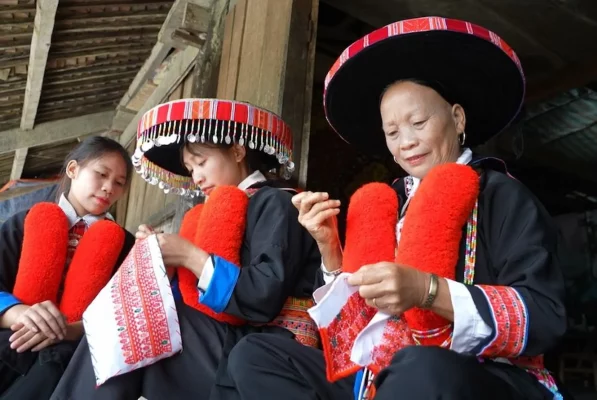
This long process turns clothing into a record of patience and skill. In traditional life, sewing and embroidery were once signs of maturity.
The ability to make clothing showed discipline, creativity and the ability to continue family knowledge. Today, hand embroidery remains a powerful symbol of Red Dao cultural continuity.
Dao Do traditional dress Vietnam: Regional variations
When discussing dao do traditional dress vietnam, it is important to remember that clothing changes by region. Red Dao communities live in Sa Pa, Ha Giang, Tuyen Quang, Cao Bang, Yen Bai and Lai Chau.
Common markers often include red headscarves, indigo fabric, hand embroidery, silver ornaments and red tassels. However, the way of wrapping the headscarf, placing embroidery and using accessories may vary by village.
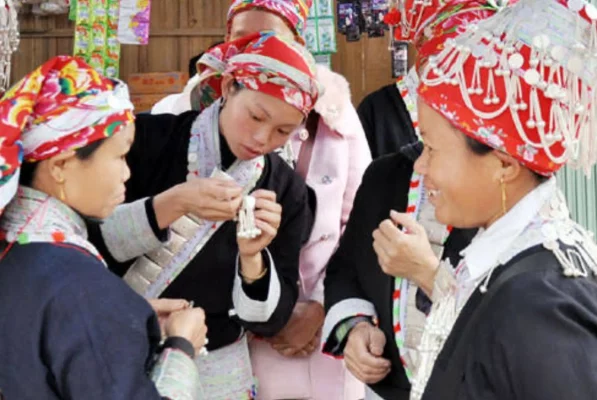
In some places, the headscarf may be taller, wider or decorated with more tassels. In other places, embroidery may focus more on trousers, collars or front panels.
These differences show that Red Dao clothing is not one fixed model. It is a living tradition with many local variations shaped by place and community history.
When do Red Dao people wear traditional clothing?
Daily life and local markets
In the past, traditional clothing appeared more often in daily life. Today, clothing use varies by region, age, occupation and context.
Some women still wear traditional clothing when going to markets or joining village activities. Highland markets are among the easiest places for travelers to see Red Dao clothing.
At markets, clothing is not only a sign of identity, but also part of social life. People go to markets to trade, meet relatives, exchange news and maintain community relationships.
Weddings and family ceremonies
Traditional clothing plays an important role in weddings and family ceremonies. These occasions often require more formal clothing, carefully arranged accessories and meaningful decorative details.
At weddings, embroidered clothing and silver jewelry show solemnity, preparation and respect. The outfit also reflects the skill and patience of the woman who made or preserved it.
Clothing in family rituals is not only about appearance. It also connects the wearer with ancestors, relatives and community expectations.
Festivals and spiritual rituals
During festivals, ancestor worship or community rituals, traditional clothing carries special meaning. The outfit helps create formality and shows respect within the ritual space.
Some Red Dao rituals are private and should not be entered or photographed without permission. Even when allowed to observe, travelers should follow local guidance.
Traditional clothing in spiritual spaces should not be seen as performance clothing. It belongs to a living cultural and religious environment.
Women’s role in preserving Red Dao traditional clothing
Red Dao women play a central role in preserving traditional clothing. Through sewing, embroidery, fabric preparation and teaching, they help keep cultural memory alive.
Many girls learn embroidery by observing and practicing with mothers, grandmothers or older women. This learning process is not only technical, but also teaches patience and family responsibility.
Red Dao women are important cultural keepers, especially in hand embroidery and family traditions. However, the Red Dao should not be described as a matriarchal society without reliable evidence.
In modern life, young people may wear traditional clothing less often every day. Even so, embroidery, red headscarves and ceremonial clothing remain powerful symbols of identity.
Can travelers see Red Dao traditional clothing in Hoang Su Phi?
Hoang Su Phi is a suitable place to learn about Red Dao culture through slow travel. Instead of seeing culture through short performances, travelers can encounter real daily life.
From Panhou Retreat, travelers can walk through villages, meet local communities and experience Red Dao herbal bathing. These experiences help visitors understand how clothing, farming and local medicinal plants connect.
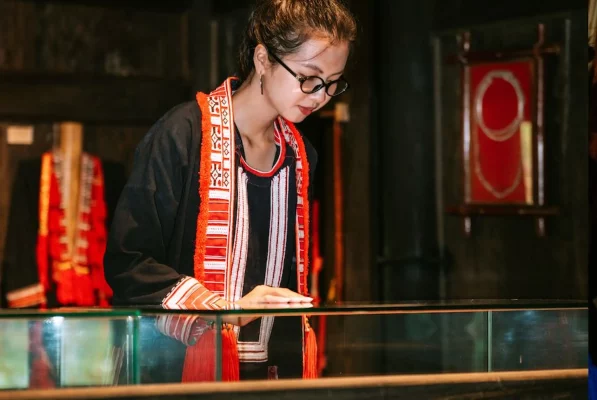
Traditional clothing may appear at local markets, village gatherings or cultural activities. However, travelers should avoid turning clothing into a photo prop.
At Panhou Retreat, travelers can approach Red Dao culture through guided experiences. This slower approach respects the rhythm of highland life and avoids turning culture into a performance.
Tips for learning about Red Dao clothing respectfully
Travelers should always ask before photographing people wearing traditional clothing. A polite question can create a better conversation than a rushed photo.
Visitors should not touch headscarves, clothing, silver jewelry or ritual objects without permission. These items may carry personal, family or spiritual meaning.
Travelers should also avoid wearing traditional clothing in ritual spaces without proper guidance. Clothing is not only decorative, especially during ceremonies or family events.
When possible, travelers should buy hand-embroidered products directly from local makers. This supports people who preserve traditional skills and helps keep craft knowledge alive.
Bargaining should be done respectfully and moderately. A hand-embroidered item may represent many days or months of careful work.
Frequently asked questions
1. What is the traditional clothing of the Red Dao people?
The red dao traditional clothing usually includes a red headscarf, indigo or black shirt, embroidered trousers, red tassels and silver ornaments. The outfit reflects identity, handmade craftsmanship and spiritual belief.
2. What does the Red Dao headscarf mean?
The red dao headscarf meaning is connected with identity, beauty, protection, luck and a sense of community belonging. The headscarf style may vary by region, village and family tradition.
3. What makes Red Dao costume embroidery special?
Red dao costume embroidery is special because it is handmade, detailed and passed down through women in the family. Motifs may reflect nature, animals, farming, family life and cultural memory.
4. What colors are used in Red Dao traditional clothing?
Common colors include red, white, yellow, blue or indigo, black and silver. In many outfits, red and indigo are the most important visual markers.
5. When do Red Dao people wear traditional clothing?
Red Dao people may wear traditional clothing at markets, weddings, festivals and family rituals. Clothing use may vary by region, generation and occasion.
6. Where can travelers see Red Dao clothing in Vietnam?
Travelers can see Red Dao clothing in Sa Pa, Hoang Su Phi, Ha Giang, Tuyen Quang and Yen Bai. Hoang Su Phi offers a deeper and more respectful way to approach Red Dao culture.
Conclusion: Red Dao clothing as living cultural memory
The red dao traditional clothing is not only a beautiful highland outfit. It is a living cultural system made from color, fabric, embroidery, silver and red headscarves.
Each outfit carries time, patience, skill, family memory and community identity. Red headscarves, indigo fabric, embroidered motifs and silver jewelry all express belonging.
For travelers, learning about Red Dao clothing creates a more respectful way to experience Northern Vietnam. It helps them look beyond a photograph and understand the story behind each garment.
Panhou Retreat is a suitable starting point for this cultural discovery. Through nature, village paths and local encounters, visitors can understand Red Dao culture more deeply.

3D2N NATIONAL DAY OFFER | JOURNEY INTO GREEN SEASON
From 125 USD/Guest/Combo
3D2N GOLDEN SEASON IN HOANG SU PHI
From 114 USD/Guest/Combo