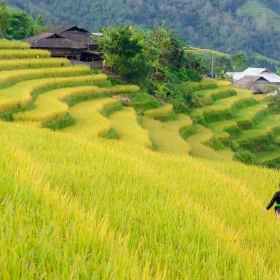
Photo Locations in Ha Giang: 12 Best Spots & Timing
| ExperiencesChoosing a photo location in Ha Giang is less about finding beauty and more about being in the right place when the light arrives. The province is all drama: limestone walls, a jade river far below, and terraces that change colour with the season. This guide maps twelve spots worth your memory card, when to shoot them, and how to plan the west side of the province around Hoang Su Phi. Panhou Retreat, a 40-bungalow forest retreat in the Thong Nguyen valley, puts you within walking distance of the terraces at first light. A quick note on names. In July 2025, Ha Giang province was merged into Tuyen Quang province, but the Ha Giang Loop, the towns and the viewpoints all kept their names. You will still see “Ha Giang” on every map and road sign that matters to a traveller.
How Ha Giang splits into two photography worlds
Most photographers only see half of Ha Giang. The famous Loop runs north-east through the Dong Van Karst Plateau, a UNESCO Global Geopark of grey stone, deep canyons and hairpin passes. It is raw and monumental, best shot with a wide lens and a lot of patience for haze.
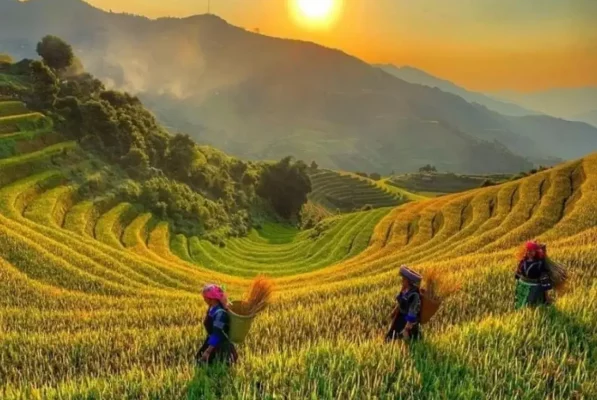
The west is a different world. Around Hoang Su Phi, the mountains are greener and softer, and the slopes are carved into some of Vietnam’s most elaborate rice terraces. Here the subject is pattern, texture and colour, and the light changes by the hour as mist lifts from the valleys.
| Region | Main subjects | Best light | Lens tip |
|---|---|---|---|
| Dong Van Karst Plateau (east) | Passes, canyons, stone villages | Early morning, late afternoon | 16–35 mm for scale, 70–200 mm to compress ridges |
| Hoang Su Phi (west) | Rice terraces, mist, Red Dao villages | Sunrise and the hour before sunset | 24–70 mm for layers, 100–400 mm for patterns |
If you have a week, do both. If you have three or four days and care most about terraces, start in the west.
12 Photo locations in Ha Giang worth planning around
On the Ha Giang Loop
- Ma Pi Leng Pass and the Nho Que River. The signature shot of Ha Giang: a thin turquoise river snaking through a canyon hundreds of metres below the road. Shoot from the pull-outs on the pass in the morning, before haze builds. A polariser helps cut glare on the water.
- Quan Ba Heaven Gate and the Twin Mountains. The first big view of the Loop, looking down onto two rounded hills rising from the valley floor. It works at sunrise when mist sits in the basin, and again in spring when peach blossom frames the foreground.
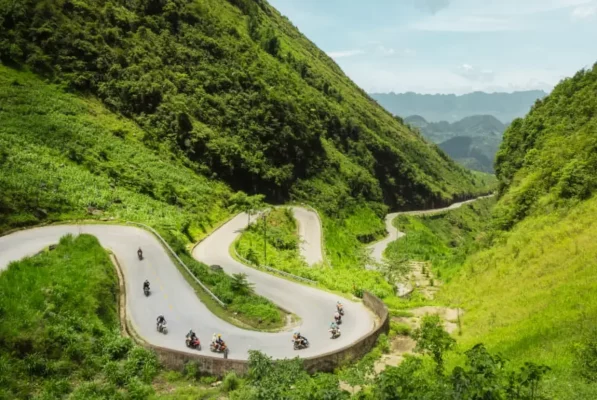
- Tham Ma Pass. A tight stack of switchbacks that looks best from above, with a motorbike or two adding scale. Late afternoon side light gives the road texture.
- Sung La Valley. Stone walls, earthen H’mong houses and, in season, flower fields. Arrive early, ask before photographing people, and keep a respectful distance from homes.
- Dong Van Old Quarter. Low tiled houses and a Sunday market that fills the streets. This is the place for street and portrait work rather than landscapes.
- Lung Cu Flag Tower. Vietnam’s northernmost point, with sweeping views over villages and fields. Clear days are best; on hazy days, focus on details and people instead.
Around Hoang Su Phi
- Ban Luoc and San Sa Ho. Classic layered terraces close to the district centre, with Tay and Dao houses tucked into the slopes. Easy access makes them ideal for a first sunrise.
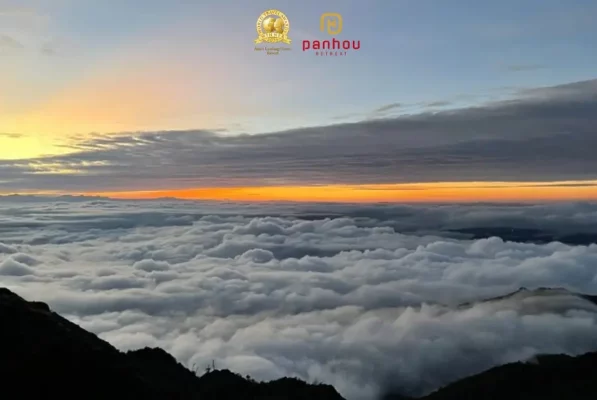
- Ban Phung. Among the highest terraces in the district, near the Chinese border. Early mornings here can put you above a sea of cloud with golden fields below.
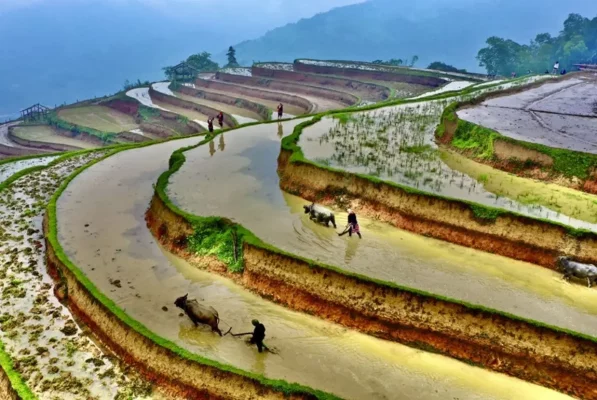
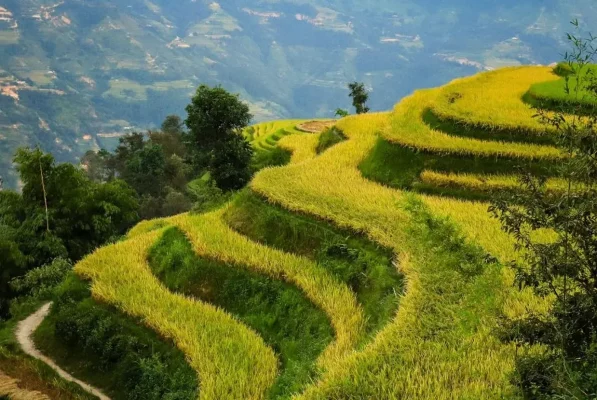
- Thong Nguyen and Nam Hong. A lush valley south of the district centre, with terraces folding down to the river and Red Dao villages on the slopes. Thong Nguyen terraces are about 20 minutes from Panhou Retreat.
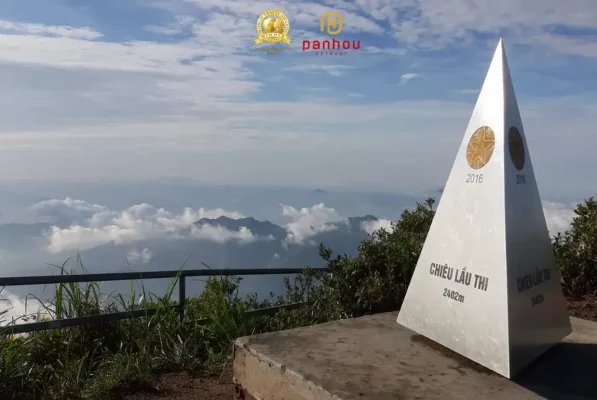
- Ho Thau and Chieu Lau Thi. The road to Chieu Lau Thi peak is a favourite for cloud hunting in Hoang Su Phi. Go for sunrise and bring layers, because the summit is cold even when the valleys are mild.
- Nam Ty. Quieter terraces and, in late winter, white plum and pear blossom against the brown fields.
- Tay Con Linh. The highest mountain in the area at about 2,428 m. The surrounding slopes offer big-sky landscapes and forest scenes for those willing to hike.
Ha Giang photography calendar: What to shoot each season
Ha Giang changes so much through the year that the same viewpoint can look like a different country. Use this as a starting point, then check recent photos and local reports before you travel.
| Months | What you’ll find | Best areas |
|---|---|---|
| January–March | Plum, pear and peach blossom; mist; quiet roads | Nam Ty, Quan Ba, Dong Van |
| May–June | Water season: flooded terraces reflect the sky | Hoang Su Phi, Thong Nguyen |
| July–August | Deep green terraces, dramatic storm clouds | Hoang Su Phi, Ma Pi Leng |
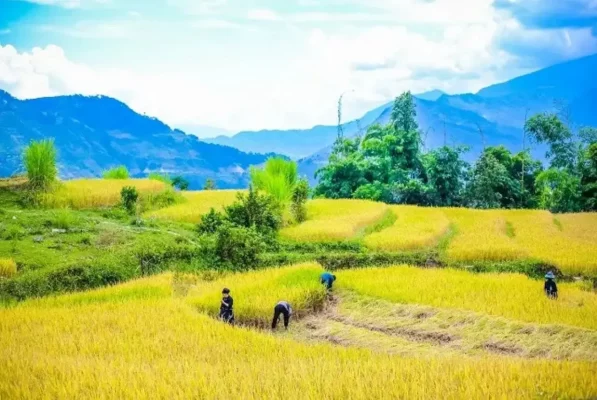
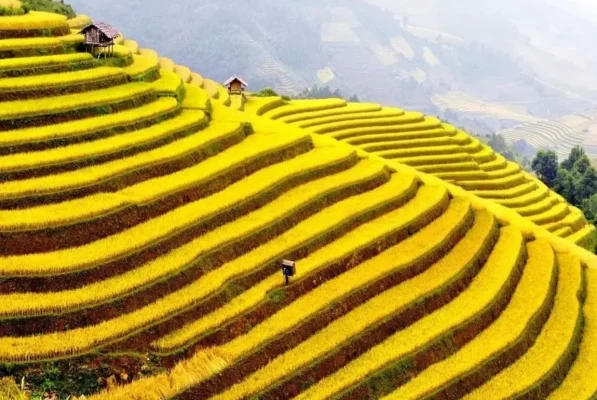
| Mid-September–early October | Golden rice, harvest scenes | Hoang Su Phi, Ban Phung, Ban Luoc |
| October–December | Buckwheat flowers, clear skies, cloud seas | Dong Van Plateau, Chieu Lau Thi |
The golden season is short and moves slightly each year, so build a few spare days into your plan. You can read more in our guide to the best time to see the Hoang Su Phi rice terraces, and in our piece on buckwheat blossoms in the old mountains of Hoang Su Phi.
Photographing golden rice at Panhou Retreat
For terrace photographers, where you sleep decides what you shoot. Golden rice glows for only a short window after sunrise and before sunset. If you are staying in a town an hour away, you will spend the best light on the road.
Panhou Retreat sits in the Thong Nguyen valley in Hoang Su Phi, with terraces in walking distance and the main Thong Nguyen fields about 7 km away. That means you can be at a viewpoint before the mist lifts, come back for breakfast, and head out again for the evening light.
What makes this valley special for photographers
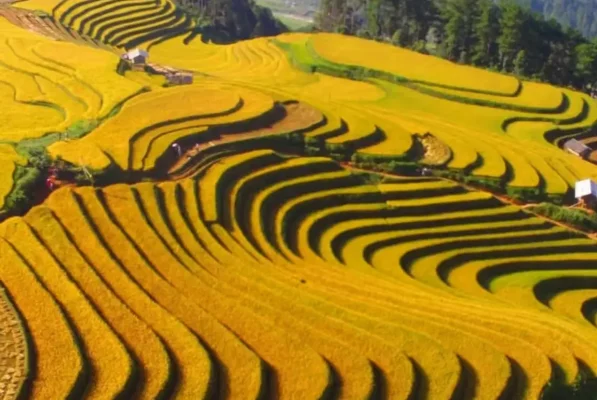
- Layers and depth: terraces stack down the slopes towards the stream, so a medium telephoto lens picks out repeating curves with forest behind them.
- Morning mist: in the golden season, low cloud often fills the valley at dawn, then breaks up slowly. This gives you soft, changing light for an hour or more.
- Life in the frame: Red Dao and Tay farmers harvest by hand. With permission, harvest scenes add a human story that pure landscapes lack.
- Year-round scenery: even outside rice season, the retreat’s forest, streams and tea hills give you subjects, which matters if weather moves your dates.
A golden-season shooting routine
- Before sunrise: walk to a nearby ridge or ask the team for the closest viewpoint. Set up while it is still blue.
- Sunrise to 8 am: shoot mist and side-lit terraces; switch to a longer lens as the light warms.
- Midday: rest, review images, or photograph village life and portraits under softer cloud.
- Late afternoon: head to Thong Nguyen or Nam Hong terraces for back-lit fields and long shadows.
- After dark: clear nights here are good for stars over the valley, as there is little light pollution.
Shooting etiquette in the terraces
Walk only along the terrace walls, never on the rice. The walls are fragile and farmers repair them by hand. Ask before flying anything: drones are not allowed inside the retreat, and many villages prefer you ask first.
Basing your photo trip at Panhou Retreat
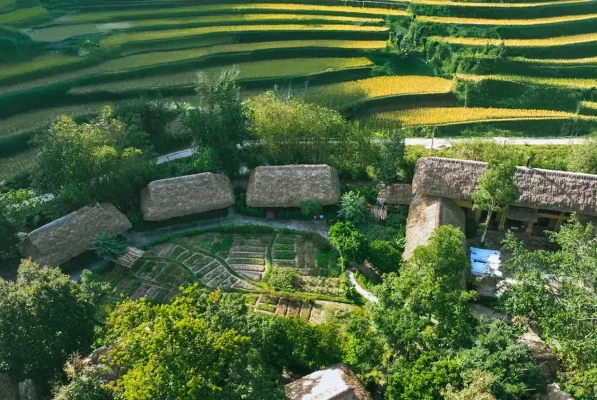
Panhou Retreat is a 40-bungalow mountain retreat built along the slopes of the Thong Nguyen valley. Bungalows use local wood, stone and bamboo and follow the contours of the land rather than flattening it. That makes the retreat itself a quiet subject, especially in the blue hour.
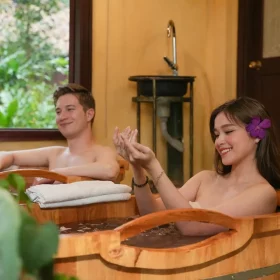
After a cold sunrise, the 48°C natural hot mineral bath and a traditional Red Dao herbal bath are genuinely welcome. Meals at Khu Cao Restaurant use ingredients grown on site or by neighbouring villages. Rooms range from the compact 28 m² Superior Window to the 60 m² Suite with a private hot mineral pool, and a 140 m² Villa for photo groups. You can compare them on the accommodation page.
Panhou packages for photographers
2D1N Trekking & Local Life: A short scouting trip through the terraces
From 85 USD/guest
The package includes one night at Panhou, breakfast and a dinner of local cuisine, and a 45-minute natural essential oil massage. It adds a half-day trek of 3–5 km with a local guide, a tea-making tour with traditional tea tasting, and a choice of Do paper painting or a cultural museum visit. The 48°C hot mineral bath is open to guests from 16:00 to 18:00. The trek passes rice terraces and Red Dao villages, enough to scout locations for a return trip.
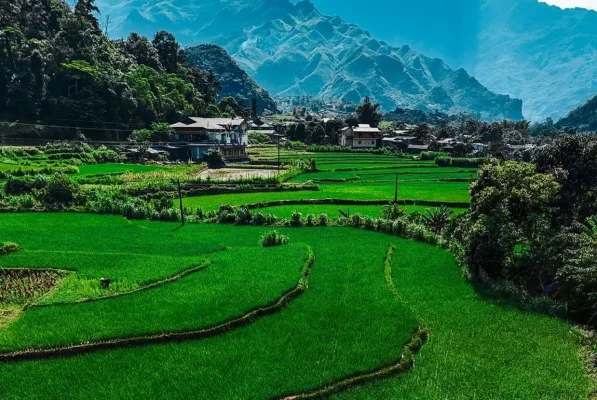
>> See the 2D1N Trekking & Local Life package for a short photo trip
3D2N Trekking & Experience Local Life (Half Trek): Two sunrises to wait for the light
From 159 USD/guest
The package includes two nights at Panhou with two breakfasts and two dinners of local cuisine, a half-day trek of 3–5 km with a local guide, and a tea-making tour with traditional tea tasting. Children can join vegetable picking and a museum visit, and everyone has free use of the infinity pool and the 48°C hot mineral bath from 16:00 to 18:00. Two nights give you two sunrises, so you have a back-up if the first is clouded out.
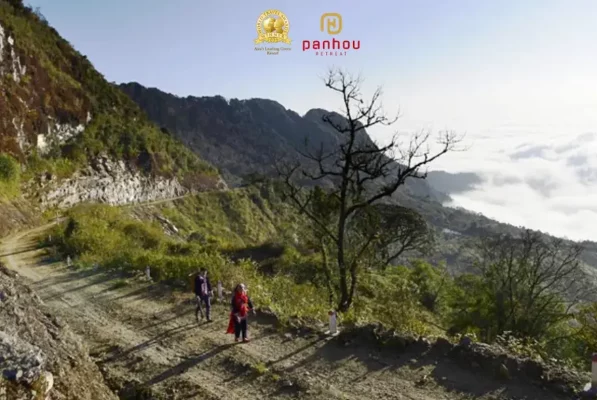
>> Explore the 3D2N Half Trek package at Panhou Retreat
3D2N Trekking & Experience Culture (Full Trek): Wake up in a high village
From 162 USD/guest
The package includes one night at Panhou and one night in a village homestay, breakfast every morning, and two lunches and two dinners of local cuisine. You trek for a full day with a local guide through forest and rice terraces, via the Red Dao village of Nam Nghi up to Giang Ha or Phin Ho, and join a tea-making tour with traditional tea tasting. The homestay night puts you in a high village at dawn, ideal for terrace and cloud shots.
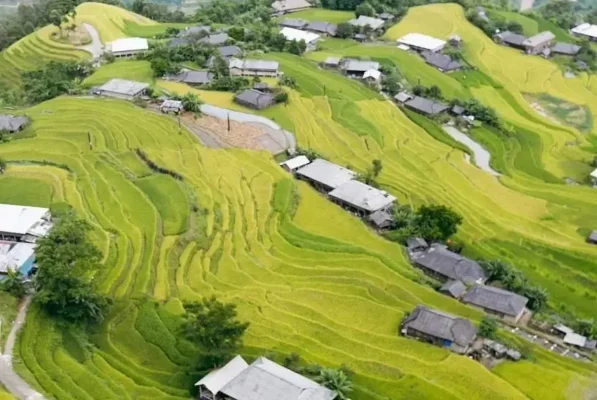
>> Discover the 3D2N Full Trek package with a village night
All packages require at least two guests. Prices are quoted in VND; USD is for reference. See all current offers on the Special Packages page.
Practical tips for a Ha Giang photo trip
- Weather: mountain forecasts change fast. Keep one flexible day for every three planned.
- Gear: bring a lens cloth and rain cover; morning mist leaves everything damp.
- Batteries: cold mornings drain them quickly from November to February. Carry spares in an inside pocket.
- People: always ask before photographing someone, especially elders and children. A smile and a gesture usually work.
- Getting there: Panhou is about 5–6 hours by road from Hanoi. The retreat runs a shared limousine on set days and can arrange private transfers. See how to get to Panhou Retreat.
If you plan to combine the west with the Loop, our Hoang Su Phi and Ha Giang Loop guide explains how to connect the two.
FAQ
1. What is the most famous photo location in Ha Giang?
Ma Pi Leng Pass above the Nho Que River is the most photographed. For rice terraces, Hoang Su Phi is the main destination.
2. When is the best time for Ha Giang photography?
Mid-September to early October for golden rice, May–June for flooded terraces, and October–December for buckwheat flowers and clear skies.
3. Can I fly a drone in Ha Giang?
Rules change and some areas near the border are sensitive. Check current regulations before you go. Drones are not permitted inside Panhou Retreat.
4. Where should I stay to photograph Hoang Su Phi rice terraces?
Stay close to the terraces so you are on location at sunrise. Panhou Retreat in the Thong Nguyen valley is surrounded by terraced slopes.
Ha Giang rewards photographers who slow down: the best frames come from waiting for mist to lift or for a farmer to walk into the light. Pair the drama of the Loop with a few calm sunrises in Hoang Su Phi, and let Panhou Retreat be the quiet base between shoots.
Ngoc Van

3D2N THE STORY OF HERITAGE
From 131 USD/Guest/Combo
3D2N BLACK FRIDAY
From 181 USD/02 Guests/Combo